
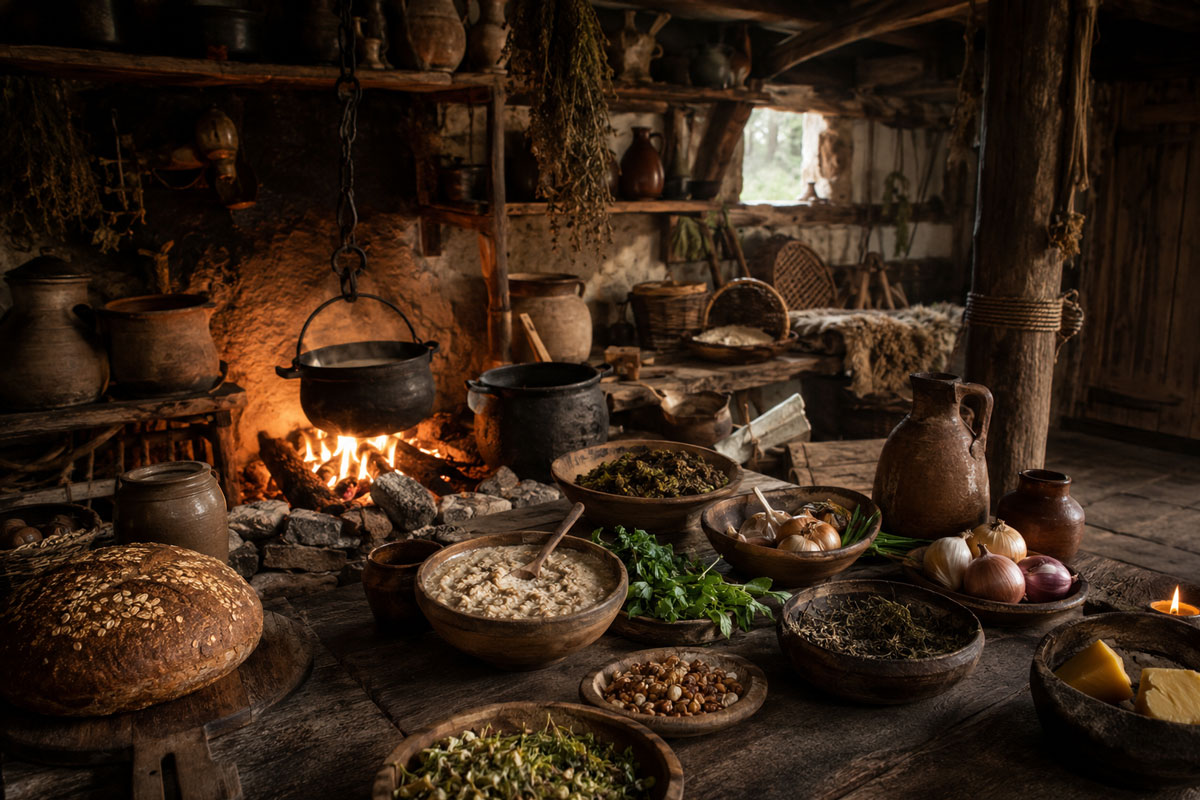
Long before modern ovens, supermarkets, or restaurant menus, the kitchens of medieval Ireland were places of smoke, fire, simplicity, and seasonal abundance. Food was deeply tied to the land, the weather, faith, and survival itself. From thick oat breads baked over open hearths to butter stored in bogs and feasts prepared for kings and monks alike, medieval Irish cooking reflected a world shaped by farming, fishing, hospitality, and tradition.
While many dishes from that era have disappeared or evolved beyond recognition, traces of medieval Irish cuisine still survive in foods enjoyed across Ireland today. Behind every loaf of soda bread, bowl of porridge, or hearty stew lies a much older culinary story — one rooted in ancient techniques, local ingredients, and a way of life centered around the communal hearth.
Food and Survival in Medieval Ireland
In medieval Ireland, food was shaped largely by necessity. Most people lived in rural farming communities where diets depended on what could be grown, gathered, preserved, or raised locally. Seasonal eating was not a lifestyle trend — it was simply reality. During harsh winters, communities relied heavily on preserved foods, dried grains, salted fish, butter, and root vegetables stored after the harvest.
Oats and barley were among the most important crops of the medieval Irish diet. Before potatoes arrived centuries later, grains formed the backbone of everyday meals. Thick oat porridges, coarse breads, and griddle cakes were common among ordinary families. Dairy also played a central role in Irish food culture, with milk, buttermilk, curds, and butter appearing regularly at the table.
Meat was often less common for ordinary people than modern audiences might imagine. While cattle were highly valued in Irish society, they were often considered symbols of wealth and status rather than daily food sources. Pork was more frequently eaten, especially salted bacon and cured meats that could last through colder months.
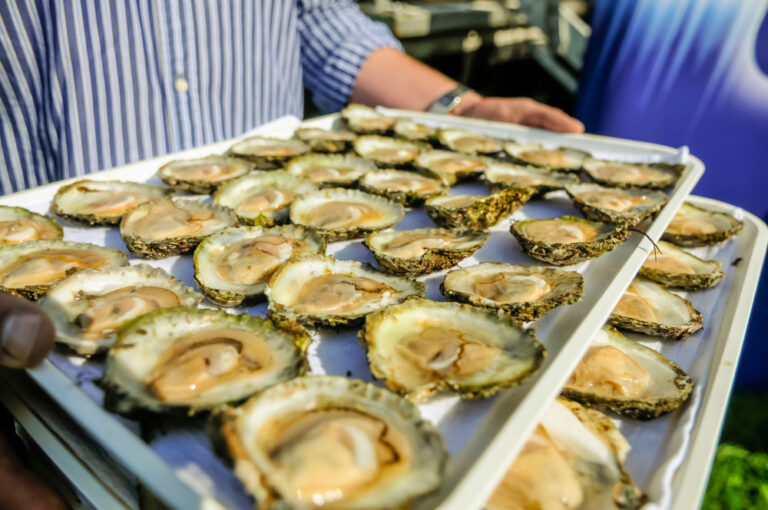
Fish and shellfish were particularly important in coastal regions and monastic communities. Salmon, herring, mussels, oysters, and eels provided reliable nourishment and became deeply connected to local food traditions. Inland rivers and lakes also supported fishing cultures that sustained communities for generations.
The Hearth: Center of the Medieval Kitchen
The medieval Irish kitchen revolved around the hearth fire. Most homes cooked over open flames using simple iron pots, hanging cauldrons, flat stones, or griddles. The hearth provided warmth, light, and a place where families gathered together at the end of the day.
Cooking methods were straightforward but effective. Soups, broths, and stews simmered slowly over the fire, often combining grains, herbs, onions, cabbage, and whatever meat or fish was available. Bread was commonly baked on flat surfaces or directly beside hot embers rather than in enclosed ovens.
Smoke played a major role in preserving food. Fish and meats were hung above the hearth to dry slowly in the rising smoke, helping families store food for longer periods. This smoky flavor became closely associated with many traditional Irish foods, especially along coastal communities.
The kitchen itself was often dark, warm, and busy. Wooden bowls, iron pots, stone grinders, and woven baskets filled the space. Herbs hung drying from rafters while butter, grains, and preserved foods were carefully stored for the seasons ahead.
Unlike modern kitchens built around convenience, medieval Irish kitchens demanded patience, physical labor, and skill. Every loaf, broth, or preserved ingredient represented hours of work tied directly to the rhythms of daily life.
Forgotten Ingredients and Flavors
Many flavors once common in medieval Ireland have faded from everyday cooking. Wild herbs, sea vegetables, sour dairy products, and foraged ingredients were once essential parts of the Irish table.
Nettles, sorrel, watercress, and wild garlic were gathered regularly for soups and herbal remedies. Carrageen moss and other seaweeds were used both as food and medicine along Ireland’s coastline. Honey sweetened foods long before refined sugar became widely available, while herbs such as thyme and parsley added flavor to otherwise simple meals.
Fermented and sour flavors were also far more common than they are today. Buttermilk, cultured butter, and naturally fermented grains gave medieval Irish cooking a tangy richness that modern processed foods often lack. Ale and mead were frequently consumed at feasts and gatherings, while oat-based drinks sometimes appeared alongside dairy beverages.
One of the most fascinating remnants of medieval Irish food culture is bog butter — butter buried in peat bogs for preservation. Archaeologists have discovered centuries-old butter hidden beneath Irish boglands, offering a glimpse into how valuable dairy products once were in Irish society.
Game meats such as rabbit, venison, and wild birds also appeared more regularly in medieval diets, particularly among nobility and hunting communities. Combined with herbs, smoked flavors, and coarse grains, these foods created a cuisine deeply connected to Ireland’s landscape.
Feasts, Monks, and the Culture of Hospitality
Hospitality held enormous importance in medieval Irish culture. Guests were often welcomed with food, drink, and warmth regardless of social status. In Gaelic tradition, generosity at the table reflected both honor and reputation.
Feasting played a major role in medieval Irish society, particularly among chieftains and kings. Large gatherings featured roasted meats, bread, ale, dairy products, and fish served in communal settings filled with music, storytelling, and ceremony. Food symbolized wealth, power, and social connection.
Monasteries also shaped Irish culinary life during the medieval era. Monks cultivated gardens filled with herbs, vegetables, and medicinal plants while preserving agricultural knowledge through changing centuries. Monastic communities often brewed ale, baked bread, tended orchards, and cared for travelers who arrived seeking shelter.
Religious fasting traditions strongly influenced eating habits throughout the year. Certain periods restricted meat consumption, encouraging greater reliance on fish, grains, dairy, and vegetable-based meals. These traditions helped shape many Irish recipes that remained common long after the medieval period ended.
Even among ordinary households, meals were rarely viewed as merely functional. Food carried meaning tied to community, faith, generosity, and survival. Around the hearth fire, stories were shared, traditions passed down, and family bonds strengthened through the simple act of eating together.
The Medieval Legacy Still Found in Irish Food Today
Although centuries have passed, traces of medieval Irish kitchens still survive in modern Irish cooking. Traditional brown breads, porridge, seafood dishes, smoked fish, butter-rich baking, and open-fire cooking methods all reflect echoes of Ireland’s culinary past.
The growing interest in heritage foods, foraging, farmhouse butter, artisan baking, and traditional preservation methods has also renewed appreciation for older Irish food traditions. Across Ireland, chefs and food historians increasingly look to medieval practices for inspiration, reconnecting modern cuisine with ancient roots.
Many of the flavors once considered ordinary in medieval Ireland now feel rare or nostalgic. Yet they remain woven into Ireland’s identity — in its breads, dairy products, seafood traditions, and enduring culture of hospitality.
The lost flavors of medieval Irish kitchens tell a story far larger than food alone. They reveal how generations of Irish families adapted to the land, preserved tradition, and built community around the warmth of the hearth. Though the world has changed dramatically since the medieval era, the spirit of those kitchens still lingers in the comforting, rustic flavors that continue to define Irish cuisine today.