

Across Ireland, something quietly powerful has been happening in town squares, village greens, and city streets. Farmers’ markets—once a fading part of local life—have returned with renewed energy, bringing with them not just fresh produce, but a revival of Irish food culture itself.
These markets are more than places to shop. They are spaces where tradition meets innovation, where small producers reconnect directly with communities, and where Ireland’s rich food heritage is being rediscovered, one stall at a time.
Table of Contents
- The Decline of Traditional Food Culture
- The Return of the Farmers’ Market
- A Focus on Local and Seasonal Produce
- Supporting Small Irish Producers
- Rediscovering Traditional Irish Foods
- Markets as Community Hubs
- The Modern Irish Food Movement
- The Future of Irish Food Culture
The Decline of Traditional Food Culture
For much of the 20th century, Ireland’s traditional food systems began to fade. Supermarkets replaced local shops, convenience foods became more common, and many of the older rhythms of seasonal eating were lost. The connection between producer and consumer weakened, and with it, a deeper understanding of where food came from.
While Irish cuisine never disappeared, it often became simplified or overshadowed by imported trends. Many traditional skills—cheesemaking, curing, baking, and small-scale farming—continued quietly, but with less visibility.
The Return of the Farmers’ Market
In recent decades, farmers’ markets have re-emerged as part of a broader shift back toward quality, authenticity, and sustainability. What began as small, local initiatives has grown into a nationwide movement, with markets now found in both rural towns and major cities.
These markets offer something that modern retail often cannot: direct connection. Shoppers meet the people who grow, bake, and craft their food. Questions are asked. Stories are shared. And food becomes something personal again.
A Focus on Local and Seasonal Produce
One of the most important ways farmers’ markets are reviving Irish food culture is through a renewed emphasis on seasonality. Instead of year-round availability, markets reflect what is actually growing and being produced in Ireland at a given time.
This return to seasonal eating reconnects people with the natural rhythm of the land—spring greens, summer berries, autumn root vegetables, and winter preserves. It also encourages fresher, more flavourful food, often harvested just hours before it reaches the stall.
Supporting Small Irish Producers
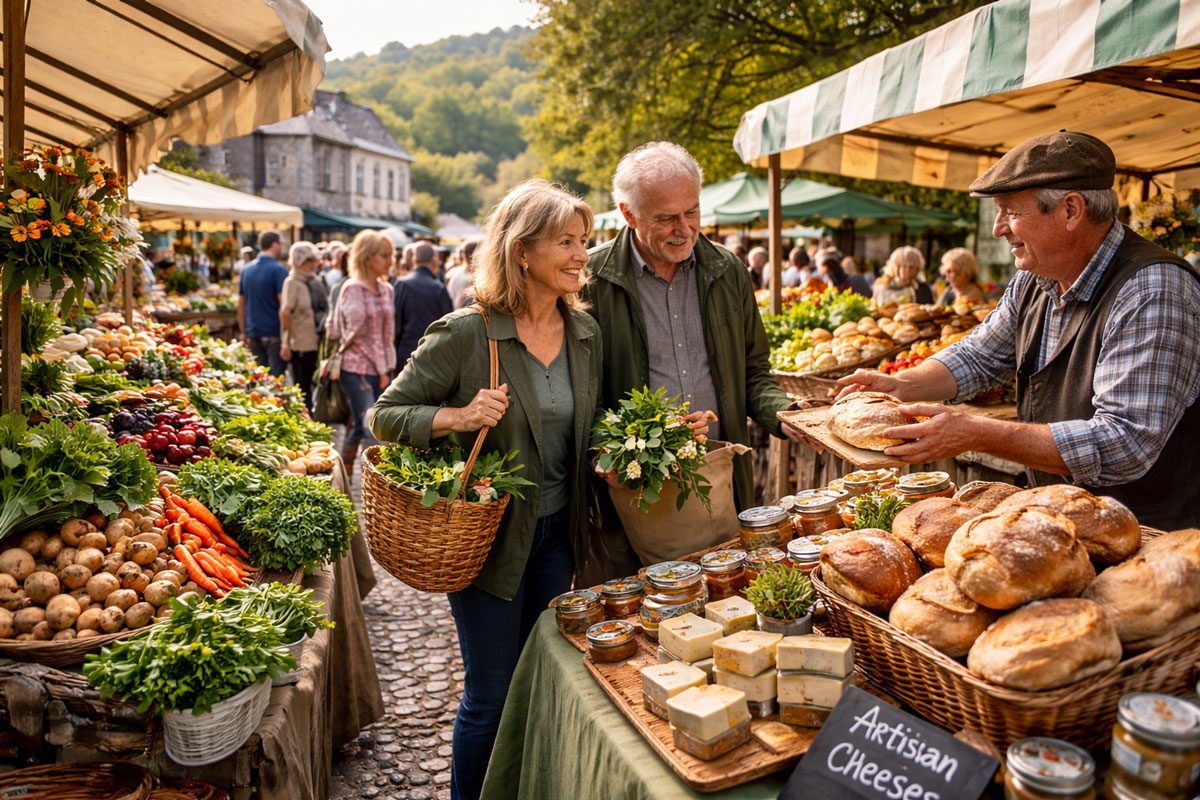
Farmers’ markets have created a vital platform for small-scale Irish producers. Artisan cheesemakers, bakers, honey producers, organic farmers, and traditional butchers now have a direct route to customers without needing large-scale distribution.
This not only supports local economies but helps preserve skills that might otherwise disappear. Many of these producers are reviving old methods—handcrafted techniques passed down through generations—while also introducing new ideas rooted in Irish ingredients.
Rediscovering Traditional Irish Foods
Walk through a good farmers’ market in Ireland and you’ll find more than just vegetables. You’ll see brown bread baked the traditional way, farmhouse cheeses with deep regional character, fresh butter, oat-based bakes, and seasonal preserves.
These foods aren’t presented as nostalgia—they are part of a living tradition. Markets allow both locals and visitors to rediscover dishes and ingredients that once formed the backbone of Irish cooking, often with a renewed appreciation for their quality and simplicity.
Markets as Community Hubs
Beyond the food itself, farmers’ markets play an important social role. They bring people together in a way that modern shopping rarely does. Conversations happen naturally—between neighbours, between producers and customers, and between generations.
In many towns, market day has become a weekly gathering point. Music, coffee stalls, and street food add to the atmosphere, creating a space that feels both traditional and contemporary at the same time.
The Modern Irish Food Movement
The rise of farmers’ markets is closely tied to a broader modern Irish food movement—one that values provenance, sustainability, and authenticity. Irish chefs, restaurants, and home cooks are increasingly drawing inspiration from local ingredients and traditional methods.
Markets act as the foundation of this movement. They supply the ingredients, connect the people, and keep the focus on quality over convenience. In doing so, they help redefine what Irish food means today—not just hearty, but thoughtful, seasonal, and deeply connected to place.
The Future of Irish Food Culture
As interest in local food continues to grow, farmers’ markets are likely to remain a central part of Ireland’s culinary landscape. They offer a model that balances tradition with modern values—supporting sustainability, reducing food miles, and strengthening local communities.
Perhaps most importantly, they remind us that food is not just something we consume. It is something we share, something we inherit, and something we continue to shape. In that sense, every market stall becomes part of a larger story—one where Irish food culture is not only preserved, but actively renewed.