



Table of Contents
- The Deep Roots of Porter Cake in Irish Kitchens
- Key Ingredients and What Makes It Unique
- A Cake for All Seasons – Celebrations, Holidays, and Daily Life
- The Modern Revival: Recipes, Variations, and Twists
- From Ireland to the World – Cultural Legacy and Emigrant Stories
The Deep Roots of Porter Cake in Irish Kitchens
Porter Cake is not just a rich, spiced fruitcake—it’s a slice of Irish culinary history that embodies the heart of home baking. Made with dark Irish porter (most famously Guinness), it’s a loaf that tells the story of frugality, festivity, and flavor, all rolled into one humble but delicious package.
Its origins are tied to the evolution of Irish domestic baking in the 18th and 19th centuries. As porter-style beer became widely available throughout Ireland—especially after the founding of Guinness in 1759—home cooks began using it not only for drinking but as an ingredient in hearty meals. Just as porter added body to beef stews and depth to brown breads, it found a flavorful role in desserts.
Recipes for porter cake began appearing in Irish cookbooks and handwritten family journals in the mid-1800s. These cakes were originally baked for holidays, weddings, and religious festivals like Easter or Christmas. Their popularity grew due to two key advantages: they lasted for weeks without spoiling and actually tasted better with time. In an age without refrigeration, this made them both practical and celebratory.
Unlike the more luxurious, brandy-soaked Christmas puddings of the English gentry, porter cake was a cake for the people. It used ingredients that were becoming more accessible to the rural Irish: dried fruits imported through coastal ports, affordable brown sugar, and of course, the ever-present porter that flowed from urban breweries into countryside shops and pubs.
What also made the cake stand out was its texture—dense, moist, and deeply flavored. The porter infused the crumb with a roasted maltiness that balanced the sweetness of the fruit. Combined with warming spices like cloves, nutmeg, and mixed spice, it created a loaf that was at once rich, rustic, and comforting.
Many grandmothers had their own version, and some were fiercely secretive about the blend of spices or the exact brand of porter used. In some areas of Ireland, the cake was baked in round tins and served like a pie; in others, it was made in long rectangular loaf pans and sliced generously for tea.
Whether wrapped in parchment for a child’s school lunch or offered to guests at wakes and weddings, Porter Cake had a place in nearly every Irish home. Its longevity made it ideal for slow weeks between shopping trips or for tucking into tins to share with neighbors. In times of celebration or hardship, this cake remained—a small but enduring comfort, often baked with love and memories in equal measure.
Key Ingredients and What Makes It Unique
At first glance, Porter Cake might appear similar to other fruitcakes—but a closer look reveals how its carefully chosen ingredients transform it into a distinctively Irish creation. This is a recipe born from both resourcefulness and flavor intuition, where every component plays a role in achieving the cake’s dense texture and rich complexity.
1. Porter or Stout – The Star Ingredient
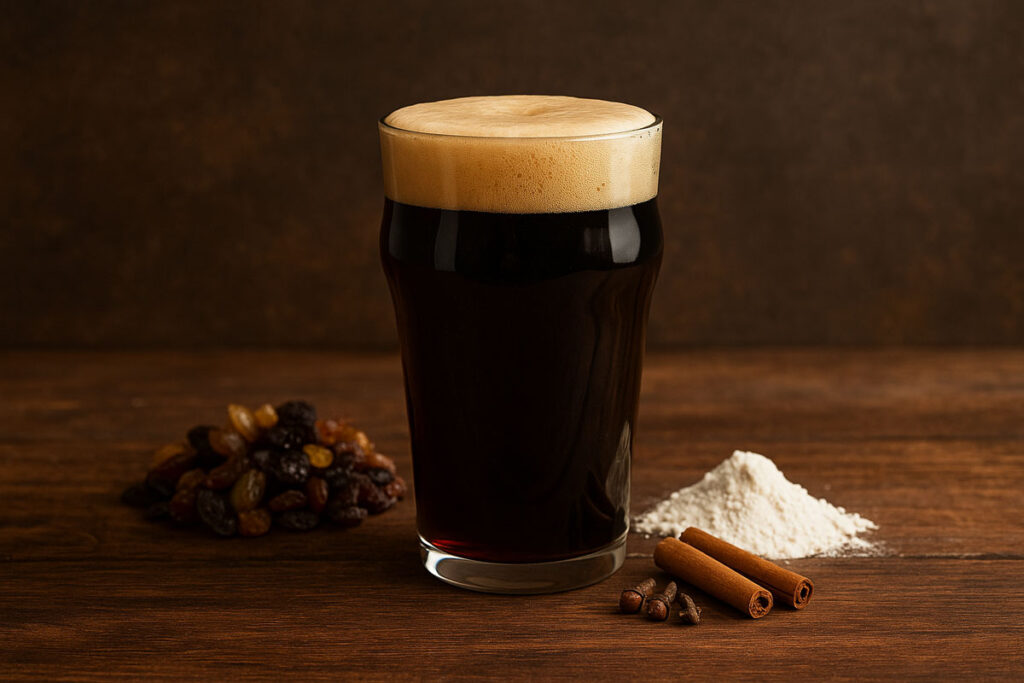
At the heart of every Porter Cake lies its namesake: a dark, malty beer such as Guinness. Traditionally, Irish porter was slightly sweeter and less bitter than stout, but modern recipes often use either. The alcohol content helps preserve the cake, while the roasted barley adds a deep, toasty flavor. When baked, porter doesn’t leave the cake tasting boozy—it lends it a rounded, nutty base that enhances the warmth of the spices and the richness of the fruit.
2. Dried Fruits – Sweetness and Chew
Irish home cooks made use of whatever dried fruits were available—usually raisins, sultanas, and currants. These fruits were sometimes soaked in porter before baking to help them plump up and absorb flavor. The sweetness of the fruit balances the slight bitterness of the beer, creating a harmonious flavor that deepens as the cake rests.
3. Butter and Brown Sugar – The Moisture Makers
Unlike some drier fruitcakes, Porter Cake is rich and tender, thanks to generous quantities of real Irish butter. Brown sugar is preferred over white, as it adds molasses notes that echo the beer’s malt. The fat and sugar ensure that the cake stays moist for days—if not weeks—after baking.
4. Flour and Raising Agent
Most traditional recipes call for plain flour and a modest amount of baking soda. The soda reacts with the acidity in the porter to create a gentle rise—not enough to make the cake airy, but just enough to avoid heaviness. The result is a close, satisfying crumb that holds its shape when sliced.
5. Spices – Warming and Aromatic
Mixed spice—a blend of cinnamon, nutmeg, cloves, and sometimes allspice or ginger—is what gives Porter Cake its signature warmth. These spices reflect Ireland’s long history of importing colonial goods through ports like Cork and Waterford. Over time, these exotic flavors became essential to Irish festive baking.
6. Optional Additions
While purists might stick to the basics, many bakers add extras like orange zest, chopped nuts (often almonds or hazelnuts), or even a spoon of treacle for darker flavor. In some recipes, a splash of Irish whiskey is added alongside the porter—especially around Christmas—to enrich the festive feel.
One of the most beautiful aspects of Porter Cake is its flexibility. The foundation remains the same, but each baker, each family, and each county in Ireland may add their own signature flourish. The result? A cake that is both consistent and customizable—ideal for tradition, yet open to innovation.
A Cake for All Seasons – Celebrations, Holidays, and Daily Life
Though it may have humble roots, Porter Cake became a beloved centerpiece for many Irish family traditions. Its rich flavor and long shelf life made it not only practical but also ceremonial. In a country where feasting often revolved around religious and seasonal rhythms, Porter Cake earned its place as a dependable, festive staple.
Everyday Cake with a Special Touch
Unlike some ornate desserts reserved strictly for holidays, Porter Cake had the rare honor of being both an everyday treat and a celebration centerpiece. In rural homes, it was common to bake a large Porter Cake at the beginning of the week and enjoy it in slices throughout the days that followed—especially with a pot of strong black tea. Children would often come home from school to find a wedge of Porter Cake and a glass of milk waiting for them at the kitchen table.
Weddings, Christenings, and Christmas
For larger events—like weddings or christenings—Porter Cake was often baked in big batches, sometimes days or even weeks ahead of time. Because of its dense structure and alcohol content, it kept well and actually improved with age. Bakers would wrap loaves in parchment and store them in tins, letting the flavors deepen. It wasn’t unusual for guests to take a slice home, often wrapped in tissue or wax paper, as a token of the celebration.
At Christmas, Porter Cake was sometimes served as a lighter, more accessible alternative to traditional plum pudding. Unlike the heavily boozed-up English Christmas cake, Irish Porter Cake was considered more “approachable”—and many families considered it a must-have on the holiday dessert table, especially in working-class homes. Its aroma—full of spice, fruit, and malt—became closely associated with the festive season.
Hospitality and Heritage
In Irish culture, offering food to guests is a sacred gesture. Porter Cake was a symbol of that spirit of hospitality. You’d find it at wakes, on church bake sale tables, in tins brought to neighbors after births or funerals. Its durability made it the perfect “just in case” cake—there was always a slice to offer visitors who stopped by unannounced.
Ritual and Memory
Many Irish people associate Porter Cake with their grandparents’ kitchens. The ritual of unwrapping the tin, slicing the dark, dense loaf, and serving it with tea was both comforting and ceremonial. Some families passed down handwritten recipes for generations, with penciled notes in the margins and small adjustments made over time. The cake itself became an heirloom of flavor and memory.
From milestone events to quiet moments by the hearth, Porter Cake provided a reliable sweetness in Irish life—unfussy, deeply flavorful, and quietly celebratory.
The Modern Revival – Recipes, Variations, and Twists
While Porter Cake may have once been a product of practicality, its nostalgic charm and deep, spiced flavor are inspiring a revival among today’s bakers. From food bloggers to café owners, a new generation is rediscovering this old Irish favorite and giving it a fresh spin—without losing what makes it special.
A Return to Traditional Baking
In recent years, there has been a growing interest in traditional Irish recipes and heritage baking. Porter Cake, with its honest ingredients and slow-baked richness, fits beautifully into this movement. Home bakers now proudly recreate their grandparents’ versions, sourcing Irish porter, organic dried fruits, and real butter to honor the past while appreciating quality.
Contemporary Twists
While many stick to the classic recipe, modern versions of Porter Cake are popping up with a range of creative updates:
- Chocolate Porter Cake: Cocoa powder or dark chocolate chunks are added to enhance the malted richness of the porter. Ideal for dessert lovers who want a deeper flavor profile.
- Mini Loaves and Cupcakes: Individual portions make the cake more shareable and easier to serve at events, bake sales, or holiday gatherings.
- Gluten-Free and Vegan Adaptations: With alternatives like gluten-free flour blends, vegan butter, and flax eggs, Porter Cake is now accessible to more dietary preferences.
- Orange & Whiskey Glaze: Some bakers finish the cooled cake with a thin glaze made from powdered sugar, orange juice, and a splash of Irish whiskey for extra festiveness.
Restaurant and Café Comebacks
Porter Cake has also returned to the menus of artisan bakeries, tearooms, and Irish-themed cafés around the world. Served warm with a dollop of cream or a drizzle of custard, it offers an authentic taste of Ireland that resonates with both locals and tourists. It’s not uncommon to see Porter Cake featured in food festivals or seasonal menus celebrating Irish heritage.
Pairing Suggestions
While the cake is still best friends with a strong cup of tea, modern pairings include:
- Craft stouts or porters – served on the side for a double hit of malty flavor
- Irish cream liqueur – sipped alongside or added to a glaze
- Spiced whipped cream – lightly flavored with cinnamon or nutmeg
Porter Cake Goes Global
Thanks to the Irish diaspora and the global popularity of Guinness, Porter Cake is now enjoyed far beyond Ireland’s shores. Irish-Americans and Irish-Australians frequently bake it around holidays like St. Patrick’s Day or Christmas. Food bloggers from the UK to the US are putting their own stamp on it—some adding espresso, others using local craft beers for a regional touch.
This modern revival is not about changing Porter Cake, but about making it accessible and personal again. The beauty of the cake lies in its adaptability—each variation a love letter to the original, but tuned to the baker’s own taste and traditions.
From Ireland to the World – Cultural Legacy and Emigrant Stories
Few cakes carry the emotional weight and cultural symbolism of Porter Cake. While it may have started as a practical bake in Irish kitchens, its journey across oceans, decades, and generations has turned it into a quiet ambassador of Irish identity. From Dublin to Boston, Galway to Sydney, this simple loaf has carried comfort, tradition, and memory wherever the Irish have gone.
Baking Across the Diaspora
For many Irish emigrants, Porter Cake became a way to preserve a connection to home. Its ingredients were relatively easy to find abroad, and its shelf-stable nature made it an ideal choice for care packages and long-distance journeys. In Irish-American communities, slices of Porter Cake were often shared during wakes, christenings, or around holiday tables—serving as both a treat and a symbol of roots that endured across time and place.
Some emigrants adapted the recipe based on what was available: California raisins instead of sultanas, American porter or ale instead of Guinness, molasses instead of treacle. Yet, the spirit of the cake remained intact. It was still dense, deeply flavored, and made with intention—baked not just for taste, but for tradition.
A Taste of Home
Countless personal stories link Porter Cake to family memory. One woman in New York recalled how her grandmother used to mail loaves from County Clare wrapped in brown paper, with notes tucked inside the folds. A man in Toronto remembered how the cake was always the first thing on the table at their St. Patrick’s Day gatherings. These cakes weren’t just baked goods—they were edible heritage, passed on with love and pride.
In Irish nursing homes, some residents with memory loss are said to recall the scent of Porter Cake before they recall names. In homesick letters from the 1950s, the craving for “Mam’s fruit loaf with the Guinness” appears more than once. Even among younger generations, there’s a growing curiosity about the traditional foods their ancestors loved—and Porter Cake is often a starting point.
Symbol of Continuity
More than just a dessert, Porter Cake represents resilience. It endured war, rationing, emigration, and modernization. It adapted without losing its essence. It stood the test of time because it was built for it—its strong flavors, long shelf life, and cultural versatility made it a survivor among Irish recipes.
Bringing It Forward
Today, Porter Cake is experiencing a gentle renaissance. Irish food historians write about it, artisanal bakeries experiment with it, and Irish families around the world return to it. Whether served in thick slices at a family wake or baked in cupcake form for a school project on Irish heritage, it continues to nourish both body and memory.
In a fast-paced world, the act of making Porter Cake—from stirring in the porter to watching the loaf rise—slows us down. It asks us to reflect, to connect, and to taste the past. And in doing so, it becomes more than food. It becomes a story worth sharing—again and again.
Conclusion
Porter Cake is far more than just an old-fashioned fruitcake. It’s a legacy loaf—rooted in history, flavored by tradition, and adaptable enough to follow the Irish wherever they roam. Whether baked for a holiday, shared with loved ones, or discovered for the first time in a modern kitchen, Porter Cake offers a sweet and spiced window into Ireland’s culinary soul.
So next time you open a bottle of Guinness, consider setting aside a cup for the cake tin. You won’t just be baking a dessert—you’ll be honoring generations of Irish hands that stirred, poured, and sliced before you.