


Table of Contents
- Introduction
- The Bread and the Pig’s Foot
- Treasures from Land and Sea
- Sweet Traditions from the Past
- Potato Classics and Family Recipes
- Forgotten Irish Desserts
- Conclusion
Introduction
Many visitors arrive in Ireland eager to sample the country’s most famous dishes. Irish stew, soda bread, seafood chowder, and a full Irish breakfast often top the list. While these well-known favorites certainly deserve their popularity, they represent only a small part of Ireland’s rich culinary heritage.
Across the island, local communities have preserved foods that rarely appear in guidebooks or tourist-oriented restaurants. Some are deeply tied to a particular county, while others are traditional dishes that have slowly faded from everyday use. Together, they offer a fascinating glimpse into the foods that sustained generations of Irish families and reflect the country’s history, geography, and culture.
If you’re looking to experience a more authentic side of Irish cuisine, these ten lesser-known foods are worth seeking out.
The Bread and the Pig’s Foot
Blaa
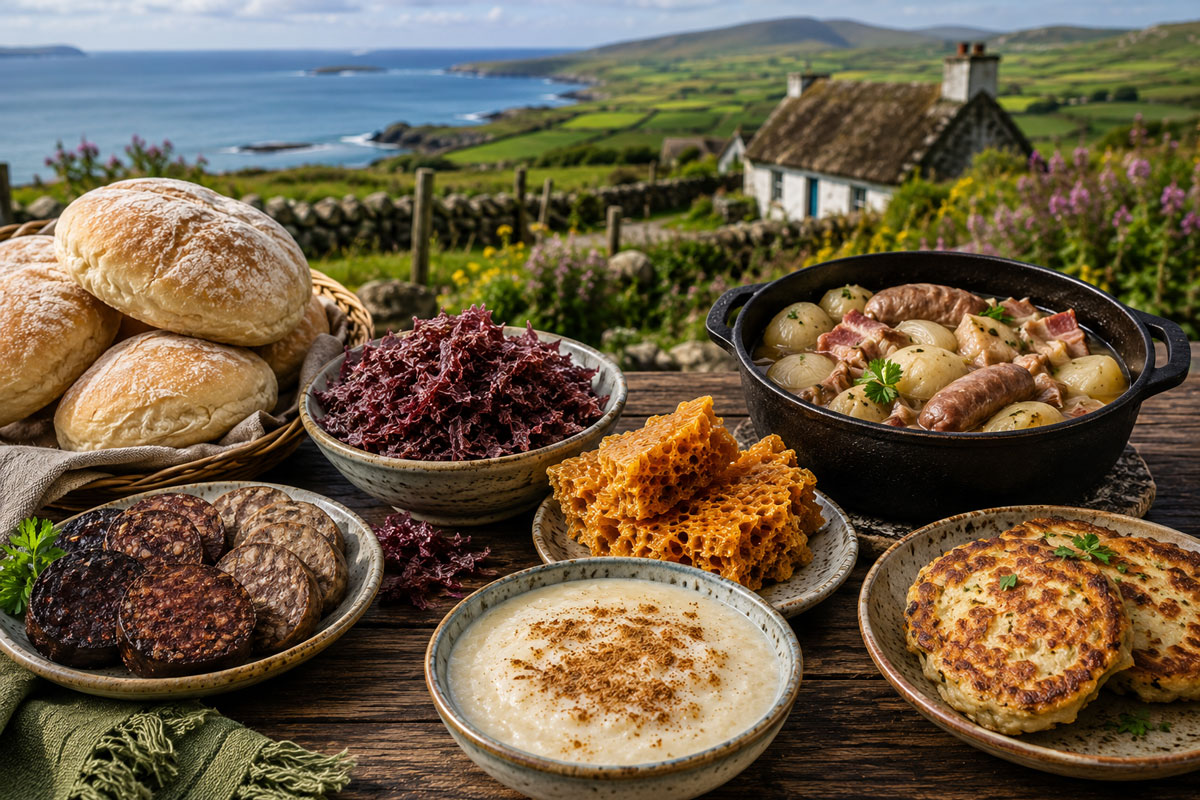
One of Ireland’s most distinctive regional breads is the blaa, a soft white bread roll traditionally associated with County Waterford. Its lightly flour-dusted exterior and airy interior make it instantly recognizable to locals. The bread has such a strong connection to the area that it enjoys protected geographical status, helping preserve a baking tradition that stretches back centuries.
Locals enjoy blaas with everything from breakfast sausages and bacon to simple ham and butter. Despite its popularity in Waterford, many tourists never encounter it because it remains largely a regional specialty rather than a nationwide staple.
Crubeens
Crubeens, or pig’s feet, are a reminder of an older Ireland where little was wasted and every part of the animal was used. Traditionally associated with Cork, crubeens were boiled until tender and sometimes roasted or breaded before serving.
While the dish may seem unusual to modern visitors, it reflects a practical approach to food that was common throughout rural Ireland. Today, crubeens are far less common but remain an important piece of Ireland’s culinary history.
Treasures from Land and Sea
Dulse
Dulse is a red seaweed harvested along Ireland’s rugged Atlantic coastline. For generations, coastal communities gathered and dried it as a convenient snack. Rich in minerals and naturally salty, dulse was often eaten by fishermen, farmers, and travelers who appreciated its long shelf life.
Today, dulse has attracted renewed interest among chefs and food enthusiasts, but traditional dried dulse remains a uniquely Irish experience that many visitors overlook.
Drisheen
Native to Cork, drisheen is one of Ireland’s most distinctive traditional foods. Made from sheep’s or cattle blood combined with milk and seasonings, it resembles blood pudding but has a softer texture and milder flavor.
Historically served with tripe, drisheen formed part of a wider tradition of using every available ingredient. Although it remains a source of local pride in Cork, it is rarely found outside the region and remains one of Ireland’s more elusive culinary specialties.
Sweet Traditions from the Past
Yellowman
Yellowman is a crunchy honeycomb-style confection strongly associated with the famous Ould Lammas Fair in Ballycastle, County Antrim. Its bright golden color and brittle texture make it instantly recognizable to those familiar with the fair.
For many families, Yellowman is closely linked with childhood memories and annual visits to one of Ireland’s oldest traditional fairs. Unless visitors happen to be in the right place at the right time, they may never encounter this beloved treat.
Goody
Goody is perhaps one of Ireland’s simplest traditional desserts. Made by soaking bread in warm milk flavored with sugar and spices, it was often prepared as a comforting family treat.
Though humble in appearance, goody reflects the resourcefulness of Irish households, where simple ingredients were transformed into satisfying dishes. Today it survives mainly in family recipe books and traditional kitchens rather than restaurant menus.
Potato Classics and Family Recipes
Boxty Dumplings
Many people know boxty as a potato pancake, but traditional boxty appeared in several forms depending on the region. In parts of northwestern Ireland, potato-based dumplings made from boxty mixtures were added to soups and stews.
These hearty dumplings helped stretch meals and provided much-needed nourishment during colder months. While modern restaurants may feature boxty pancakes, the older dumpling version is much harder to find.
Traditional Coddle
Dublin coddle is often mentioned in Irish food guides, but few tourists experience the authentic home-cooked version. Traditional coddle was made by slowly simmering sausages, bacon, potatoes, and onions for hours, creating a deeply comforting dish.
Every family developed its own variation, making coddle less of a fixed recipe and more of a culinary tradition. The best versions are often found in family kitchens rather than restaurants.
Forgotten Irish Desserts
Carrageen Moss Pudding
Carrageen moss is a seaweed gathered along Ireland’s coast that has long been used as a natural thickening agent. When simmered with milk, it creates a delicate pudding often flavored with vanilla, lemon, honey, or even a splash of whiskey.
The dessert highlights how coastal communities made creative use of local ingredients long before commercial thickeners became available. It remains one of Ireland’s most unique traditional sweets.
Flummery
Flummery is another dessert that has largely disappeared from modern menus. Traditionally made from oatmeal, cream, and sweeteners, it was once a common feature of rural Irish households.
Different regions developed their own versions, some incorporating fruit while others emphasized a rich, creamy texture. Though rarely seen today, flummery offers a fascinating glimpse into Ireland’s dessert traditions before the arrival of modern convenience foods.
Conclusion
Ireland’s food culture extends far beyond the dishes most visitors encounter during a short trip. Foods such as blaa, dulse, drisheen, Yellowman, carrageen moss pudding, and flummery preserve stories of coastal communities, farming families, local fairs, and regional traditions that have shaped Irish life for centuries.
Seeking out these lesser-known foods can provide a deeper appreciation of Ireland’s culinary heritage and offer experiences that many tourists miss entirely. While they may not be as easy to find as Irish stew or soda bread, they represent some of the most authentic and memorable flavors the island has to offer.