

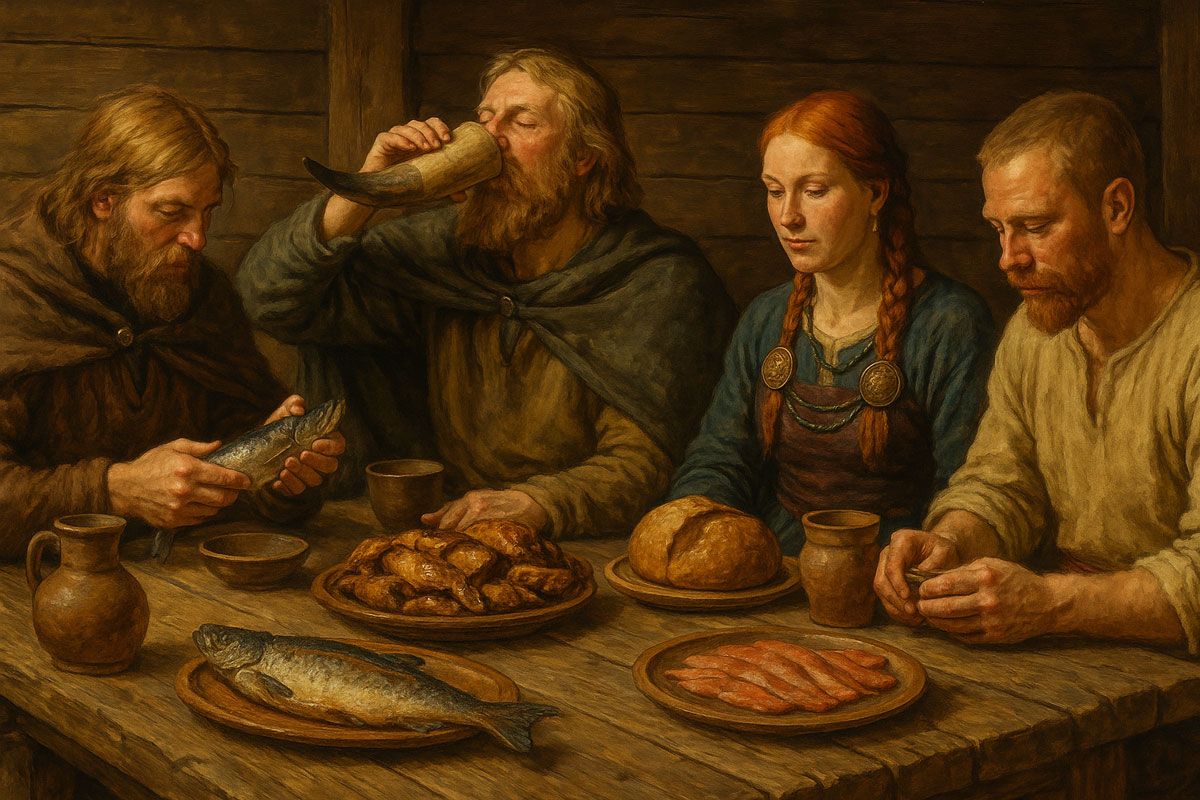
When the Norse seafarers first set foot on Irish shores in the late 8th century, they brought with them more than longships and battle axes. They carried food traditions, cooking techniques, and a deep connection to the sea that would leave a lasting mark on Irish cuisine. Today, traces of Viking influence can still be found in the flavors of coastal Ireland, from smoked fish to honeyed mead. In this article, we’ll explore how Viking settlers shaped the Irish food landscape, blending Norse traditions with Gaelic practices to create something uniquely Irish.
Table of Contents
- The Arrival of the Vikings and Their Culinary Traditions
- The Viking Settlements in Ireland: Ports, Trade, and Food Exchange
- Norse Ingredients Meet Irish Staples: The Fusion of Two Food Cultures
- Viking Food Preservation: Smoking, Salting, and Fermenting in Ireland
- Lasting Culinary Legacies: Mead, Fish, and Seafaring Foods Today
The Arrival of the Vikings and Their Culinary Traditions
The story of Viking influence on Irish food begins with the first recorded raid on Irish soil in 795 AD, when Norse raiders attacked the monastery of Lambay Island. Over the next two centuries, these Scandinavian seafarers established strongholds in Dublin, Waterford, Limerick, Wexford, and Cork. While they are often remembered for warfare and trade, their presence also introduced new ingredients and cooking practices to Ireland.
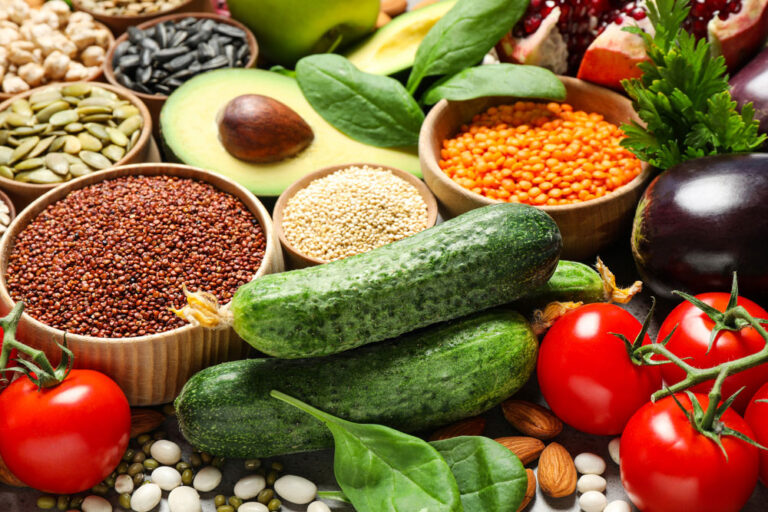
The Viking diet was shaped by the harsh climates of Scandinavia, where farming was limited and the sea provided much of the sustenance. They relied heavily on fish, especially herring and salmon, as well as preserved meats such as smoked lamb and pork. Grain was equally important, with barley and rye forming the base for breads and porridges. Dairy, too, was central to their diet, with butter, cheese, and milk forming everyday staples. Perhaps most famously, the Vikings brewed mead (honey wine) and ale, which they carried across the seas to their new settlements.
When they arrived in Ireland, these Norse foodways merged with the existing Gaelic traditions of farming, foraging, and cattle-rearing. The Irish already had a rich diet of beef, pork, oats, and dairy, but the Vikings brought new preservation methods and seafaring flavors that would shape the culinary future of coastal towns. The cultural exchange went both ways: the Vikings adopted local ingredients like oats and adapted their diet to Ireland’s fertile soil and mild climate, while the Irish absorbed techniques like salting, smoking, and fermenting that transformed how food was prepared and stored.
Beyond survival, Viking feasting traditions also influenced Irish society. Norse banquets celebrated victories and honored gods with roasted meats, hearty stews, and plenty of ale. These gatherings were as much about social bonds as they were about nourishment, echoing the Gaelic feasting culture but with distinctly Nordic touches. Such communal celebrations left a lasting impression on Irish food culture, where hospitality and shared meals remain central even today.
The Viking Settlements in Ireland – Ports, Trade, and Food Exchange
Once the Vikings moved beyond raiding and began settling in Ireland, their relationship with food evolved from survival to trade and cultural exchange. By the 9th and 10th centuries, the Norse had established fortified settlements known as longphorts along Ireland’s coast. These bases grew into some of the country’s most important towns and cities—Dublin, Waterford, Limerick, Wexford, and Cork. Each became a hub not only for commerce and defense, but also for food distribution and culinary innovation.
The Vikings were expert traders who connected Ireland to a vast network stretching from Scandinavia to the Mediterranean and beyond. Through these maritime routes, exotic ingredients began to trickle into Irish markets. Salt, spices, dried fish, and grains arrived from abroad, while Ireland exported hides, wool, and livestock. Most importantly, the Viking settlements opened up Ireland’s access to preserved foods, which were vital for long voyages and long winters.
Dublin in particular became a bustling trading port under Viking control. Archaeological digs in the city have uncovered fish bones, grain stores, and even fragments of cooking pots that reveal a blending of Scandinavian and Gaelic food practices. Evidence shows that salted herring, dried cod, and imported walnuts were circulating through the city, alongside native Irish staples like oats, barley, and pork. This mingling of ingredients created a more diverse diet than either culture had previously enjoyed alone.
In addition to trade, the settlements introduced new forms of communal cooking and market culture. Viking marketplaces were lively scenes where freshly caught fish, farm produce, and imported goods were bartered and sold. These open-air exchanges influenced the development of Irish markets, many of which retained a focus on fish and livestock long after the Norse presence faded. In this way, Viking commerce helped shape the way Irish food was distributed and consumed for centuries to come.
Beyond commerce, food was also a tool of diplomacy and integration. Shared meals in Norse-Irish households symbolized alliances between Viking settlers and local clans. Marriages often bound the two cultures together, with women bringing traditional recipes and cooking techniques into blended households. In time, Irish coastal communities absorbed Viking preservation methods and seafaring staples, while the Vikings adopted Irish dairy, grains, and feasting traditions.
By the end of the Viking Age, Ireland’s coastal towns had become gateways of flavor, enriched by trade and cultural exchange. The markets of Dublin and Waterford were filled with foods that bore the stamp of both Norse and Gaelic traditions.

Norse Ingredients Meet Irish Staples – The Fusion of Two Food Cultures
As Viking settlers became part of Irish life, their foodways began to blend with the established Gaelic diet. This culinary fusion was not immediate but unfolded gradually through trade, intermarriage, and shared survival. The resulting mix created new flavors that enriched Ireland’s food traditions and left a legacy that can still be traced today.
The Vikings were masters of the sea, bringing with them a diet rich in fish—particularly herring, cod, and salmon. Ireland, too, had a long tradition of fishing, but the Norse influence elevated its importance. Smoked salmon and dried fish became more common in Irish diets, especially in coastal settlements, while Viking methods of preserving fish for long winters or voyages spread inland. These techniques ensured a more reliable protein supply year-round, something that was transformative for Irish communities.
Grains were another point of cultural crossover. The Irish relied heavily on oats, which thrived in the damp climate, while the Vikings introduced a greater use of barley and rye. Together, these grains broadened the options for porridges, breads, and ales. Archaeological finds suggest that the bread eaten in Viking Dublin was a mix of rye and barley, a style of bread unfamiliar to the Gaelic Irish at the time but one that became part of the evolving diet.
Meat was central to both cultures, but the Vikings’ expertise in salting and smoking pork, lamb, and beef added a new dimension to Irish cuisine. The Irish already prized pork and beef, but with the Norse methods of preservation, meat could last longer and be transported more easily. This not only influenced everyday diets but also the feasting traditions that both cultures held dear. Joint feasts would often feature a mix of roasted meats, fresh dairy, and preserved fish—a true blend of Norse and Irish fare.
Dairy, long established as a cornerstone of Irish life, also took on new forms under Norse influence. While the Irish produced butter and soft cheeses, the Vikings introduced harder cheeses and techniques for storing dairy through the colder months. This exchange reinforced dairy as a dietary staple and gave Irish communities more variety in their dairy products.
One of the most symbolic examples of fusion came in drink. The Vikings brought their passion for mead and ale, brewed from honey and grains. The Irish, who were already brewing their own ales from oats and barley, absorbed these methods, creating a stronger brewing culture in Ireland. Mead, in particular, became a celebrated drink at feasts, blending Irish hospitality with Norse festivity.
This gradual blending of ingredients and methods created what could be described as an early “fusion cuisine” in Ireland. Neither purely Norse nor purely Gaelic, it reflected the realities of shared life, trade, and intermarriage. By combining the best of land and sea, fresh and preserved, the Irish food landscape gained new flavors and greater resilience.
Viking Food Preservation – Smoking, Salting, and Fermenting in Ireland
One of the most significant contributions the Vikings made to Irish food culture was the refinement of preservation techniques. In Scandinavia, where harsh winters limited fresh food supplies, the Norse developed reliable methods for extending the life of meat, fish, and dairy. When they settled in Ireland, they brought these skills with them, and Irish communities quickly adopted and adapted them. The result was a transformation in how food was stored, transported, and enjoyed throughout the year.
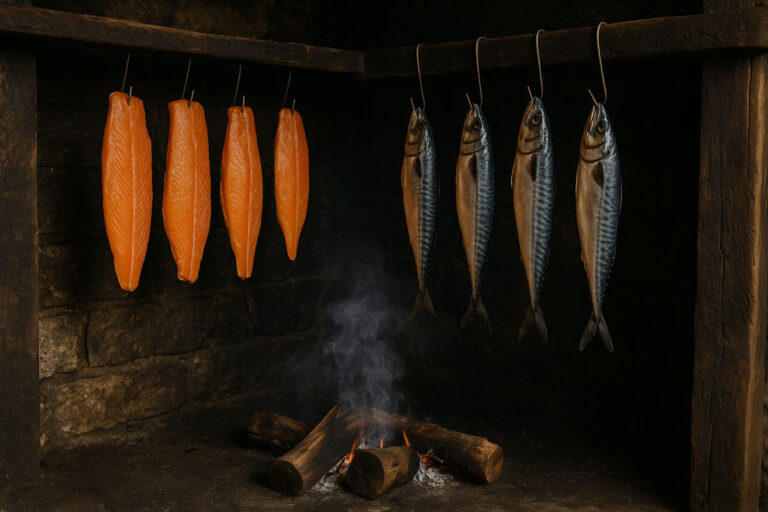
Smoking was perhaps the most enduring Viking preservation method. Archaeological evidence from Viking Dublin points to the widespread use of smokehouses, where salmon, herring, and other fish were cured to last weeks or even months. Smoking also imparted a distinct, savory flavor that became a culinary signature in coastal Ireland. Today, smoked salmon remains one of Ireland’s most iconic foods, a tradition that can be traced back to these early Norse techniques.
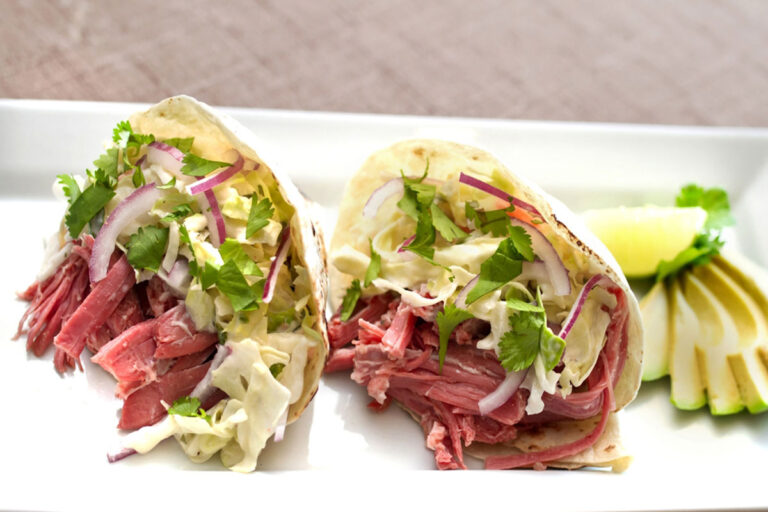
Salting was another essential practice. The Vikings had access to sea salt from their trading networks and used it to preserve pork, beef, and fish. Salting not only made food last longer but also allowed it to be transported across long distances, whether on a voyage to Iceland or traded through Dublin’s bustling port. Irish communities adopted salting, particularly for pork—a meat already central to the Gaelic diet. Over time, this gave rise to beloved dishes such as salted bacon and ribs, which remained staples for centuries.
Fermentation was a practice the Vikings excelled in, applying it to fish, grains, and even dairy. Fermented fish, while not universally embraced in Ireland, was an important survival food in Norse culture. More successful was the adoption of fermented dairy techniques, which produced stronger cheeses and yogurts that lasted through the seasons. The Vikings also bolstered Ireland’s brewing traditions with new methods of fermenting grains and honey into ales and mead, strengthening Ireland’s reputation as a land of hospitality and hearty drink.
These preservation techniques had profound implications. They made it possible for coastal Irish towns to sustain larger populations, as food could be stored for the lean months. They also opened the door to more robust trade: salted and smoked goods were easier to transport and sell in foreign markets. Just as importantly, these methods influenced Irish cooking styles, introducing flavors that became woven into the nation’s food identity.
What began as survival strategies became cornerstones of Irish cuisine. The smoky, salty, and fermented flavors introduced by the Vikings not only fed households but also shaped culinary preferences that endured long after the Norse had faded from political power. Even today, dishes like smoked salmon, salted ribs, and craft ales echo these ancient techniques.
Lasting Culinary Legacies – Mead, Fish, and Seafaring Foods Today
Although the Viking Age in Ireland came to an end nearly a thousand years ago, the Norse imprint on Irish food culture has never fully disappeared. From smoked salmon to honeyed mead, the echoes of those seafaring settlers are still present in Ireland’s kitchens, pubs, and coastal markets. Their contributions blended seamlessly with Gaelic traditions, creating enduring legacies that continue to define Irish food today.
Smoked and salted fish remain at the heart of Ireland’s culinary identity. While fish was always part of the Irish diet, it was the Viking mastery of smoking and salting that ensured these foods became staples not only of survival but also of taste. Modern Irish smoked salmon, a celebrated delicacy served at festive occasions and enjoyed worldwide, is directly descended from these Norse techniques. Salted fish, though less common today, paved the way for Ireland’s historical reliance on preserved foods during hard winters and lean times.
Mead and ale are another enduring legacy. Viking feasts revolved around these drinks, brewed with honey, barley, and sometimes fruit. In recent years, mead has experienced a revival in Ireland, with craft producers recreating ancient recipes for a modern audience. Similarly, Ireland’s brewing culture, famously represented by stout and ale, owes a debt to Norse fermentation practices that strengthened brewing traditions centuries ago.
Market culture also bears traces of Viking influence. The Norse-established ports—Dublin, Waterford, Cork, Limerick, and Wexford—remain some of Ireland’s busiest centers of trade and food distribution. Weekly markets in these towns, with their emphasis on fresh fish, meats, and breads, mirror the bustling open-air exchanges the Vikings once held along their fortified harbors. The idea of food as both commerce and community gathering has endured, linking modern Irish towns back to their Norse beginnings.
Seafaring foods are perhaps the most symbolic connection. The Vikings lived by the sea, and their reliance on it influenced Irish food culture in lasting ways. Coastal Ireland continues to celebrate its bounty of seafood, from mussels and oysters to mackerel and herring. These dishes not only provide sustenance but also honor a shared maritime heritage that began with Norse settlers steering their longships into Irish bays.
Finally, the Viking legacy lives on in the cultural memory of feasting and hospitality. Both Norse and Gaelic societies placed great importance on shared meals as a sign of strength, unity, and community. This tradition is alive in Ireland today, where food and drink remain central to celebration and togetherness.
Conclusion: The Viking influence on Irish food is a story of adaptation and integration. While they arrived as raiders, the Norse left behind gifts of preservation, brewing, and trade that strengthened Ireland’s culinary traditions. Smoked salmon, salted pork, mead, and seafood feasts still carry the flavors of that era, reminding us that Irish cuisine has always been shaped by the meeting of cultures. The fusion of Norse and Gaelic foodways created a resilient, flavorful heritage—one that continues to thrive in Ireland’s kitchens and markets today.