


Table of Contents
- Ireland’s Root Vegetable Tradition
- Forgotten Roots of the Irish Garden
- How These Vegetables Were Grown and Cooked
- Why They Disappeared from the Table
- A Slow Revival of Ireland’s Rooted Food Culture
Ireland’s Root Vegetable Tradition
For much of Ireland’s history, root vegetables formed the backbone of everyday cooking. Long before supermarkets, refrigeration, or imported produce, the Irish diet depended heavily on what could be grown locally, harvested at the right moment, and stored safely through the long winter months. While the potato remains the most famous of these crops, it was once only one element of a much broader and more varied root-based food tradition.
Rural households relied on gardens, small fields, and marginal land to produce vegetables that would sustain families when fresh greens were scarce. Root crops offered reliability. Growing beneath the soil, they were protected from early frosts and harsh weather, and once harvested, they could be stored for months without spoilage. This made them invaluable in a country where food security depended largely on self-sufficiency.
Many traditional Irish root vegetables have faded quietly from the table. Some were displaced by modern farming practices, others by changing tastes, convenience, or the availability of imported produce. Yet these vegetables once played a vital role in sustaining rural households and shaping Irish cooking. Today, they survive mostly in memory, folklore, agricultural records, and the occasional heritage garden.
Ireland’s climate and soil were particularly well suited to root crops. Cool temperatures, consistent rainfall, and fertile ground made it possible to grow vegetables that could be harvested in autumn and relied upon throughout the winter. In a society where a failed harvest could mean real hardship, this dependability was essential.
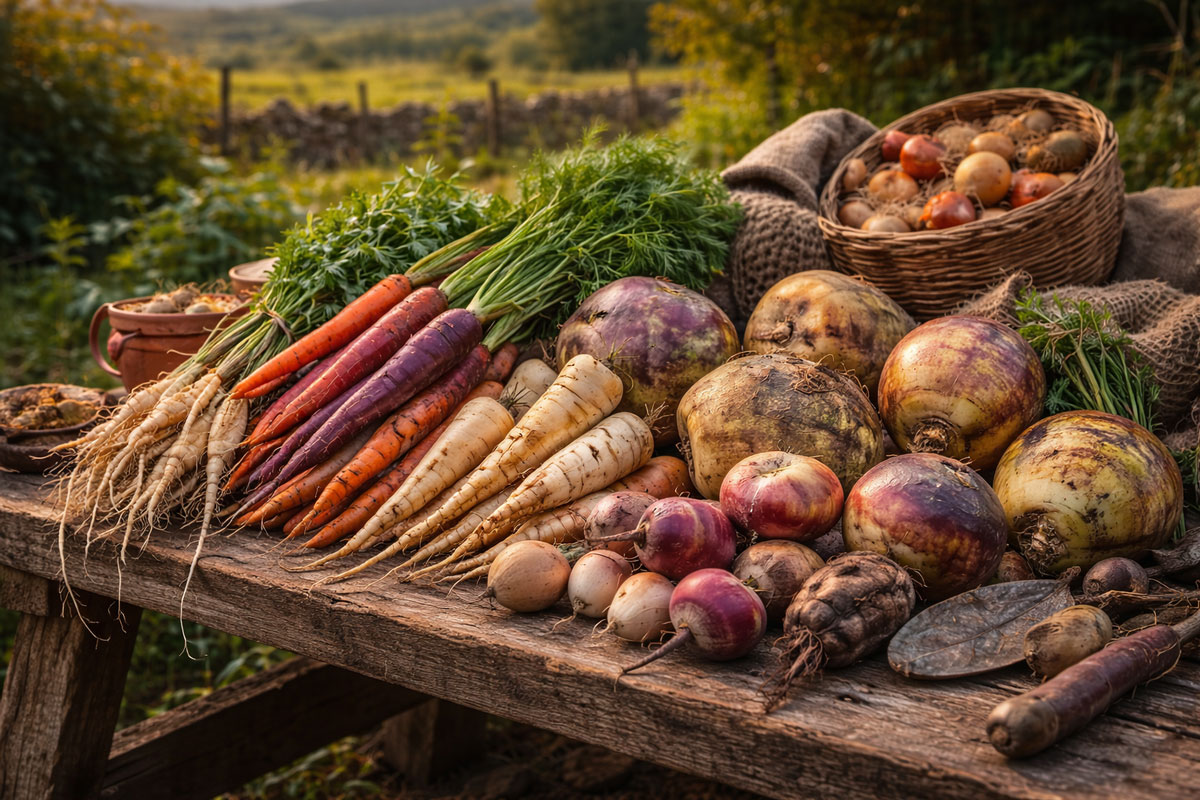
Before the potato became dominant, Irish gardens were far more diverse. Parsnips, turnips, swedes, carrots, and lesser-known roots all contributed to a varied diet that balanced nourishment with practicality. Together, these vegetables formed the foundation of a food culture shaped by resilience rather than abundance.
Forgotten Roots of the Irish Garden
One of the most overlooked root vegetables in Irish food history is skirret. Once cultivated in parts of Europe, including Ireland, skirret was prized for its natural sweetness and starchy texture. It grows in clusters of slender white roots and was often described as tasting somewhere between parsnip and carrot.
Skirret was typically boiled or roasted and served with butter, making it a valuable energy source in colder months. Its sweetness also meant it could be used in both savoury and lightly sweetened dishes, particularly when sugar was scarce. Despite its usefulness, skirret required careful preparation, which may have contributed to its gradual decline.
Parsnips were once far more prominent in Irish cooking than they are today. Before the widespread adoption of the potato, parsnips provided a reliable source of carbohydrates and were valued for their sweetness and versatility. They were boiled, mashed, roasted, or added to stews, and in some cases used in baking or fermentation.
Turnips and swedes were also central to Irish winter cooking. Easy to grow and highly resilient, they thrived in poorer soils and colder conditions where other crops struggled. These vegetables were particularly important in upland and western regions, where farming conditions were challenging and dependable crops were essential.
Carrots have a long history in Ireland, though early varieties were often pale yellow, white, or purple rather than the familiar bright orange. These older carrots had stronger, earthier flavours and were well suited to long cooking in soups and broths.
Scorzonera and salsify, sometimes referred to as “oyster roots,” were grown in small quantities, particularly in estate gardens and monastic settings. Their mild, slightly seafood-like flavour made them unusual but valued, especially during fasting periods when meat was avoided.
How These Vegetables Were Grown and Cooked
Traditional Irish cooking treated root vegetables with respect but little embellishment. The emphasis was always on nourishment and practicality rather than display. Boiling, mashing, and stewing were the most common methods, allowing vegetables to be cooked slowly and evenly while preserving their sustenance.
Roots were often combined in a single pot, creating layered flavours and textures. Butter, salt, and occasionally herbs were used sparingly. In households with access to dairy, milk or buttermilk softened flavours and added richness, turning simple vegetables into filling meals.
These vegetables were rarely meant to dominate a dish. Instead, they supported it, stretching small amounts of meat, thickening broths, and providing bulk during long winters. A pot of root vegetables simmering on the hearth could feed a family for days.
Some roots, particularly parsnips and carrots, were occasionally sweetened and served as simple desserts, especially when fruit was unavailable. Others were preserved through drying, clamping, or storage in pits lined with straw or earth to extend their usefulness.
Cooking knowledge was passed down through practice rather than written recipes. Knowing when a root was ready to harvest, how long it would store, and how best to cook it was part of everyday rural knowledge.
Why They Disappeared from the Table
Several factors contributed to the disappearance of many traditional Irish root vegetables. Industrial agriculture prioritised uniformity, high yields, and ease of harvest, favouring crops that suited mechanisation and large-scale production.
The potato’s dominance, combined with imported produce and changing cooking habits, reduced the need for a wide variety of root vegetables. As diets shifted and convenience became more important, vegetables that required peeling, long cooking, or unfamiliar preparation gradually fell out of favour.
Knowledge loss also played a role. As fewer people grew these vegetables, fewer knew how to cook them. Without familiarity, many roots came to be seen as old-fashioned, poor food, or animal feed rather than valuable ingredients.
Urbanisation further widened the gap. As people moved away from rural life, the connection to seasonal growing and storage weakened, and supermarket availability reshaped expectations of what food should look like and how it should taste.
A Slow Revival of Ireland’s Rooted Food Culture
In recent years, interest in heritage vegetables has begun to return. Small-scale growers, seed savers, chefs, and food historians are rediscovering traditional Irish root vegetables and experimenting with their cultivation once more.
These vegetables appeal to modern cooks seeking sustainability, flavour, and a connection to the past. Their resilience, low input requirements, and suitability to Irish growing conditions make them particularly relevant in conversations about food security and climate adaptation.
Traditional Irish root vegetables tell a story of survival, adaptation, and quiet ingenuity. They remind us that Irish cooking was once deeply seasonal, shaped by necessity and local knowledge rather than abundance or convenience.
By revisiting these forgotten roots, we gain a fuller understanding of Ireland’s food history—one that extends beyond the potato and reflects a richer, more varied culinary landscape. In doing so, we reconnect not only with ingredients, but with the rhythms of land, season, and tradition that once sustained everyday life.