
Stretching over 2,500 km along Ireland’s rugged western coastline, the Wild Atlantic Way is one of the world’s longest defined coastal touring routes. Famous for its breathtaking landscapes, windswept cliffs, and charming villages, this journey is also a feast for the senses. From fresh Atlantic seafood to farmhouse cheeses, traditional breads, and locally crafted drinks, the Wild Atlantic Way offers a culinary experience as unforgettable as its scenery. If you’re exploring this iconic route, you can also check out our full Wild Atlantic Way travel guide at IrishTravelHub.com for must-see stops along the journey.
Table of Contents
- Introduction: The Wild Atlantic Way as Ireland’s Culinary Highway
- Donegal to Sligo – From Seaweed Shores to Hearty Lamb
- Mayo to Galway – Oysters, Festivals, and Farmhouse Traditions
- Clare to Kerry – Coastal Comforts and Rustic Flavors
- Cork – Ireland’s Foodie Capital at the Journey’s End
The Wild Atlantic Way as Ireland’s Culinary Highway
The Wild Atlantic Way is more than a scenic road trip—it’s a living pantry of Ireland’s finest ingredients and food traditions. Every region along the route boasts its own specialties, from the seaweed-rich diets of Donegal, to Galway’s famous oysters, Kerry’s world-class lamb, and Cork’s bustling food markets. Travelers who follow this path can savor not just the flavors of Ireland, but the history, heritage, and hospitality behind each dish.
Donegal to Sligo – From Seaweed Shores to Hearty Lamb
The northern gateway to the Wild Atlantic Way begins in County Donegal, where untamed coastlines and traditional foodways still shape daily life. Here, the Atlantic Ocean provides an abundance of shellfish, while seaweed—long a staple in local diets—remains a prized ingredient. Known as Ireland’s “sea vegetable,” seaweed is foraged fresh from the shore and used in soups, breads, and even sweet treats like dulse paired with caramel.
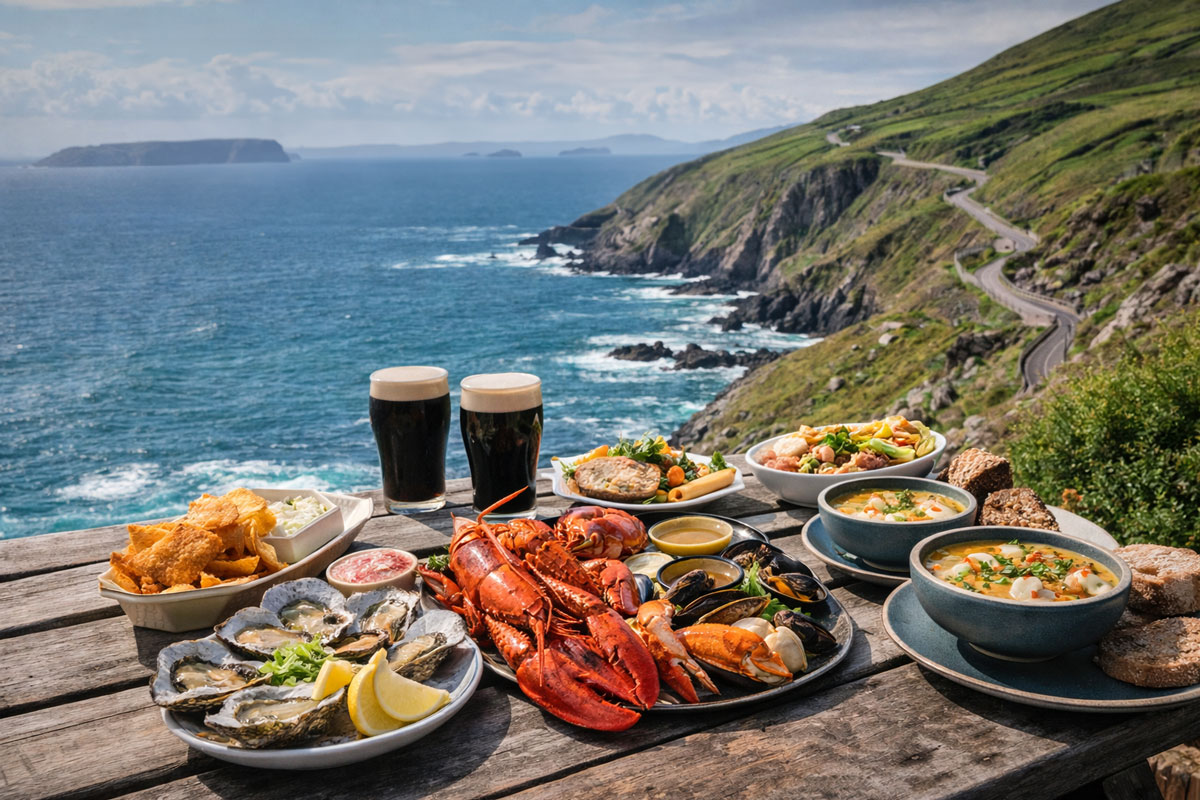
Seafood lovers will find Donegal irresistible, with fresh lobster, mussels, and crab available in coastal villages. Traditional dishes such as coddle of fish and smoked mackerel highlight the strong seafaring heritage of this region. For something more unusual, visitors can sample dulse, a dried seaweed snack that has sustained coastal communities for generations.
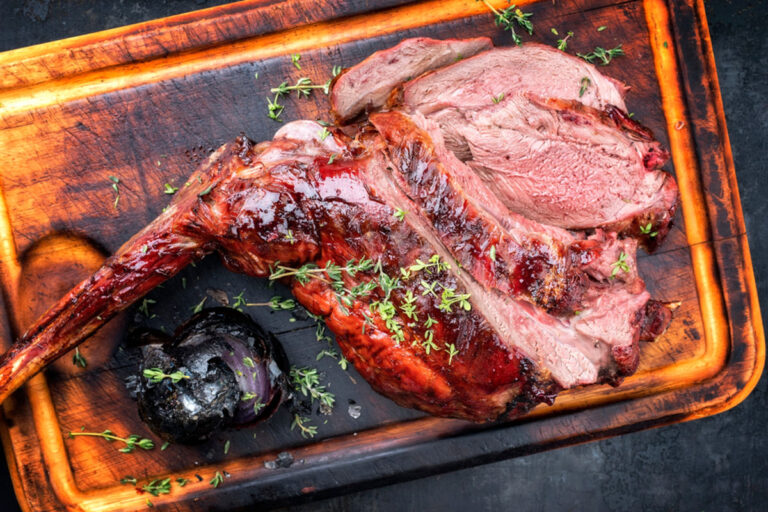
Traveling south into Sligo, the landscape shifts to rolling hills and fertile farmland. This is prime sheep country, where Sligo lamb is renowned for its tender, flavorful meat thanks to the salt-rich grasses the animals graze on near the coast. Pair it with locally grown root vegetables, and you have a meal that reflects the rugged but generous land.
Sligo is also becoming a hub for artisan food producers. From hand-crafted cheeses to organic vegetables and sourdough bread, the county’s small-scale farmers and food innovators are breathing new life into traditional Irish flavors. Farmers’ markets in Sligo town are perfect for sampling these goods, offering everything from wildflower honey to locally roasted coffee.
In this stretch of the Wild Atlantic Way, food reflects both the sea and the land—simple, honest, and deeply tied to place. Whether you’re slurping fresh mussels in Donegal or savoring a roast of Sligo lamb, you’re tasting the heart of Ireland’s northwest.
Mayo to Galway – Oysters, Festivals, and Farmhouse Traditions
Heading south along the Wild Atlantic Way, County Mayo greets travelers with a rugged coastline dotted with fishing villages. Here, food traditions are as enduring as the landscapes themselves. Freshly caught Atlantic salmon, wild mussels, and cockles are celebrated in local pubs and restaurants. For generations, families in Mayo have also relied on the humble potato, often paired with fresh fish or turned into hearty dishes like pratie oaten—a sweet griddle bread of mashed potatoes and oats.
As the road winds into Galway, food culture takes on a festive atmosphere. The city is famous for the Galway International Oyster and Seafood Festival, held every September, which draws visitors from across the globe to sample the finest oysters harvested from Galway Bay. These oysters, known for their briny sweetness, are considered among the best in the world and are often enjoyed with a splash of lemon or paired with a pint of Guinness.
Galway’s food scene extends well beyond oysters. The county is home to a thriving network of farmhouse cheese makers, craft brewers, and small-scale distillers. Visitors can sample everything from creamy goat cheese to artisan chocolates and innovative gins infused with local botanicals. Traditional music spills out from pubs, where hearty bowls of seafood chowder and freshly baked brown bread keep both locals and visitors well-fed.
Farmhouse traditions are deeply rooted here, too. Many rural families still bake soda bread daily, churn butter, and tend to small herds of cattle or sheep. This connection to the land gives Galway’s food its unmistakable authenticity—a reminder that the Wild Atlantic Way is as much about community and heritage as it is about taste.
From Mayo’s rustic simplicity to Galway’s vibrant celebrations, this stretch of the journey captures the essence of western Ireland: fresh, local, and full of life.
Clare to Kerry – Coastal Comforts and Rustic Flavors
From the windswept Cliffs of Moher in County Clare to the rolling green hills of Kerry, this stretch of the Wild Atlantic Way offers some of the most iconic scenery in Ireland—and some of the most comforting foods. In Clare, traditional flavors thrive in homely kitchens and coastal restaurants. A must-try is the county’s famous seafood chowder, brimming with Atlantic fish, mussels, and creamy broth, often served with freshly baked brown soda bread.
Clare is also known for its farmhouse butter and local cheeses, made from milk produced by cows that graze on the lush pastures of the Burren. Farmers’ markets in Ennis and nearby towns showcase everything from artisan jams to handmade chocolates, making it a perfect stop for foodies eager to explore regional specialties.
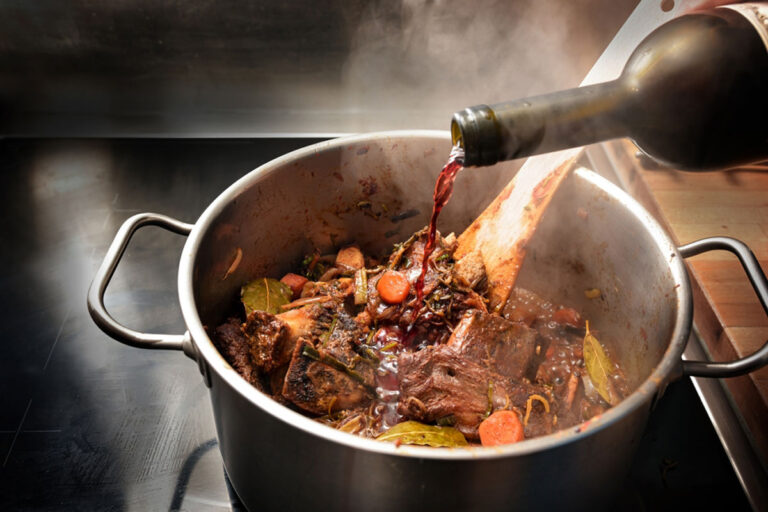
Continuing south into Kerry, visitors discover a county renowned for its world-class Kerry lamb. The unique flavor of this meat comes from sheep grazing on salt-kissed grasslands near the coast. Whether enjoyed as a roast or in a traditional Irish stew, Kerry lamb is celebrated as one of Ireland’s finest meats. Local seafood is equally exceptional, with Dingle’s bustling harbor offering fresh hake, crab, and lobster straight from the Atlantic.
Kerry is also home to time-honored baking traditions. Rustic brown bread, scones, and apple tarts are staples in both homes and cafes, often accompanied by a pot of strong Irish tea. In recent years, Dingle has emerged as a foodie destination in its own right, with craft distilleries, artisan ice cream makers, and vibrant food festivals attracting visitors from far and wide.
Together, Clare and Kerry embody the essence of coastal comfort food—simple, filling, and steeped in the natural bounty of Ireland’s Atlantic shores.
Cork – Ireland’s Foodie Capital at the Journey’s End
The Wild Atlantic Way reaches its grand finale in County Cork, often hailed as Ireland’s true foodie capital. Bursting with markets, artisan producers, and innovative chefs, Cork blends centuries of food heritage with a modern appetite for creativity. For many travelers, the journey isn’t complete until they’ve tasted Cork’s legendary offerings.
At the heart of the city lies the famous English Market, a bustling food hall dating back to 1788. Here, visitors can browse stalls overflowing with local delicacies—freshly caught fish, farmhouse cheeses, handmade sausages, and the county’s iconic spiced beef, traditionally enjoyed at Christmas but available year-round. The market is also the perfect place to meet the people behind the food: butchers, bakers, fishmongers, and cheesemakers who proudly keep Cork’s food traditions alive.
Cork is equally celebrated for its artisan cheeses and dairy products. From creamy Cashel Blue to handcrafted farmhouse cheddars, the county’s cheeses have gained international recognition. Add in smoked salmon from West Cork, homemade preserves, and small-batch craft beers, and you have a culinary scene that rivals any in Europe.
Beyond the city, West Cork’s food culture shines in its villages and coastal towns. Places like Skibbereen, Clonakilty, and Kinsale host lively food festivals and farmers’ markets. Kinsale, in particular, is known as the “Gourmet Capital of Ireland,” with award-winning restaurants and seafood prepared fresh from the harbor. Pair a bowl of seafood chowder with a glass of locally distilled gin or whiskey, and you’ll understand why Cork is a must for food lovers.
Ending your road trip here is fitting: Cork represents the Wild Atlantic Way’s culinary spirit at its richest—rooted in tradition, fueled by passion, and endlessly innovative. From the raw Atlantic shores of Donegal to the vibrant food stalls of Cork, this journey is not only about landscapes and history but also about savoring the tastes that make Ireland unforgettable.