


Table of Contents
- Shrove Tuesday in Ireland: A Day of Using Up
- The Savoury Tradition Before the Sweet
- Eggs, Dairy, and the Art of Stretching Ingredients
- Regional Twists and Forgotten Dishes
- Reviving the Savoury Side of Pancake Tuesday
Shrove Tuesday in Ireland: A Day of Using Up
In Ireland, Shrove Tuesday is almost synonymous with pancakes. Known widely as Pancake Tuesday, it marks the final day before the beginning of Lent, a season historically associated with fasting, restraint, and simplicity. Yet beneath the familiar image of sugar-dusted crêpes lies a deeper culinary tradition rooted not in indulgence, but in practicality.
Shrove Tuesday was originally about using up rich ingredients before the restrictions of Lent began. Eggs, butter, cream, and milk were all limited or avoided during the forty days that followed. Rather than waste these foods, households gathered them into dishes that cleared the pantry and marked the shift from abundance to abstinence.
While sweet pancakes became the dominant expression of this custom, they were not the only dish prepared. In fact, many Shrove Tuesday meals leaned toward the savoury. In rural kitchens especially, practicality took precedence over sweetness, and dishes were shaped by what was available rather than what was fashionable.
Understanding Shrove Tuesday as a day of resourcefulness opens the door to a richer culinary story — one that includes hearty, savoury fare alongside the more familiar stack of pancakes.
The Savoury Tradition Before the Sweet
Before refined sugar became widely affordable, pancakes were not always sweet. Early Irish versions were closer to flatbreads or griddle cakes, often eaten with butter, salt, or simple savoury accompaniments. The batter itself — made from flour, eggs, and milk — was neutral rather than sugary.
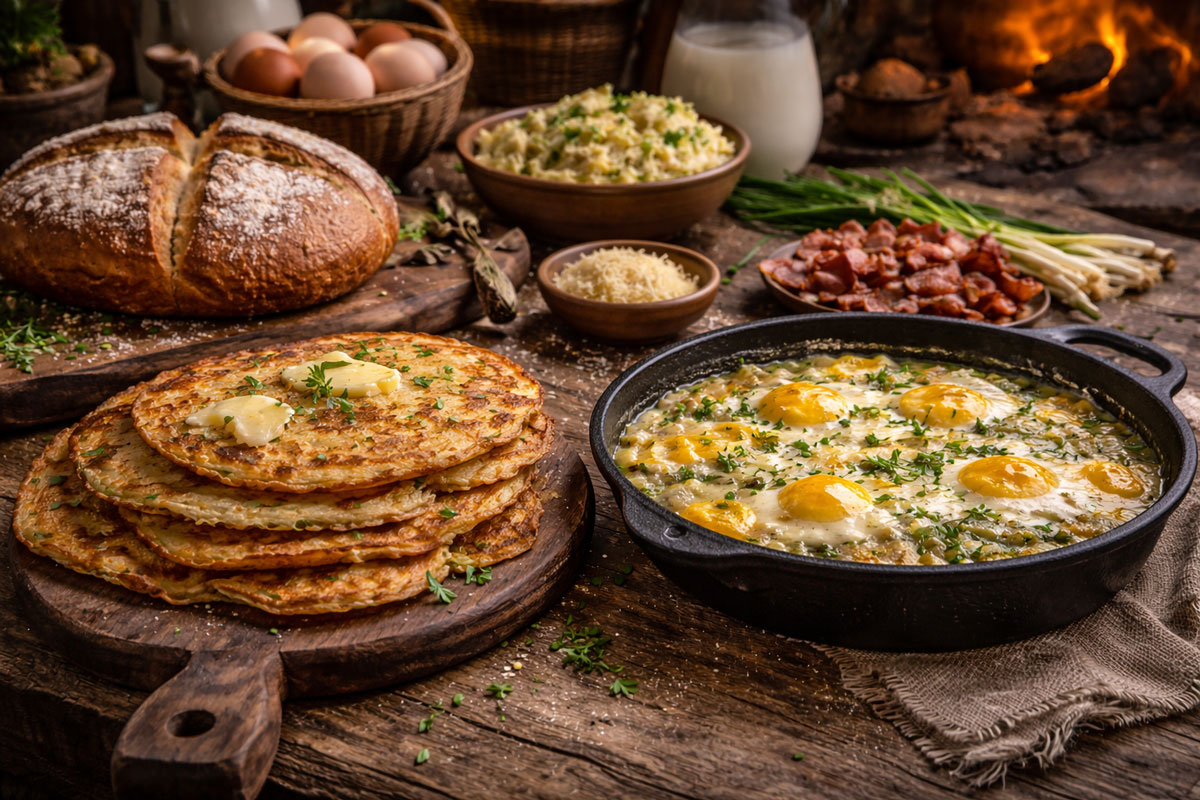
In many households, pancakes were served alongside rashers, sausages, or fried eggs, blurring the line between breakfast and supper. The emphasis was on substance rather than dessert.
Other egg-based dishes also featured prominently. Omelettes filled with leftover vegetables, herbs, or small pieces of meat provided a practical way to use up perishable ingredients. These were not elaborate creations but straightforward, filling meals designed to prevent waste.
Colcannon or champ — mashed potatoes enriched with cabbage or scallions — might also appear, particularly if dairy needed to be used before Lent began. The richness of butter and milk in these dishes reflected the same impulse behind pancakes: clearing stores before a leaner season.
Even soda bread, made with fresh buttermilk, could be baked to ensure no dairy was left unused. Eaten warm with butter and perhaps a slice of cheese, it formed a simple but satisfying Shrove Tuesday meal.
Eggs, Dairy, and the Art of Stretching Ingredients
Eggs were central to Shrove Tuesday cooking. In rural Ireland, hens began laying more consistently as daylight increased toward spring, making eggs plentiful at this time of year. Using them generously before Lent was both symbolic and sensible.
Savoury custards, baked egg dishes, and enriched breads all made appearances in different households. A simple baked dish of eggs, milk, and herbs could serve an entire family, stretching limited supplies while ensuring nothing was wasted.
Milk and cream also played an important role. Fresh dairy had a short shelf life, and Lent’s traditional avoidance of rich foods meant it needed to be used promptly. Adding cream to soups or stirring butter generously into mashed vegetables created hearty meals that contrasted with the plainer fare to come.
Cheese, particularly farmhouse varieties, could also be incorporated into savoury pancakes or griddle cakes. Melted into batter or sprinkled over eggs, it added richness and protein to meals meant to sustain labourers during cold February days.
This approach reflected a broader Irish culinary principle: make the most of what you have. Shrove Tuesday savories were not elaborate feasts, but they were thoughtful, shaped by season, faith, and economy.
Regional Twists and Forgotten Dishes
Across Ireland, Shrove Tuesday customs varied. In some regions, boxty — the traditional potato pancake — replaced flour-based crêpes. Made from grated raw potato mixed with mashed potato and flour, boxty offered a heartier, more filling alternative.
Boxty could be served plain with butter or paired with bacon and cabbage, creating a distinctly savoury celebration. In counties where potatoes remained central to the diet, this variation felt more natural than delicate pancakes dusted with sugar.
In coastal areas, fish might feature in Shrove Tuesday meals, especially if it needed to be consumed before fasting began. Simple fried fish with soda bread or potato cakes provided substance without extravagance.
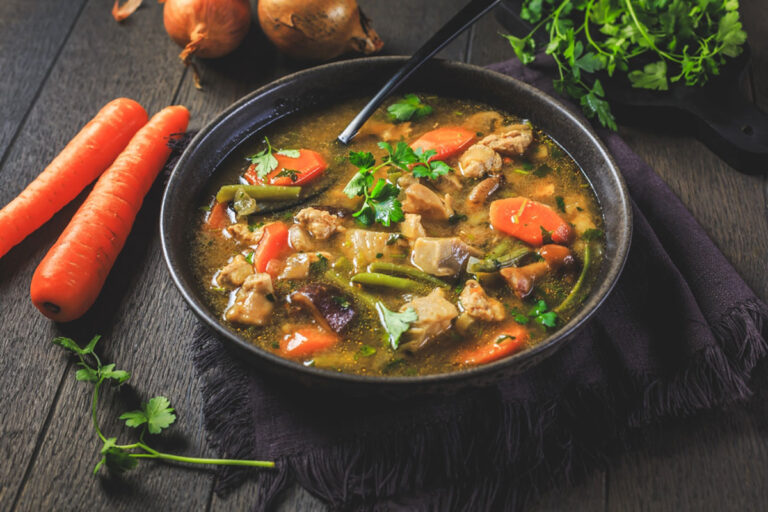
Some households prepared hearty soups enriched with milk or cream, particularly if dairy supplies were abundant. These soups, thickened with oats or potatoes, bridged the gap between winter and spring.
Over time, as sugar became cheaper and global influences shaped Irish tastes, sweeter versions of Pancake Tuesday gained prominence. Yet beneath the modern tradition lies a quieter history of savoury ingenuity.
Reviving the Savoury Side of Pancake Tuesday
Today, Shrove Tuesday in Ireland is often reduced to lemon juice and sugar, or chocolate spread on thin crêpes. While these treats have their place, revisiting the savoury roots of the day offers a more rounded appreciation of its meaning.
Savoury pancakes filled with cheese and herbs, boxty served with smoked salmon, or baked eggs with scallions and butter reconnect the celebration to its origins. These dishes reflect the practical spirit of using up rich ingredients while still honouring tradition.
Reintroducing savoury elements also highlights the seasonal transition at the heart of Shrove Tuesday. February in Ireland remains cool and often damp. Hearty, warming foods feel more appropriate to the landscape than dessert alone.
Most importantly, embracing the savoury side restores Shrove Tuesday to its original purpose: preparation. It marks a threshold between indulgence and restraint, winter and spring, abundance and reflection.
In rediscovering these dishes, we uncover a fuller story of Irish food culture — one rooted not only in sweetness, but in balance, economy, and quiet resourcefulness.
Beyond the pancakes lies a tradition shaped by land, faith, and the rhythms of rural life. To explore Shrove Tuesday savories is to remember that even the simplest meal can carry history within it.