


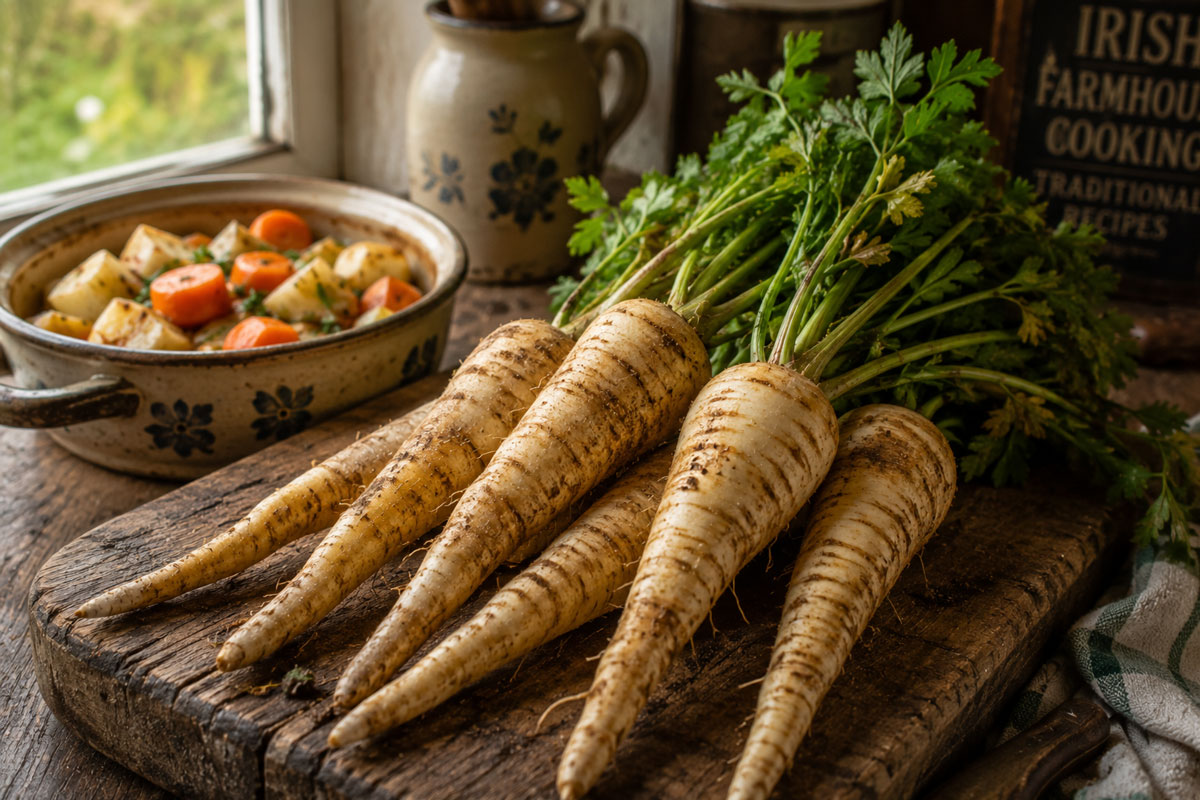
Today, potatoes often dominate conversations about traditional Irish vegetables, but long before the potato became Ireland’s defining crop, another humble root vegetable held an important place on the Irish table—the parsnip. Sweet, earthy, and remarkably versatile, parsnips were cultivated and enjoyed throughout Ireland for centuries, providing nourishment during the colder months when fresh produce was scarce.
Although they have never disappeared entirely from Irish cooking, parsnips gradually lost their prominence as potatoes became the country’s staple food. In recent years, however, chefs, gardeners, and home cooks have begun rediscovering this forgotten vegetable, celebrating both its rich flavor and its connection to Ireland’s culinary heritage.
A Long History in Ireland
Parsnips have been cultivated in Europe for thousands of years and were well established in Ireland long before the arrival of the potato during the late sixteenth century. Their ability to thrive in Ireland’s cool, damp climate made them an ideal crop for both monastery gardens and rural farms.
Medieval Irish kitchens relied heavily on vegetables that could be grown locally and stored throughout winter. Alongside turnips, carrots, onions, leeks, cabbage, and oats, parsnips became an important source of nourishment during seasons when little fresh produce was available.
Their naturally sweet flavor also made them particularly valued before refined sugar became widely available. Roasted or boiled, parsnips provided a welcome richness to otherwise simple meals.
Before the Potato Became King
Modern visitors often associate Irish food almost exclusively with potatoes, but earlier generations relied on a much wider range of root vegetables.
Before potatoes became widespread, parsnips were one of Ireland’s principal winter crops. They stored well in the ground and could even become sweeter after exposure to frost, making them an excellent food for colder months.
While potatoes eventually proved more productive and calorie-dense, parsnips continued to play a supporting role in many Irish kitchens, especially in regions where mixed vegetable gardens remained common.
The Farmhouse Favorite
For rural Irish families, parsnips were a practical crop that required relatively little attention once established. Many farmhouse gardens included rows of parsnips alongside cabbages, carrots, onions, and herbs.
After harvest, they could be stored in cool sheds or left in the ground until needed. This made them especially valuable during winter when fresh vegetables were limited.
Parsnips often accompanied Sunday roasts, appeared in hearty soups and stews, or were simply boiled and served with butter. Their sweetness paired particularly well with beef, lamb, and game.
Because nearly every part of rural life revolved around making the most of seasonal produce, parsnips became a dependable ingredient that families returned to year after year.
Why Parsnips Taste Different
Unlike many root vegetables, parsnips develop a distinctive sweetness as their starches convert to natural sugars. Cold weather enhances this process, which explains why many gardeners believe parsnips harvested after the first frost have the finest flavor.
Their taste combines earthy, nutty, and slightly spicy notes, making them remarkably versatile. They can be roasted until caramelized, mashed with potatoes, pureed into soups, or added to slow-cooked stews.
Modern chefs often appreciate parsnips because they offer both sweetness and depth without overwhelming other ingredients.
Traditional Irish Dishes Featuring Parsnips
Although rarely the star of a meal, parsnips have long appeared in traditional Irish cooking.
They were commonly added to farmhouse vegetable soups, where they contributed natural sweetness to broths made with onions, carrots, barley, and herbs. Slow-cooked stews also benefited from parsnips, which softened beautifully while enriching the overall flavor.
Roasted parsnips became especially popular alongside roast beef or lamb, often served with potatoes, carrots, cabbage, and rich gravy. In some households, mashed parsnips were combined with butter and cream to create a comforting side dish.
Today, many contemporary Irish recipes feature honey-roasted parsnips, parsnip soups, and root vegetable medleys that celebrate traditional ingredients in modern ways.
The Modern Revival of Parsnips
As interest in heritage foods and seasonal cooking has grown across Ireland, parsnips have experienced something of a renaissance.
Farmers’ markets, artisan restaurants, and home gardeners increasingly value traditional vegetables that connect diners with Ireland’s agricultural past. Parsnips fit naturally into this movement, offering excellent flavor while requiring relatively few imported inputs.
Chefs have also embraced the vegetable’s versatility. Parsnip crisps, roasted parsnip purées, creamy soups, and even desserts occasionally appear on modern menus, demonstrating that this humble root vegetable has far more to offer than many people realize.
Growing Parsnips in Ireland
Ireland’s cool climate remains well suited to growing parsnips. They prefer deep, well-drained soil and benefit from a long growing season, often remaining in the ground for many months before harvest.
Many gardeners intentionally leave some parsnips in the soil until late autumn or winter, allowing colder temperatures to improve their sweetness naturally.
Because they store well after harvesting, parsnips continue to be a practical crop for gardeners seeking fresh produce throughout the colder months.
A Vegetable Worth Remembering
Parsnips may never rival potatoes in their importance to Irish cuisine, but they remain an essential part of the country’s culinary story. Long before potatoes became Ireland’s defining crop, parsnips helped sustain families through long winters and added flavor to countless traditional meals.
Their recent revival reflects a broader appreciation for Ireland’s agricultural heritage and the value of seasonal, locally grown food. As more people rediscover traditional vegetables, parsnips are once again earning their place on Irish tables.
Whether roasted until caramelized, simmered in a hearty stew, or blended into a warming winter soup, this once-overlooked root vegetable reminds us that some of Ireland’s richest culinary traditions are often found in its simplest ingredients.