

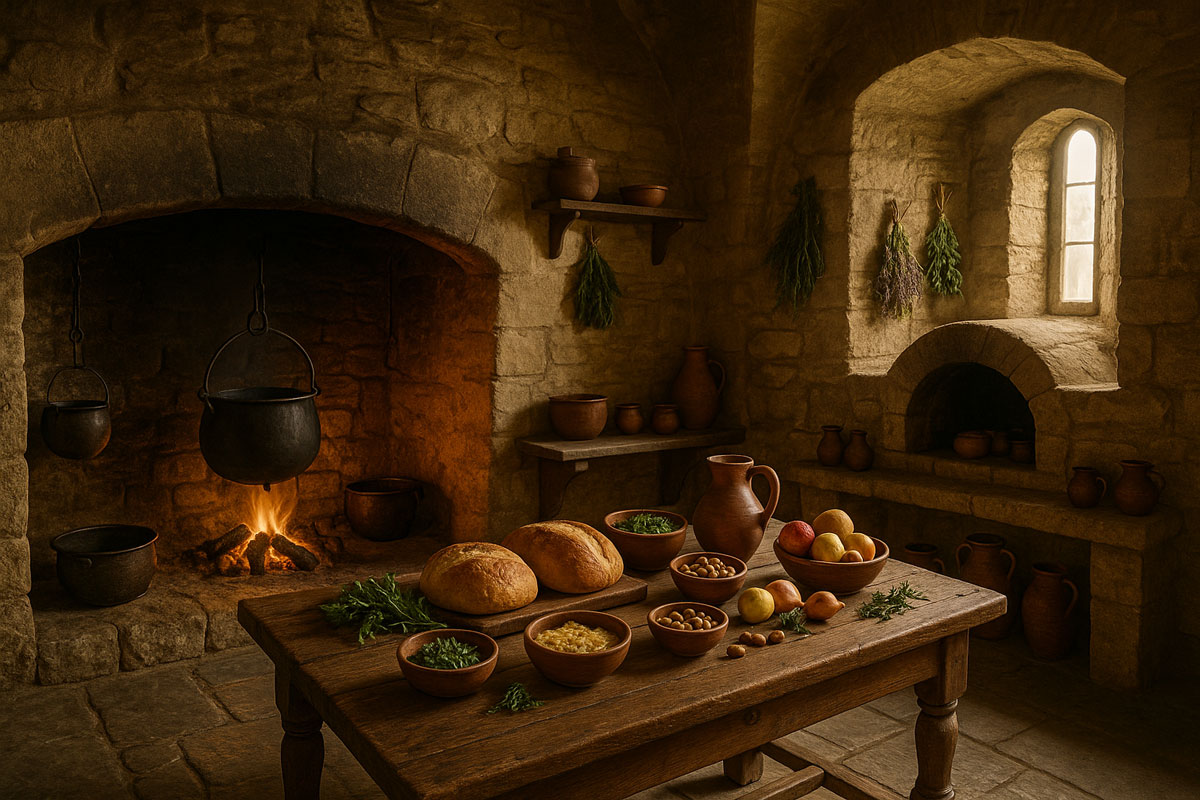
When the Normans arrived in Ireland in 1169, they brought more than soldiers, stone castles, and new systems of rule—they carried with them a vibrant culinary culture that would reshape Irish food for centuries. Their arrival marked one of the most important turning points in Irish history, influencing farming, cooking techniques, and the very ingredients found in kitchens across the island.
Before the Normans, Irish cuisine was built around pastoral farming: dairy, beef, barley, oats, and simple broths dominated the table. The Normans, however, came from a world rich with European influences—from French orchards to Mediterranean spice routes—and they introduced Ireland to new flavours, new crops, and an entirely new way of thinking about food.
The fusion that followed created something unique. Irish and Norman traditions blended together, forming the early foundations of the Ireland we know today. From apples and rabbits to baking ovens and herbs, the Normans left a mark on Irish cooking that endures in fields, farmhouses, and recipes throughout the country.
Table of Contents
- Introduction: When New Flavours Came to Ireland
- What the Normans Brought to the Irish Table
- Norman Farming and Food Production
- Feasting, Castles, and Everyday Eating
- The Lasting Legacy of Norman Flavours
When New Flavours Came to Ireland
The Norman conquest was not only a political shift but a culinary one. Their influence touched every part of Irish food culture—what people grew, how they cooked, how they baked, and even how they dined. Their arrival introduced new systems of agriculture, expanded orchard growing, and brought new ingredients that transformed medieval Irish diets.
For the Normans, food was a marker of status and refinement. They valued herbs, garlic, wine, roasted meats, pies, and spiced sauces—flavours largely unfamiliar to the Gaelic Irish. Over time, however, the two cultures blended, producing a rich hybrid cuisine that continues to shape Irish food today.
What the Normans Brought to the Irish Table
When the Normans arrived in Ireland, they stepped into a food culture built largely on cattle, dairy, oats, and simple broths. Their own culinary world, shaped by northern France and wider European trade, was quite different. With them came new ingredients, flavours, and cooking habits that gradually began to filter into Irish life—especially around the new towns and castles they established.
One of the most important changes was the increased use of herbs and aromatics. While the Irish already used wild plants, the Normans promoted the cultivation of parsley, sage, thyme, marjoram, and dill in enclosed gardens. They also relied heavily on onions, leeks, and garlic, which added depth and sharpness to stews, sauces, and roasted meats. These ingredients helped shift Irish cooking from simple boiling towards more layered, seasoned dishes.
The Normans were also fond of the emerging medieval European taste for “sweet-and-sour” flavours. They used vinegar, verjuice (sour juice from unripe grapes or crab apples), honey, and imported sugar—when available—to create sauces that balanced sharpness and sweetness. Combined with dried fruits such as raisins or prunes, these ingredients transformed meat and poultry dishes into something far more complex than the straightforward broths common in earlier Irish cooking.
Another key influence was in bread and baking. While the Gaelic Irish relied heavily on oat and barley cakes cooked on griddles, the Normans brought a stronger tradition of wheat bread baked in enclosed ovens. Fine white loaves, coarser brown breads, and trenchers (thick slices of bread used as edible plates) slowly became part of the food culture around Norman towns and manors. This “oven culture” would later help pave the way for pies, pastries, and more sophisticated baked goods in Ireland.
The Normans also encouraged the use of almonds and nuts in sauces and desserts. Ground almonds were used to thicken broths, create faux “milk” during fasting periods, and enrich sweets. While such ingredients were too expensive for most rural households, they left their mark on the cooking of wealthy households and religious communities—and on the idea of food as something that could be refined, not just filling.
Slowly but surely, these new ingredients and techniques began to blend with existing Irish foodways. Garlic joined leeks in the pot; herbs grew beside native plants; wheat bread appeared alongside oatcakes. The Norman table did not replace the Irish one—but it expanded it, planting the seeds of a more varied and European-influenced Irish cuisine.
Norman Farming and Food Production
The Normans did not simply change what Ireland ate—they transformed how food was grown, managed, and distributed. Their arrival introduced new farming systems, new animals, and more organised forms of agriculture that reshaped the Irish landscape and laid the foundations for modern food production.
One of their greatest contributions was the introduction of manorial farming. Unlike the mostly pastoral Gaelic economy, Norman estates were structured, hierarchical, and highly productive. They divided land into fields, encouraged tillage, and relied on tenants and labourers to cultivate crops efficiently. This approach increased the availability of grains like wheat, rye, and barley, improving Ireland’s bread-making potential and strengthening local markets.
The Normans also dramatically expanded orchard culture. They brought improved varieties of apples, pears, and cherries, establishing orchards around castles, monasteries, and manor houses. These fruits were used fresh, baked into pies, fermented into ciders, and preserved for winter—marking a major shift from Ireland’s earlier reliance on wild foraged fruit. Over time, orchard-growing spread to Gaelic households, leaving a legacy that continues in Irish cider regions today.
Livestock management evolved too. The Normans introduced rabbits to Ireland for fur and meat, creating managed warrens near estates. They also improved poultry farming, encouraging the keeping of hens, ducks, and geese for eggs and meat. Their emphasis on structured animal husbandry provided greater food stability for the communities that lived around their settlements.
Another lasting innovation was the expansion of mills and milling technology. Watermills and windmills became far more common after the Norman arrival, vastly improving grain processing. This meant finer flour, better bread, and a more reliable food supply year-round. Such mills became cornerstones of Norman villages, often controlled by the local lord, and were essential for producing both everyday bread and higher-status baked goods.
Perhaps most importantly, the Normans introduced a stronger sense of food surplus and storage. They built granaries, storehouses, and controlled distribution networks that helped communities survive poor harvests. This emphasis on planning and storage was new to many parts of Ireland and helped stabilise food availability in ways that would ripple through Irish agriculture for centuries.
Through these changes—structured fields, expanded orchards, improved mills, and new livestock—the Normans rooted their culture deeply into Irish soil. The land itself became a blend of Gaelic tradition and Norman innovation, shaping the food grown in Ireland long after the medieval period ended.
Feasting, Castles, and Everyday Eating
The arrival of the Normans in Ireland brought not only stone castles and new political order but an entirely different way of dining. From lavish banquets in great halls to the daily meals of ordinary townsfolk, Norman food culture introduced Ireland to a more elaborate, European-influenced style of eating.
At the heart of Norman culinary life were the feasts held in their manor houses and castles. These events could last for hours—sometimes days—and were designed to display wealth, hospitality, and social status. Whole roasted animals, such as beef, pork, venison, and goose, were carried into the hall on great platters. Meals were eaten to the sound of music, storytelling, and the clatter of servants bustling between tables.
Norman cuisine embraced roasting and baking more than the Gaelic Irish, who traditionally relied on boiling and stewing. This shift was made possible by the widespread introduction of stone ovens, hearths, and improved kitchen layouts. Castles often contained dedicated bakehouses and brewhouses, producing wheat bread, pastries, pies, and ales that were far more refined than earlier Irish fare.
The Normans also appreciated a broad range of imported foods, made possible by their connections to continental trade routes. Items like wine, almonds, dried fruits, exotic spices, olive oil, and pepper made their way into high-status kitchens. While such luxuries were reserved for the elite, they set new culinary standards that influenced Irish cooking in subtle ways over the centuries.
At the same time, the diet of ordinary Norman settlers and townspeople was simpler but still distinct from Gaelic norms. Commoners ate wheat and rye bread, pottages seasoned with herbs, vegetable broths, small cuts of meat, and eggs—foods made more accessible through improved farming and market systems. Market towns founded by the Normans (such as Kilkenny, Wexford, and Youghal) became hubs of food exchange, where local Irish and settlers mingled and shared culinary habits.
Alongside these changes came new table customs. The Normans introduced the use of trenchers (thick bread plates), more formal seating arrangements, and the idea of shared courses rather than individual bowls. Meals became more structured, reflecting the hierarchical society the Normans created.
While Gaelic Irish food practices continued, particularly in rural areas, the influence of Norman feasting culture left a lasting mark on Ireland. From the architecture of castle kitchens to the rise of baking, roasting, and imported flavours, the Norman table helped shape Irish dining in ways still visible today.
The Lasting Legacy of Norman Flavours
The Normans may have first arrived in Ireland as conquerors, but over the centuries their culture blended so deeply into Irish life that many of their culinary influences are now considered “traditional Irish.” Their impact can be tasted in orchards, kitchens, and baked goods across the island—and seen in the very language Ireland uses to talk about food.
One of the clearest legacies is the continued prominence of orchards. Apples and pears became far more widespread after the Normans’ arrival, and their organised orchard systems evolved into regional traditions such as cider-making in counties like Armagh and Tipperary. The medieval introduction of managed fruit-growing still shapes rural landscapes today.
The Normans also left their mark on baking and oven culture. Ireland’s transition from simple griddle breads to oven-baked loaves, pies, and pastries began in Norman kitchens. Words borrowed from Norman French—such as bácús (from “bakehouse”)—echo this influence. Over time, Irish and Norman traditions fused, giving rise to a uniquely Irish form of rustic baking that survives in farmhouse tarts, apple cakes, and meat pies.
Culinary techniques such as roasting, spit cooking, and herb gardening also spread across the island. The Norman preference for seasoned sauces, herbs like parsley and thyme, and the sweet-and-sour flavours of medieval Europe introduced Ireland to a broader palette that gradually enriched the national cuisine.
Other influences were less obvious but no less lasting. The introduction of rabbits created a new source of meat; improved poultry farming boosted egg production; and new systems of milling allowed for finer flour and better bread. Market towns founded by the Normans supported food trade, while castle feasts introduced Ireland to new ingredients and styles of dining.
Perhaps the greatest legacy, however, is the fusion of two culinary worlds: the pastoral Gaelic traditions of cattle, dairy, and broths, combined with the Norman love of gardens, orchards, ovens, and spices. This blending gave Ireland a richer, more varied culinary identity—one that continued to evolve through later Viking, English, and continental influences.
Today, when an Irish apple tart is baked, when a roast is seasoned with herbs, or when a village celebrates its orchard festival, a piece of the Normans’ culinary DNA is still at work. Their flavours took root in Irish soil—literally and culturally—and remain part of the nation’s food story more than 850 years later.