


Table of Contents
- Part 1: Introduction – Nettles in Irish Tradition
- Part 2: Harvesting and Preparing Nettles Safely
- Part 3: Classic Irish Nettle Recipes
- Part 4: Nettles as Herbal Remedies in Folk Medicine
- Part 5: Nettles in Modern Irish Cuisine and Sustainability
Introduction – Nettles in Irish Tradition
The humble stinging nettle (Urtica dioica) has long held a place of respect in Irish cooking and folk medicine. Far from being just an invasive weed, nettles were once an essential springtime food, valued for their nutritional richness and versatility in the kitchen. In fact, generations of Irish households knew that when the first tender nettles appeared in March and April, it marked not only the coming of warmer days but also the arrival of one of nature’s healthiest greens.
A plant of necessity and resilience: Nettles were widely used across rural Ireland, particularly during the “hungry gap” of early spring when winter food stores were running low. Families would gather young nettle shoots from hedgerows and fields, boiling them into soups or teas that were both nourishing and restorative after the long, harsh winters. The plant’s ability to grow almost anywhere, from stony soils to damp meadows, made it a dependable resource for poor communities.
Cultural and symbolic roles: Beyond the table, nettles carried symbolic significance in Irish culture. In some regions, nettles were believed to ward off evil spirits when hung above doorways. On “Bealtaine” (May Day), nettle stings were thought to protect health and ensure vitality for the summer ahead. Such beliefs intertwined practical use with spiritual tradition, highlighting how deeply embedded nettles were in daily life.
Nutritional powerhouse: Modern science confirms what past generations seemed to know intuitively—nettles are packed with vitamins and minerals. Rich in iron, calcium, magnesium, and vitamin C, they were especially important in combating nutritional deficiencies common in rural Ireland. Their high chlorophyll content also made them a natural tonic for energy and blood health, something farmers and laborers greatly valued.
A forgotten staple revived: While nettles gradually fell out of everyday Irish cooking with modernization and easier access to cultivated greens, they are now making a comeback. Contemporary chefs and foragers are once again celebrating the plant’s flavor—somewhere between spinach and cucumber—and its sustainable appeal as a free, abundant, and nutritious ingredient.
From ancient folk remedies to today’s gourmet kitchens, nettles have never truly disappeared from Ireland’s food story.
Harvesting and Preparing Nettles Safely
While nettles are highly nutritious and flavorful, their stinging hairs can make them intimidating to handle. For centuries, Irish households passed down practical knowledge on how to gather and prepare nettles safely, turning a prickly plant into a beloved spring ingredient. Understanding the right techniques ensures that nettles can be enjoyed without discomfort.
When to harvest: Nettles are at their best in early spring, typically from March to May, when the young shoots are tender and packed with nutrients. Once the plant matures and begins to flower, the leaves develop a coarse texture and can become bitter. Traditionally, Irish foragers would only pick nettles before June, knowing that young leaves made the most delicious soups and teas.
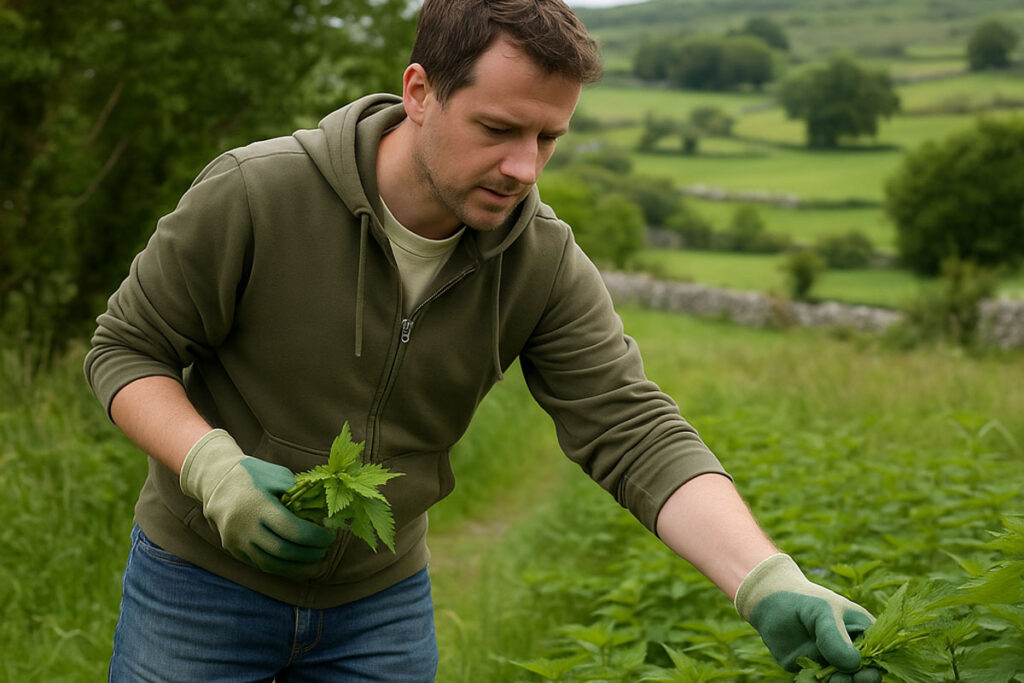
How to pick nettles: The golden rule of nettle harvesting is to wear gloves. Thick gardening gloves or even simple cloth gloves prevent stings from the tiny, hair-like needles on the stems and leaves. Using scissors or shears, snip the top 4–6 inches of the plant, as these younger tips are softer and less fibrous. Always harvest away from roadsides or polluted areas to ensure the leaves are clean and safe to eat.
Neutralizing the sting: Fortunately, nettle stings disappear as soon as the plant is cooked or dried. Boiling, steaming, or sautéing nettles for just a few minutes completely removes the sting, leaving a tender, spinach-like green behind. Drying nettle leaves for tea also makes them harmless to touch and consume.
Washing and cleaning: Like any foraged green, nettles should be thoroughly rinsed in cold water to remove dirt and insects. Some cooks recommend blanching the leaves briefly before using them in soups or recipes, both to soften them and to give them a vibrant green color.
Storing nettles: Fresh nettles are best used immediately after harvesting, but they can be kept in the refrigerator for a day or two if wrapped in a damp cloth. For long-term use, many Irish households would dry the leaves for teas or freeze blanched nettles to preserve their nutritional value year-round.
Harvesting nettles may require care, but once prepared, they are no more difficult to cook with than any leafy green.
 .
.
Classic Irish Nettle Recipes
For generations, nettles have found their way into the Irish kitchen in simple but deeply nourishing dishes. Often considered a “poor man’s food,” nettles were both affordable and abundant, making them an essential ingredient during the lean months of spring. Today, these recipes are enjoying a revival as chefs and home cooks rediscover their earthy flavor and nutritional value.
Nettle Soup: Perhaps the most iconic use of nettles in Ireland is the humble nettle soup. Traditionally, families boiled fresh nettle leaves with potatoes, onions, and leeks, creating a thick and warming dish to combat the chill of spring. Butter and cream were sometimes added when available, but even in its simplest form, nettle soup was hearty and restorative. Modern variations often blend the soup for a smooth texture and may include herbs like parsley or thyme for added flavor. (View Our Recipe)
Nettle Colcannon: Colcannon, the classic Irish dish of mashed potatoes with greens, was occasionally made with nettles in place of cabbage or kale. Blanched nettles added a slightly nutty, spinach-like flavor, while also boosting the nutritional content. Served with butter melting in the center, nettle colcannon was a comfort food that combined practicality with tradition.
Nettle Bread and Scones: Nettles were sometimes dried, ground, and mixed into flour to make rustic breads or scones. This practice not only stretched scarce flour supplies but also infused the bread with a rich green color and earthy flavor. Today, artisanal bakers are reviving nettle bread, often pairing it with local cheeses or smoked salmon for a uniquely Irish twist.
Nettle Tea: Long valued for its medicinal properties, nettle tea was a staple in many Irish households. Fresh or dried leaves were steeped in boiling water to produce a dark, mineral-rich brew. Known for aiding digestion and boosting energy, nettle tea was often consumed as a daily tonic, especially in the spring months when fresh greens were scarce.
Nettle as a versatile green: Beyond these traditional recipes, nettles were used anywhere one might use spinach. They were added to omelets, mixed into broths, or simply sautéed with butter and garlic. Their adaptability meant they could enrich both humble family meals and more elaborate dishes.
These recipes showcase the creativity and resilience of Irish cooking, transforming a common wild plant into nourishing meals.
Nettles as Herbal Remedies in Folk Medicine
In addition to their role in the kitchen, nettles have held a place of honor in Irish folk medicine for centuries. Known as both food and cure, they were often the first plant people turned to for health and healing. The line between nourishment and remedy was blurred, as islanders and rural families relied on nature’s pharmacy to address common ailments.
A spring tonic: Nettles were seen as a cleansing herb, perfect for shaking off the heaviness of winter. Drinking nettle tea or eating nettle soup in early spring was thought to “purify the blood,” boost energy, and restore vitality. This belief, widespread in rural Ireland, reflected the real nutritional benefits of nettles—rich in iron, vitamin C, and minerals that combated fatigue and deficiencies.
Treatment for joint pain: Folk remedies often used nettles for rheumatism and arthritis. In some traditions, fresh nettles were applied directly to the skin, the sting stimulating circulation and relieving pain. Though uncomfortable, many swore by this practice, and modern science recognizes that nettles contain compounds with anti-inflammatory properties.
Respiratory health: Nettle infusions were a common home remedy for colds, coughs, and seasonal allergies. The plant’s natural antihistamine effects made it valuable for easing hay fever, while its vitamin-rich teas supported the immune system. On the Aran Islands and in rural communities, nettle brews were part of the household medicine chest.
Skin and hair care: Nettles were also used externally. Decoctions of nettles were applied to the scalp to promote hair growth and strengthen follicles. Infusions were sometimes used as washes for skin irritations or wounds, valued for their soothing and antibacterial qualities.
Superstition and symbolism: Nettles also carried spiritual and protective associations. Some Irish households believed that hanging nettles above the door could ward off evil spirits. Nettles gathered on May Day (Bealtaine) were thought to safeguard health for the year ahead, blending medicine with folklore in a way that reflected Ireland’s holistic approach to healing.
Though modern medicine has replaced many of these practices, nettles remain a respected herbal ally, with teas, supplements, and extracts still widely available today.
Nettles in Modern Irish Cuisine and Sustainability
Once dismissed as a weed or remembered only in folk tradition, nettles are now enjoying a renaissance in modern Ireland. Chefs, food producers, and foragers are reintroducing this ancient green into contemporary cuisine, highlighting its nutritional benefits and its role in sustainable food culture. The revival of nettles is part of a broader movement in Ireland that values local, seasonal, and foraged ingredients.
On the restaurant menu: Across Ireland, chefs are giving nettles a gourmet twist. Fine dining establishments serve nettle risottos, pestos, and velvety nettle soups, often paired with Irish lamb or seafood. By showcasing nettles alongside premium ingredients, they elevate the plant from humble foraged green to a star of modern Irish cuisine. For tourists and locals alike, nettle-based dishes connect the present with Ireland’s culinary heritage.
Foraging revival: Foraging has become a popular pastime, and nettles are often the first plant recommended to beginners. Easy to identify and abundant, they embody the spirit of Ireland’s wild food culture. Many workshops and food festivals now include nettle foraging walks, where participants learn how to gather and cook this nutritious green safely and sustainably.
Artisan products: Beyond the kitchen, Irish producers are turning nettles into innovative products. Nettle teas, powders, and supplements are marketed for their health benefits, while nettle-infused cheeses, breads, and craft beers highlight the plant’s versatility. These artisanal goods celebrate nettles as both a wellness ingredient and a cultural touchstone.
Sustainability and climate resilience: Nettles grow abundantly without fertilizers or pesticides, making them an eco-friendly alternative to many cultivated greens. Their resilience in poor soils and damp climates echoes the challenges of farming in Ireland, while also offering lessons for sustainable agriculture. Promoting nettles as a local, low-impact food aligns with Ireland’s growing commitment to environmental responsibility.
A bridge between past and future: The return of nettles to Irish plates reflects a larger story—one of rediscovery, respect, and continuity. From spring soups and colcannon to herbal tonics and modern pestos, nettles remain a food that nourishes both body and culture. Their revival shows how traditional knowledge can inform modern food systems, ensuring that heritage is not lost but reinvented for new generations.
Conclusion: Nettles in Irish cooking are more than a seasonal ingredient; they are a symbol of resilience, resourcefulness, and renewal. Once central to survival, then nearly forgotten, nettles are now being celebrated again as a superfood of the future. By embracing this humble plant, Ireland honors its past while cultivating a sustainable and flavorful path forward.