

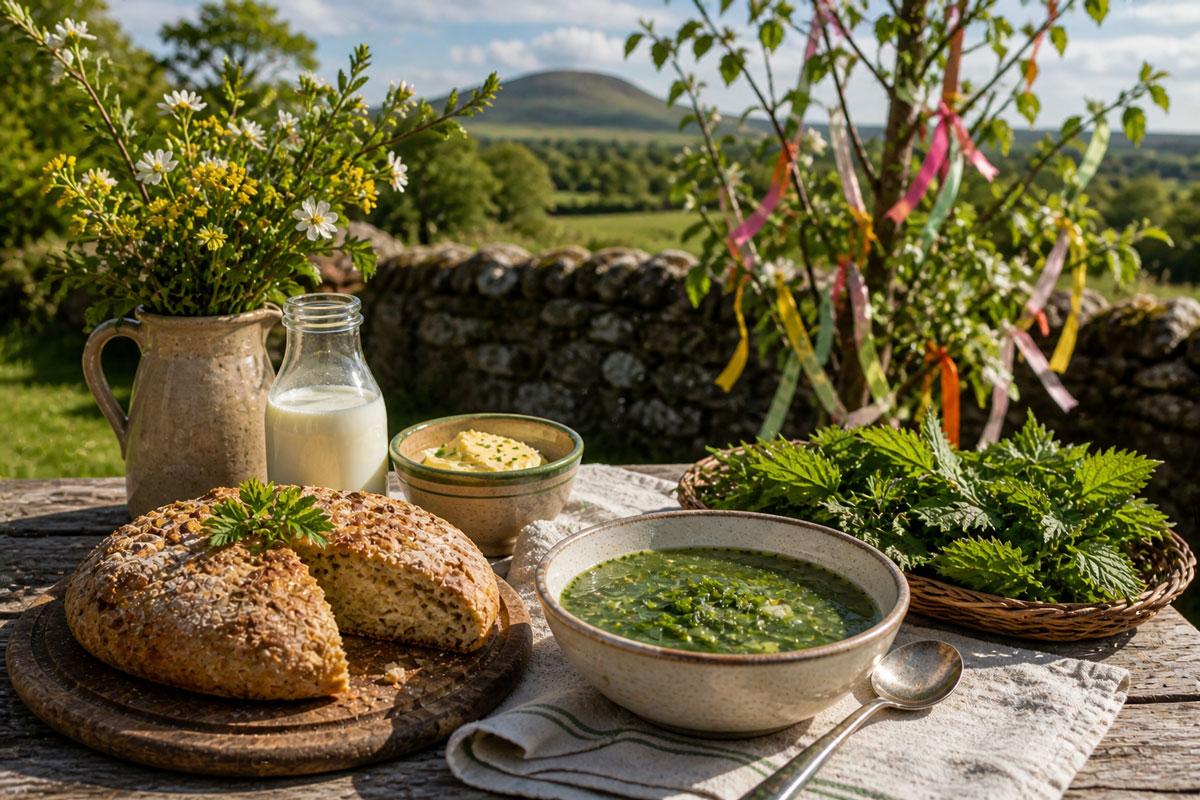
Long before modern calendars marked the start of summer, the Irish marked it in a very different way. Bealtaine, celebrated on May 1st, was one of the most important festivals in the ancient Gaelic year—a turning point between the darkness of winter and the brightness of the growing season. It was a time of fire, protection, renewal, and quiet celebration.
While Bealtaine is often remembered for its rituals—bonfires, May bushes, and protective customs—it was also a moment that touched the table. The foods associated with May Day in Ireland were simple, seasonal, and deeply symbolic. They reflected the land’s awakening, the return of milk and growth, and the hope for abundance in the months ahead.
Unlike later feast days, Bealtaine was not about lavish meals. It was about marking change—using what was available, and preparing for what was to come.
Table of Contents
- The Meaning of Bealtaine
- A Seasonal Turning Point
- The Return of Milk and Dairy
- Oats, Bread, and Everyday Staples
- Wild Greens and Early Harvest Foods
- Food and Protection Rituals
- Sharing Food and Community Traditions
- Bealtaine Foods Today
The Meaning of Bealtaine
Bealtaine (or Beltane) marked the beginning of summer in the Gaelic calendar. It was a festival rooted in agriculture, signalling the movement of livestock to summer pastures and the renewal of the land. Fire played a central role—bonfires were lit for protection, and cattle were driven between them to safeguard their health.
Food, though less dramatic than the fires, was part of this same rhythm. It was tied to protection, gratitude, and the hope for a good season. The table reflected not abundance, but transition—a movement from scarcity toward growth.
A Seasonal Turning Point
In early May, Ireland sat between two worlds. Winter stores were running low, but summer crops were not yet fully ready. This meant that Bealtaine foods were often simple, relying on staples that had lasted through the colder months, alongside the first signs of new growth.
This in-between season shaped everything. Meals were not extravagant, but they carried meaning. Even small additions—fresh milk, early greens, or newly churned butter—felt significant.
The Return of Milk and Dairy
One of the most important food elements of Bealtaine was dairy. As cows returned to richer pasture, milk production increased, making fresh milk, butter, and buttermilk more available after the leaner months.
This made dairy a symbol of renewal and prosperity. Fresh butter, in particular, held a special place—it represented both nourishment and the success of the coming season. In some traditions, butter was even associated with protection, carefully guarded against folklore fears of it being “taken” or spoiled through superstition.
Simple foods like bread and butter, or porridge enriched with fresh milk, became quietly celebratory in this context.
Oats, Bread, and Everyday Staples
Oats remained a cornerstone of the Irish diet at Bealtaine, just as they had been throughout the year. Porridge, oatcakes, and simple breads provided reliable nourishment, especially when other foods were limited.
On May Day, these staples might be prepared with a little more care or served with the season’s first dairy. A warm oatcake with fresh butter could mark the day just as meaningfully as any feast.
Bread—whether griddle bread or early forms of soda bread—also played a role. It was practical, filling, and easily shared, making it a natural centrepiece for small gatherings.
Wild Greens and Early Harvest Foods
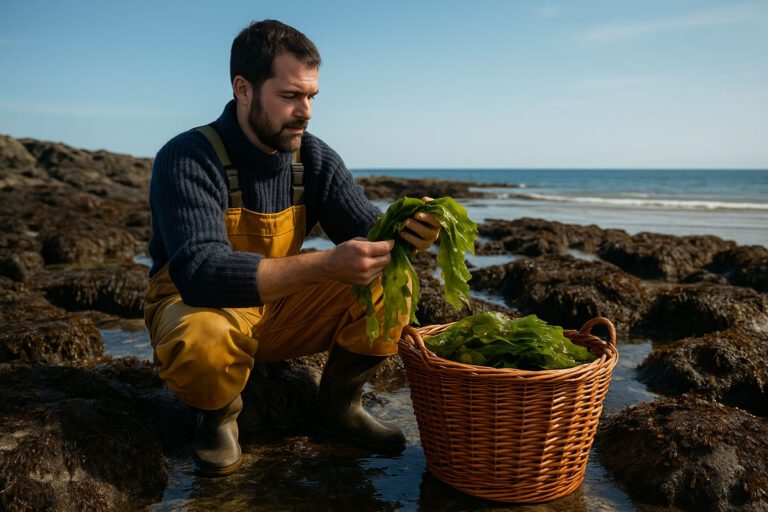
As the land began to wake, wild greens started to appear—nettles, sorrel, and other early plants that could be gathered and added to meals. These were among the first fresh foods after winter, bringing both nutrition and a sense of renewal.
Nettle soup, in particular, has long been associated with spring in Ireland. Though not exclusive to Bealtaine, it reflects the same seasonal shift: a return to fresh, living ingredients after months of stored food.
These early greens weren’t just practical—they symbolized health, vitality, and connection to the land.
Food and Protection Rituals
Bealtaine was deeply tied to protection, and food often played a role in these customs. Some traditions involved leaving small portions of food outside—offerings meant to ensure good fortune or to ward off harm.
Milk and butter, because of their importance, were sometimes included in these rituals. The idea was not just to nourish the body, but to safeguard the household and livestock for the months ahead.
Even within the home, food could carry symbolic weight. The act of preparing and sharing a meal on May Day was part of a wider effort to begin the season well.
Sharing Food and Community Traditions
Like many Irish traditions, Bealtaine was not experienced in isolation. It was a community event, even if the food itself was simple. Neighbours gathered, fires were shared, and small acts of hospitality took on greater meaning.
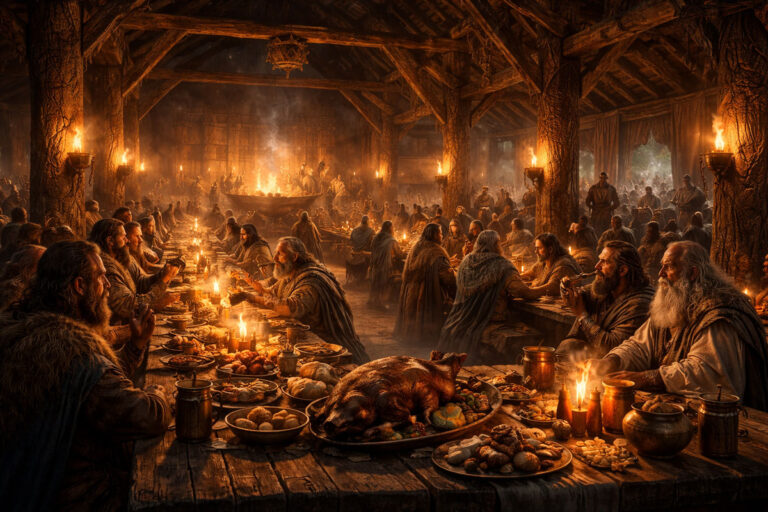
Food might be exchanged, shared, or prepared together. A loaf of bread, a pot of porridge, or a simple meal eaten outdoors could mark the occasion. These moments reinforced community ties and created a shared sense of hope for the season ahead.
Bealtaine Foods Today
Today, Bealtaine is often celebrated in a more symbolic or cultural way, but its food traditions still offer inspiration. Modern interpretations might include seasonal Irish dishes that reflect the same themes: freshness, simplicity, and connection to the land.
A contemporary Bealtaine table might feature fresh dairy, rustic bread, spring greens, and light, nourishing dishes. It doesn’t need to be elaborate to be meaningful—just thoughtful and seasonal.
In rediscovering these traditions, we reconnect with a slower, more grounded approach to food—one that values the time of year, the quality of ingredients, and the act of sharing a meal.
Closing: A Quiet Celebration of Renewal
The foods of Bealtaine are not about indulgence—they are about transition. They reflect a moment when the land begins to give again, when the days grow longer, and when hope quietly returns to the table.
In a modern world of constant availability, there is something powerful in remembering this rhythm. To eat with the season, to value simple ingredients, and to mark the turning of the year through food—these are traditions worth keeping.