

For centuries, Ireland’s coastal communities have lived in harmony with the sea, relying on its bounty for food, trade, and livelihood. Fish was not just a meal but a lifeline, sustaining families through harsh winters and long fishing seasons. Yet with abundance came a challenge—how to preserve the catch before it spoiled. The answer lay in an ancient technique that would shape Ireland’s food culture for generations: smoking fish.
Table of Contents
- Introduction: Preserving the Catch of the Day
- The Ancient Origins of Fish Smoking in Ireland
- The Coastal Communities and Their Craft
- From Necessity to Flavor
- Smoking Fish Today: Heritage Meets Modern Taste
Preserving the Catch of the Day
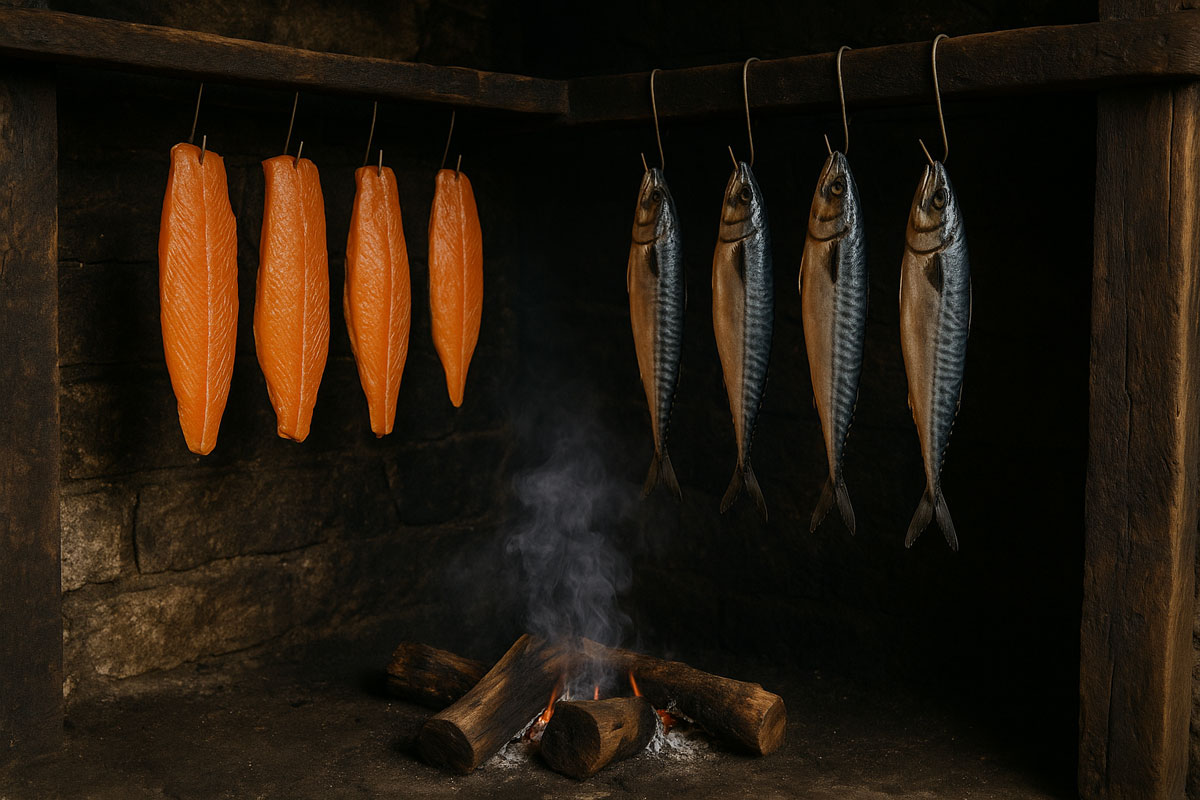
Before refrigeration, fresh fish spoiled quickly, leaving fishermen with little choice but to eat their catch immediately or risk losing it. Smoking offered a solution. By curing fish over smoldering wood or turf fires, communities along Ireland’s Atlantic coast found a way to extend the life of their harvest. What began as a practical necessity became a culinary hallmark—one that carried the essence of the sea and the smoke-filled hearth into every bite.
The Ancient Origins of Fish Smoking in Ireland
The roots of fish smoking in Ireland stretch back thousands of years. Archaeological evidence and folklore suggest that coastal communities were preserving fish through drying, salting, and smoking long before written records. The technique likely evolved from the need to make abundant seasonal catches—such as herring or salmon—last throughout the year.
Smoking was not unique to Ireland; it was common across Europe, particularly in Scandinavia. Historians believe the Vikings, who settled in Ireland from the 9th century, brought with them advanced methods of curing and smoking fish. These practices blended with existing Gaelic traditions, creating uniquely Irish variations that relied on local fuels like oak, beech, and turf to flavor the fish.
Monastic communities also played a role. Medieval monasteries, which were centers of farming, brewing, and food preservation, recorded the use of smoking and salting to sustain large religious populations. For fasting days, when meat was forbidden, smoked fish became a vital protein source.
By the Middle Ages, smoking fish was firmly established as a staple practice in Ireland’s coastal settlements. Whether influenced by Viking innovation, monastic necessity, or the realities of survival, smoking allowed fish to travel further inland, ensuring that even those far from the sea could enjoy its nourishment.
The Coastal Communities and Their Craft
From Donegal’s rugged inlets to the sheltered coves of West Cork, Ireland’s coastal communities became the guardians of the fish smoking tradition. In these small towns and villages, smoking fish was more than a way to preserve food—it was a family craft, passed down through generations.
Fishing villages often had communal smokehouses, simple stone buildings where fresh catches of herring, mackerel, or salmon were cured over slow-burning fires. Each household might bring their share of fish to be smoked, creating a shared food supply that helped communities survive leaner months. These smokehouses were often located near harbors, where the scent of woodsmoke mingled with the salty sea air.
Over time, families developed their own closely guarded techniques. Some preferred the mellow flavor of oak-smoked salmon, while others swore by turf fires that gave fish a distinctive earthy character. The choice of wood, the length of smoking, and the salting process all contributed to regional differences in taste and texture.
In places like Connemara and Kerry, smoked mackerel became a household staple—cheap, nutritious, and long-lasting. Meanwhile, in Donegal and Cork, smoked salmon grew into a delicacy, often reserved for festive occasions or shared with guests as a sign of hospitality.
These communities not only preserved their catch but also preserved their identity. To this day, many of Ireland’s most famous smokehouses trace their roots back to these humble beginnings, where craftsmanship and survival were intertwined with the rhythm of the sea.
From Necessity to Flavor
What began as a survival skill gradually evolved into a celebrated element of Irish cuisine. For centuries, smoking fish was a way to ensure food security. But as preservation methods improved and refrigeration became widespread in the 20th century, smoking no longer served as a necessity. Instead, it transformed into a culinary art form prized for its flavor.
Smoked fish developed a reputation as a delicacy. Oak-smoked salmon, with its rich, buttery taste, became a symbol of Irish coastal refinement. Smoked mackerel offered a more robust, earthy flavor that was affordable and widely loved. Even humble herring, once the food of survival, found new life on restaurant menus as a traditional yet flavorful dish.
The diversity of fuels used in different regions added to the uniqueness of Irish smoked fish. Oak imparted a warm sweetness, while beech lent a lighter note. Turf, abundant along the west coast, gave fish a deep, smoky character that spoke of Ireland’s boglands as much as its seas. These flavors connected the diner not just to the ocean but to the land itself.
As Ireland’s food culture modernized, chefs began showcasing smoked fish in innovative ways: smoked salmon on brown soda bread with a squeeze of lemon, smoked mackerel pâté served as a starter, or smoked herring paired with pickled vegetables. What was once eaten for necessity had become an emblem of Ireland’s culinary identity.
This shift from preservation to pleasure ensured that smoking fish endured as more than a relic of the past. It had become a tradition celebrated for its taste, artistry, and connection to Ireland’s coastal heritage.
Smoking Fish Today: Heritage Meets Modern Taste
In today’s Ireland, smoked fish is no longer a necessity but a celebrated delicacy, enjoyed in both humble kitchens and Michelin-starred restaurants. Artisanal smokehouses have sprung up along the coast, many run by families who trace their craft back through generations. Their commitment to tradition ensures that the flavors of oak, turf, and sea air remain part of every bite.
Smoked salmon is perhaps the most famous of Ireland’s offerings, exported worldwide and featured on festive tables at home. It pairs perfectly with brown soda bread, Irish butter, and a dash of lemon, making it a staple of both breakfast platters and elegant appetizers. Smoked mackerel, once the affordable choice of fishing families, has enjoyed a renaissance as a nutritious and flavorful option, often served as pâté or in hearty salads.
Tourism has also embraced this tradition. Visitors to Ireland can tour smokehouses in places like Cork, Kerry, and Connemara, where demonstrations reveal the age-old techniques of curing, salting, and smoking. Tastings connect guests directly to Ireland’s coastal heritage, offering a sensory experience that is both educational and delicious.
Modern chefs continue to innovate, blending old methods with new ideas. Smoked fish is now used in sushi rolls, pasta dishes, and even infused into soups and sauces, proving the versatility of this ancient practice. Sustainability has also become central, with smokehouses focusing on responsible fishing and eco-friendly production.
From Viking settlers to today’s artisanal producers, smoking fish has endured as one of Ireland’s most distinctive culinary traditions. It is a living link between past and present, sea and land, survival and celebration—ensuring that the tradition still smokes strong on Ireland’s coasts.