


Long before modern appliances entered the Irish kitchen, cooking was a matter of fire, stone, and ingenuity. We will now explore the ancient cooking techniques that sustained generations — from the flicker of the hearth to the smoky depths of pit ovens.
Table of Contents
- The Hearth as the Heart of the Home
- The Griddle (Báicín): Flatbreads and Bannocks
- Earth Ovens and Pit Cooking
- Cauldrons, Spits, and Sospans
- Legacy of Fire-Cooked Flavour in Irish Cuisine Today
The Hearth as the Heart of the Home
In early Irish homes, the hearth was more than a place to cook — it was the spiritual and social center of domestic life. Positioned in the middle of the house or along a wall, the open hearth provided warmth, light, and nourishment. Cooking was done directly over the flames or in the hot embers, using tools and methods passed down for generations.
Hearth Design and Materials
The typical hearth was a stone or clay-lined pit, raised slightly to protect the floor. In many rural cottages, turf (peat) was the fuel of choice — slow-burning, aromatic, and abundantly available. Hardwood logs were used where available, but in the boggy western regions, turf ruled.
Cooking Methods Around the Fire
- Suspended Pots: A pot crane (or crook) was often used to hang iron pots over the fire. This method was ideal for boiling soups, stews, or porridges.
- Hot Stone Cooking: Flat stones were placed in or near the embers to cook oatcakes, fish, or meat directly on the surface — a primitive but effective grill.
- Coal Baking: Dough wrapped in cabbage leaves or encased in clay was placed under the coals, allowing for slow, even baking.
The Communal Nature of the Hearth
Beyond sustenance, the hearth symbolized protection and community. Families gathered around it for warmth, storytelling, and prayer. It was considered sacred — in pre-Christian times, associated with the goddess Brigid, and later with Saint Brigid. The fire was never allowed to go out, as it was believed to bring blessings and keep evil at bay.
Foods Commonly Cooked at the Hearth
Daily meals reflected what was local and seasonal. Oat porridge, nettle broth, cabbage, and boiled barley were staples. Occasionally, fish or a joint of salted meat might be cooked when available. The diet was humble, but the methods coaxed out deep, smoky, and comforting flavors.
Preserving the Tradition
Today, heritage centers and folk villages across Ireland demonstrate these time-honored techniques, preserving the knowledge of a time when flame and patience were the only kitchen tools available. The hearth may be gone from modern homes, but its memory lives on in our stories — and our food.
The Griddle (Báicín) – Flatbreads and Bannocks
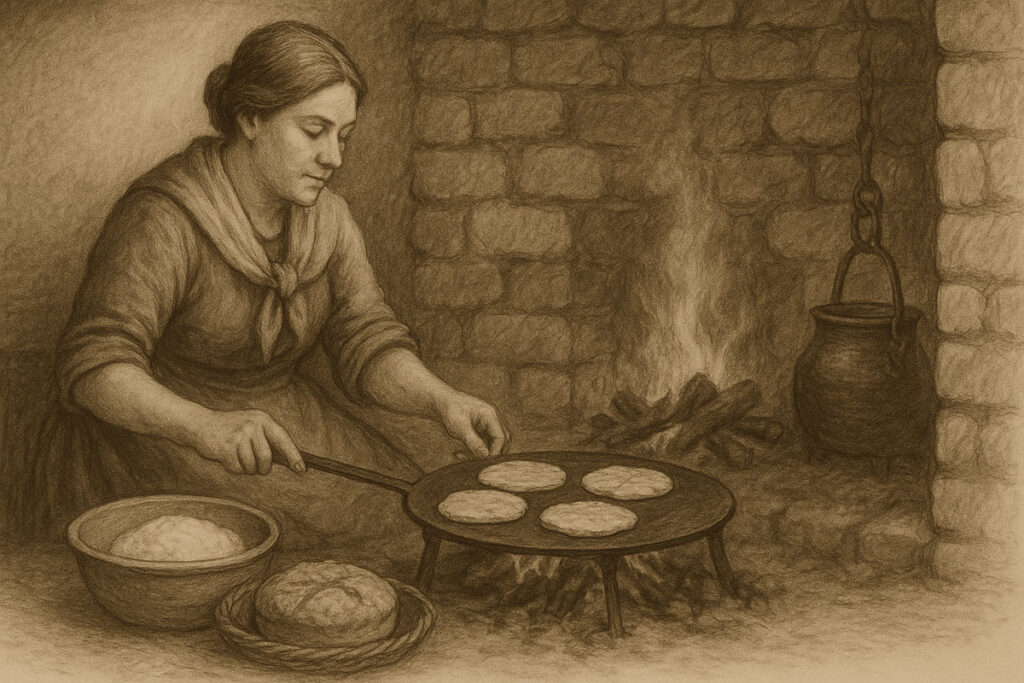
Before metal ovens were common, the Irish relied on a simple yet versatile cooking tool: the griddle, or báicín in Irish. This flat, round iron plate was placed directly over the open fire or rested on a tripod of stones. With no need for enclosed heat, the griddle offered a quick and efficient way to bake flatbreads, bannocks, and even early versions of soda bread.
A Tool of Simplicity and Ingenuity
The traditional Irish griddle was made from cast iron or thick wrought metal. It had no sides or lid — just a flat surface, slightly convex to allow fat or liquid to run off. Cooks controlled the heat by adjusting the griddle’s distance from the flame or by moving coals beneath it. Some households had griddles with detachable legs or handles, depending on the setup of the hearth.
Flatbreads and Everyday Baking
Without yeast or ovens, early Irish breads were typically unleavened or made with simple rising agents like sour milk and ash. Oats and barley were the main grains used, later joined by wheat when it became more available. Key griddle-baked breads included:
- Oatcakes: Thin, rustic rounds made from oats and water or buttermilk. These were quick to make and lasted well when dried.
- Bannocks: Thicker, round cakes cut into farls (quarters) and cooked on the griddle. Often made with barley or oatmeal and eaten warm with butter.
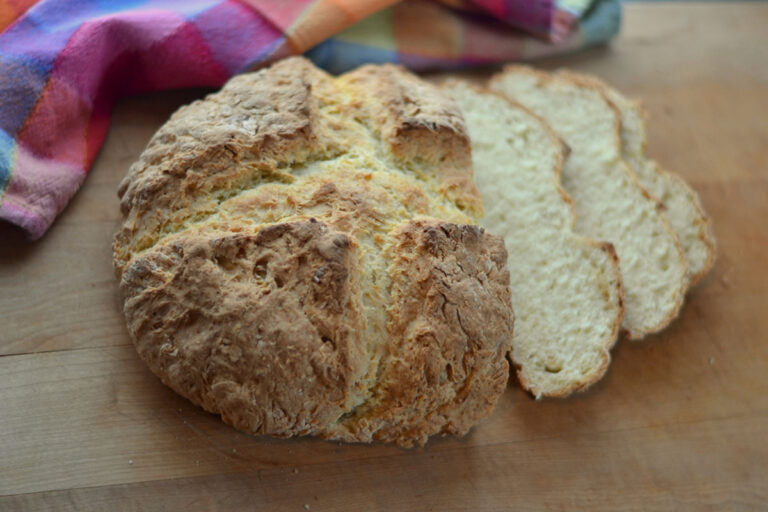
- Soda Farls: A later development, made from flour, baking soda, salt, and buttermilk — a precursor to modern soda bread.
Techniques Passed Through Generations
Women typically managed the griddle, developing a feel for when the heat was right and the dough was ready to flip. There was no timer or thermometer — just intuition, tradition, and practice. The smell of griddle bread browning on the fire was a familiar comfort in Irish cottages.
Serving and Storing
Breads were eaten fresh when possible, but could also be hung to dry for later use. A smear of homemade butter or a spoon of jam transformed a simple oatcake into a satisfying meal. In lean times, bread alone might have to serve as both breakfast and supper.
The Griddle’s Legacy
Though replaced by the oven in most homes, the griddle lives on in traditional Irish cookery. Some still use a cast iron pan or modern griddle to make soda farls and potato breads. The báicín remains a symbol of practical, nourishing food made with minimal resources and plenty of heart.
Earth Ovens and Pit Cooking – The Ancient Art of Cooking Underground
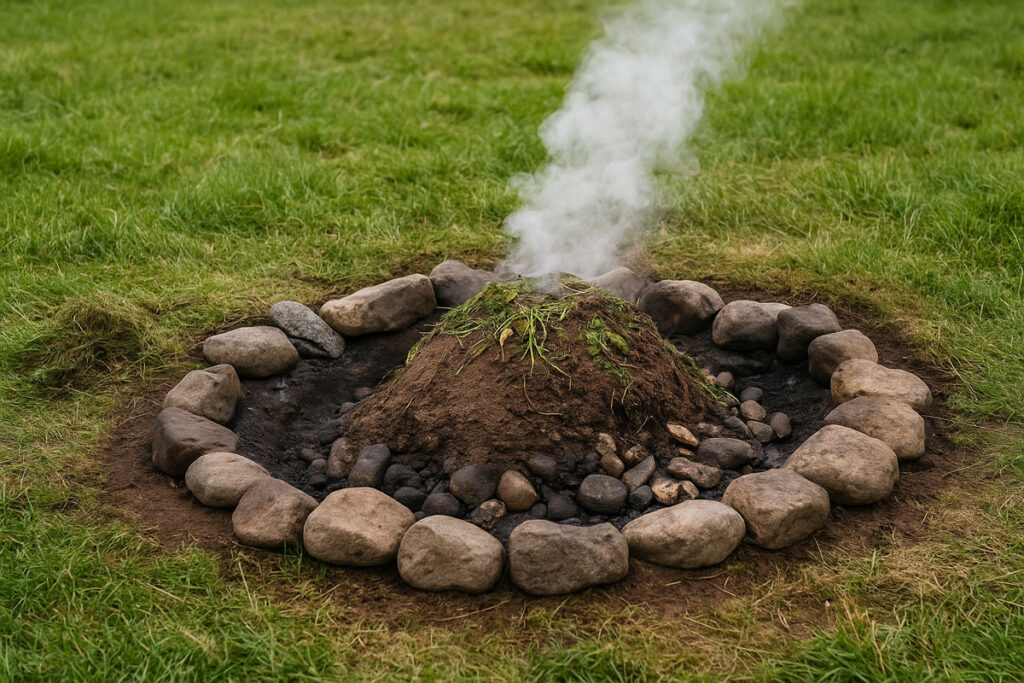
Long before metal cookware or masonry hearths, the Irish — like many ancient cultures — harnessed the earth itself as a cooking tool. Earth ovens, or pit ovens, were among the earliest and most effective methods for preparing food. These underground cooking pits, known in Irish as “poll cócaireachta,” made use of heated stones and insulating materials to slow-cook meat, fish, and root vegetables to tender perfection.
How Pit Cooking Worked
The basic method was deceptively simple and required minimal tools:
- A pit was dug into the earth, often lined with stones.
- A fire was built inside the pit to heat the stones for several hours.
- Once the stones were glowing hot, the embers were removed or spread out, and the food — wrapped in leaves, grass, or cloth — was placed inside.
- The pit was then covered with sod, soil, or turf to trap the heat and steam.
- After several hours, the pit was uncovered and the food removed — juicy, smoky, and infused with earthy flavor.
What Was Cooked in a Pit Oven?
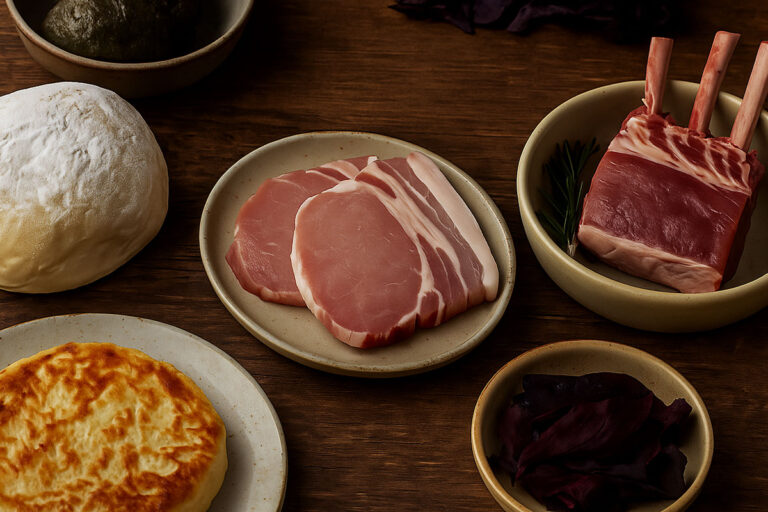
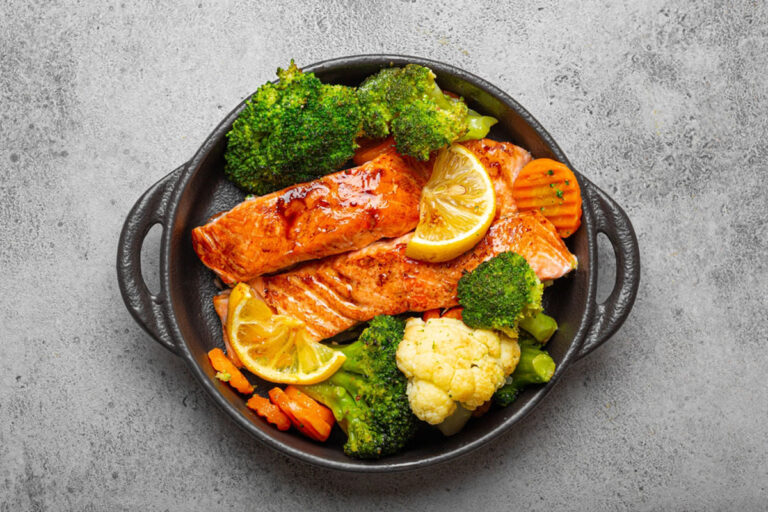
- Whole fish or cuts of meat: Salmon, mackerel, rabbit, and pork were typical choices, often wrapped in rushes or seaweed.
- Vegetables: Root crops like carrots, turnips, and parsnips, as well as foraged wild onions and garlic, were layered in.
- Feasts and gatherings: Pit ovens were commonly used during Lughnasadh harvest festivals or clan gatherings, making them both practical and ceremonial.
Evidence from Irish Archaeology
Archaeological digs have uncovered cooking pits dating back thousands of years. Fulachtaí fia — ancient cooking sites found across Ireland — are believed to have served a similar purpose. These sites consist of a trough of water surrounded by fire-heated stones. Though their exact function is debated, many scholars believe they were used to boil meat or prepare hot baths through the same heat-stone process used in pit ovens.
Why Pit Cooking Endured
Pit cooking required no special equipment and could feed large groups, making it ideal for early Irish communities. It was slow, but reliable — allowing flavors to develop over time and ensuring food was safely cooked without drying out. It also worked well with the irregular cuts of meat and wild ingredients common in pre-farming eras.
Bringing It Back Today
While no longer common, earth oven techniques are being revived in Irish food heritage events and reenactments. Outdoor chefs and bushcrafters have adapted similar slow-cooking styles using cast iron Dutch ovens buried in coals. Pit cooking may be ancient, but its spirit lives on — blending food, fire, and a deep connection to the land beneath our feet.
Cauldrons, Spits, and Sospans – Boiling, Roasting, and Simmering
As Irish cooking evolved from earth pits and open hearths, the arrival of metal cookware brought greater variety and efficiency. Chief among these tools were the cauldron (or hanging pot), the spit for roasting over flames, and the humble sospan (a small pot or saucepan). These vessels allowed for more complex meals, particularly in stews, soups, and roasted meats.
The Hanging Cauldron – A Staple of the Irish Hearth
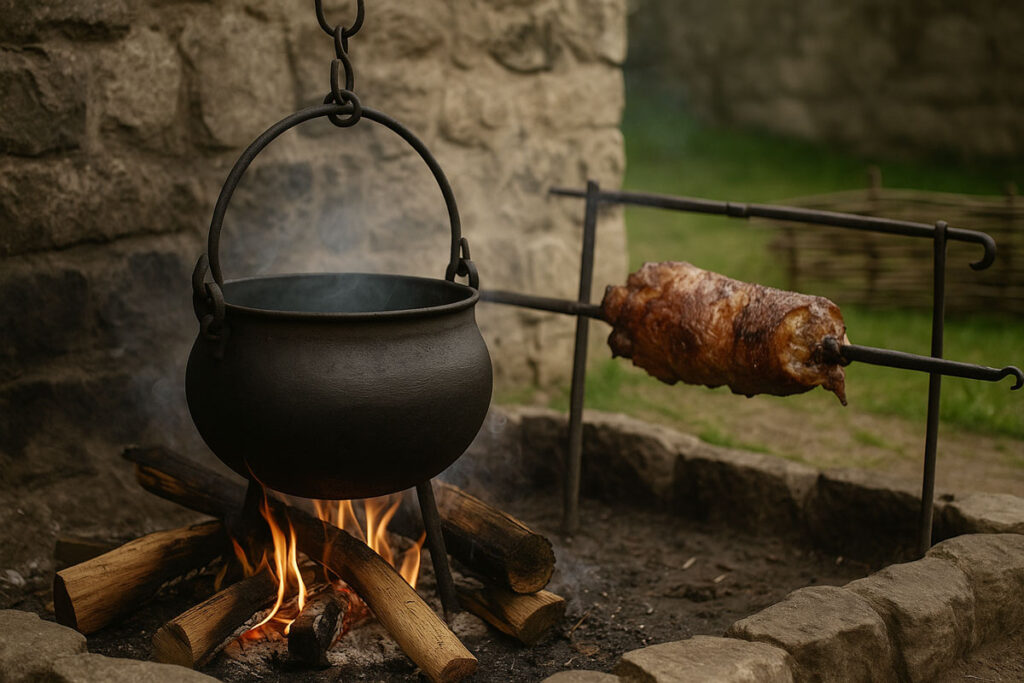
Suspended by a chain, hook, or pot crane over the fire, the cauldron was the workhorse of the traditional Irish kitchen. Made from iron or bronze in earlier times, it was used for boiling grains, preparing broth, and making hearty stews.
- Stews (Stobhach): A mix of root vegetables, barley, and any available meat — often lamb or mutton — simmered slowly for hours.
- Porridge: Oats or barley boiled with water or milk, sometimes sweetened with honey or flavored with foraged herbs.
- Broths and Herbal Remedies: Cauldrons also played a role in traditional healing, used to steep herbs and roots.
Spit Roasting – The Celebration Method
For feasts or special occasions, meat was roasted on a spit — a long rod turned by hand or balanced on supports over an open flame. This technique was labor-intensive, requiring constant rotation, but produced richly browned, smoky results.
- Whole birds: Goose, duck, or wild game birds were trussed and basted with fat or mead as they turned over the fire.
- Joints of pork or lamb: Roasted slowly, they were often served with fresh herbs or wrapped in leaves to hold moisture.
Spit roasting was rarely used for everyday meals due to the amount of meat and effort required. It was more commonly seen during festivals or communal gatherings — a sign of hospitality and abundance.
The Sospan – Small but Essential
The word sospan, used especially in parts of western Ireland, refers to small cooking pots used for sauces, broths, or reheating leftovers. These pots were often made from tin or copper and required careful tending due to their thin walls and quick heating.
Sospans were ideal for:
- Heating milk or gruel for children and the elderly
- Melting fat or tallow for use in cooking or candles
- Preparing herbal teas and infusions
Social and Cultural Significance
Each of these tools — the cauldron, spit, and sospan — held symbolic importance. The cauldron, in particular, has deep roots in Celtic mythology, where it represented abundance, rebirth, and wisdom. In practical life, it represented care and nourishment — food shared from one pot among all gathered.
Preserving the Legacy
Today, replicas of these cooking methods can be seen at Irish heritage farms, reenactment villages, and living history museums. Whether it’s a bubbling stew over a turf fire or a roast turning above glowing coals, these traditional tools continue to inspire Irish culinary heritage — even in modern kitchens.
Legacy of Fire-Cooked Flavour in Irish Cuisine Today
Though modern ovens, stovetops, and microwaves now dominate Irish kitchens, the spirit of traditional fire-cooked food lives on in the flavors, techniques, and values passed down through generations. Open-fire cooking is no longer a necessity, but it remains a cherished part of Ireland’s culinary heritage — celebrated in recipes, reenactments, and rural communities alike.
Flavours Born of Flame
Even today, Irish cuisine favors simple, earthy ingredients that shine through slow, careful cooking. The influence of fire-based methods can be tasted in:
- Charred and smoked notes: Whether in black pudding, grilled fish, or turf-smoked salmon, there’s an appreciation for the rustic, smoky edge that fire imparts.
- One-pot stews and soups: Many modern Irish dishes like coddle or lamb stew are direct descendants of cauldron meals.
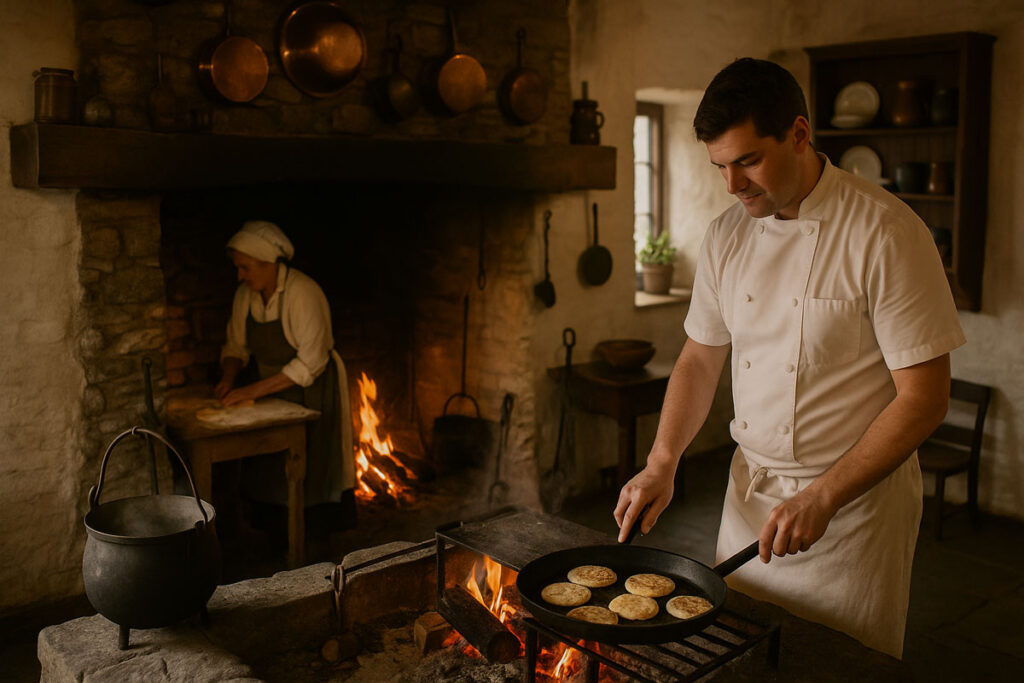
- Griddle revival: Soda farls, potato breads, and oatcakes are still made on cast iron pans — a nod to the ancient báicín.
Back-to-Basics Cooking
Across Ireland, a growing number of food festivals, farm stays, and wilderness schools are reviving traditional techniques. These hands-on experiences allow visitors to cook bannocks on a hot stone, stir stew in an iron pot over turf, or bake root vegetables in a recreated earth oven.
Chefs and home cooks alike are rediscovering the joys of:
- Cooking slowly with fewer ingredients
- Connecting with the land and seasonal cycles
- Honoring food not just as fuel, but as a communal ritual
Cultural Memory Through Food
Traditional cooking methods aren’t just about technique — they’re about memory. The aroma of a peat fire, the sizzle of a griddle, or the soft crumb of a soda farl carry emotional weight. They recall grandparents’ kitchens, village gatherings, and stories passed around the hearth.
In Irish folklore, the hearth was sacred — a place of storytelling, prayer, and kinship. Cooking over fire was more than practical; it was spiritual. And while technology has changed the tools, it hasn’t replaced the heart of what cooking means in Irish culture.
Preserving and Sharing
Through museums, historical sites, cookbooks, and online platforms, the story of Ireland’s fire-cooked past is being preserved. Whether you’re baking a griddle cake, simmering soup in a heavy pot, or roasting meat outdoors, you’re tapping into a legacy that stretches back thousands of years.
Conclusion
The old ways of cooking — born of necessity, sustained by tradition — continue to shape Ireland’s food identity. They remind us that even the humblest meal, prepared with care and fire, can nourish more than the body. It feeds the soul.