


When people think of an Irish breakfast, the image that usually comes to mind is the hearty Full Irish: sausages, rashers, black and white pudding, fried eggs, tomatoes, and toast, all washed down with a strong cup of tea. But the breakfasts of Ireland’s past were far more varied—and often far more unusual—than what we find on the plate today.
For centuries, Irish breakfasts were shaped by necessity, seasonality, and the rural rhythms of life. Farmers and laborers needed fuel for long days, and meals were built around what was available locally—oats, potatoes, dairy, and occasionally fish or offal. While some of these foods have faded into obscurity, they provide a fascinating glimpse into Ireland’s culinary heritage.
Table of Contents
- Introduction: More Than the Full Irish
- Stirabout (Oatmeal Gruel)
- Tripe and Drisheen
- Boxty Cakes
- Fish and Seasonal Bakes
More Than the Full Irish
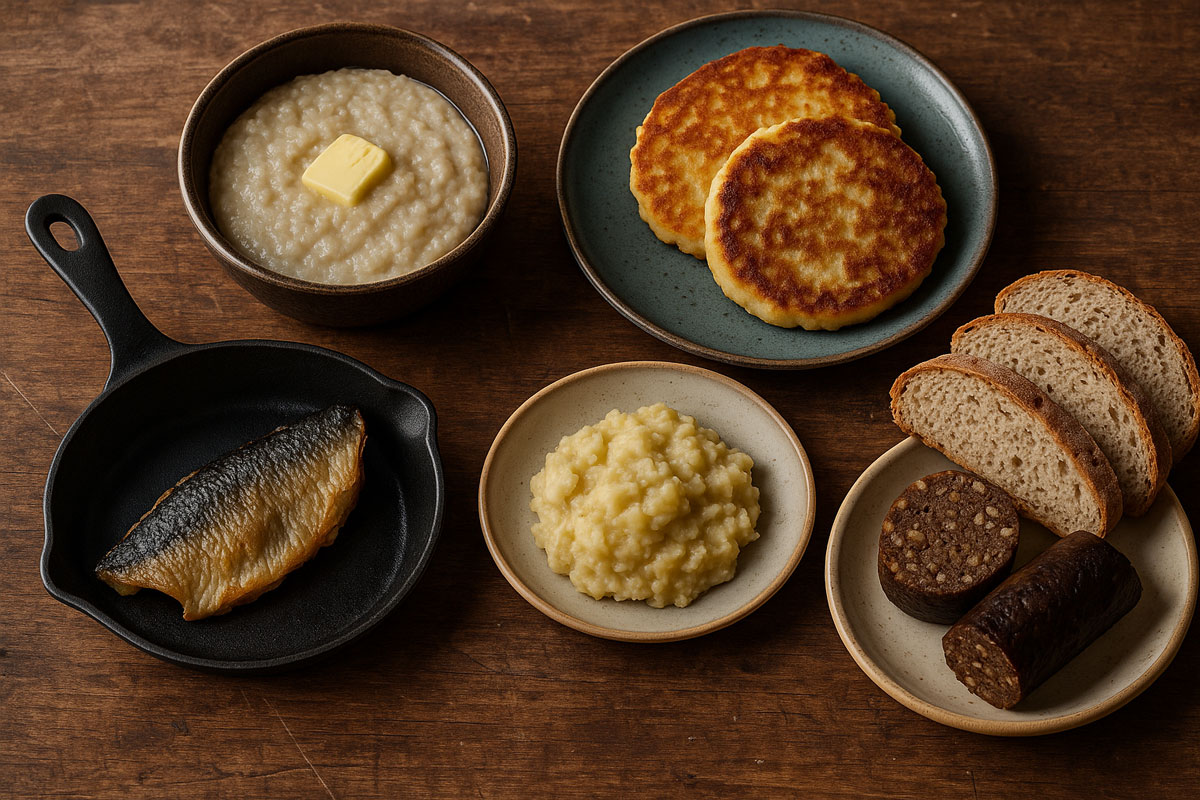
The Full Irish is a relatively modern standardization of the Irish breakfast, but older generations began their day with meals that reflected resourcefulness and regional traditions. From stirabout, a thick oat gruel that predates the potato, to fried herrings on the coast, to potato-and-apple cakes cooked on a griddle, Irish breakfasts of the past were diverse, filling, and deeply tied to the land.
Stirabout (Oatmeal Gruel)
Long before the potato became Ireland’s staple, oats were the cornerstone of the Irish diet. One of the most common ways they were eaten was as stirabout, a simple but filling oat gruel that served as the primary breakfast for centuries. Made by boiling coarse oatmeal in water or milk, stirabout was hearty, inexpensive, and capable of sustaining farmers through long hours in the fields.
Unlike today’s creamy porridge, stirabout had a much thicker texture. It was often poured into a dish, left to cool and set, then sliced into wedges that could be carried to work and eaten cold. Families might sweeten it with a little honey or treacle when available, though more often it was eaten plain, sometimes with a splash of buttermilk on top.
Stirabout’s popularity stemmed from its practicality. Oats grew well in Ireland’s damp climate, and the dish could be made in large quantities to feed an entire household. It was a breakfast that combined nourishment with economy, reflecting the resourcefulness of rural life.
Today, while porridge remains common in Irish homes, traditional stirabout has largely disappeared. Its dense, rustic form has been replaced by smoother, creamier versions better suited to modern tastes. Yet stirabout stands as a reminder of how the simplest foods once provided the strength to fuel Ireland’s working classes.
Tripe and Drisheen
Of all the forgotten Irish breakfast items, few are as unusual to modern palates as tripe and drisheen. Once a common dish in Cork and parts of Munster, this combination of offal-based foods was both nourishing and inexpensive, making it a staple for working-class families.
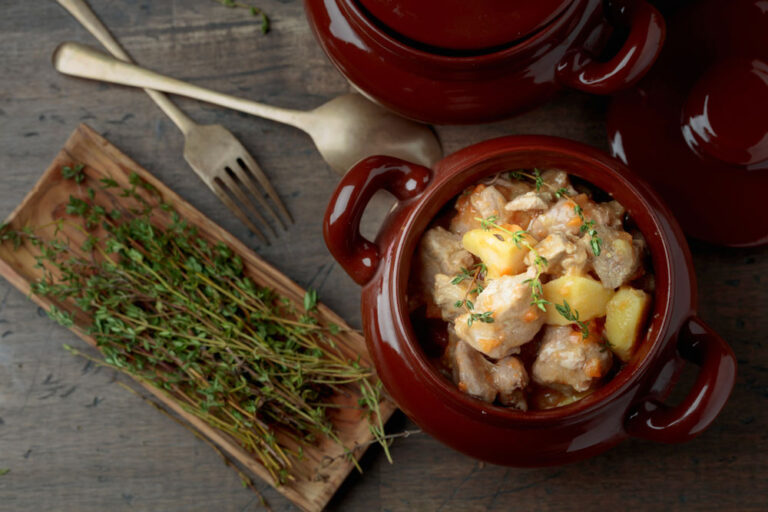
Tripe refers to the lining of a cow’s stomach, typically cleaned, boiled, and served in milk with onions. It was soft, mild, and filling—though its texture made it an acquired taste. Drisheen, on the other hand, was a type of blood pudding unique to the region, made from cow’s blood, milk, and herbs, encased in natural casing and boiled.
Together, tripe and drisheen formed a hearty breakfast, packed with protein and iron, that sustained laborers through demanding days. For many families in Cork, it was a beloved local tradition, often purchased from butchers who specialized in preparing both elements of the dish.
Today, tripe and drisheen have almost entirely vanished from breakfast tables, surviving only in niche food festivals or as a curiosity in discussions of Ireland’s culinary past. To the modern diner, the thought of offal for breakfast may seem unusual, but for generations, it was both a necessity and a comfort food.
The decline of this dish reflects broader changes in Irish diets. As incomes rose and global food trends spread, offal lost its place at the center of the table. Still, tripe and drisheen remain an important part of Ireland’s food heritage—a reminder of how resourcefulness shaped everyday meals.
Boxty Cakes
Few traditional foods are as versatile as boxty, the Irish potato pancake. While today it is often served in restaurants as a rustic side dish or novelty item, boxty was once a common breakfast staple, especially in the midlands and northwestern counties. Easy to prepare and filling, it was the perfect way to use up leftover potatoes.
Boxty came in many forms: grated raw potato mixed with mashed potato and flour to make a batter fried on a griddle, or shaped into cakes and baked or boiled. For breakfast, boxty cakes were fried until crisp and golden, then eaten hot with a little butter, buttermilk, or even a slice of bacon when available.
The popularity of boxty reflected the central role of the potato in the Irish diet. Cheap, abundant, and endlessly adaptable, potatoes could be turned into a variety of dishes, and boxty was one of the simplest ways to transform them into a satisfying meal. Children on their way to school and farm laborers heading to the fields alike would have enjoyed boxty for breakfast.
Though still celebrated at events like the annual Boxty Festival in Leitrim, the dish has largely disappeared from everyday breakfast menus. Today’s Irish breakfast tends to favor bread, cereal, or the standardized “Full Irish,” leaving boxty as more of a heritage food than a household staple.
Yet boxty cakes remain an enduring symbol of Irish ingenuity—transforming the humble potato into a dish that carried families through lean times and busy mornings.
Fish and Seasonal Bakes
One of the biggest differences between traditional and modern Irish breakfasts is the role of fish. In coastal communities, it was once entirely normal to begin the day with herring, kippers, or mackerel, fried up in a pan and eaten with bread or potatoes. Cheap, plentiful, and full of protein, fish provided the energy needed for a day’s work at sea or on the land.
Fried herring with oats, smoked mackerel, or even salted ling were common sights on morning tables. For many fishing families, breakfast was simply whatever came in from the nets the night before. Today, these dishes have all but disappeared from the breakfast menu, though they occasionally appear in retro food festivals or as part of high-end brunch menus.
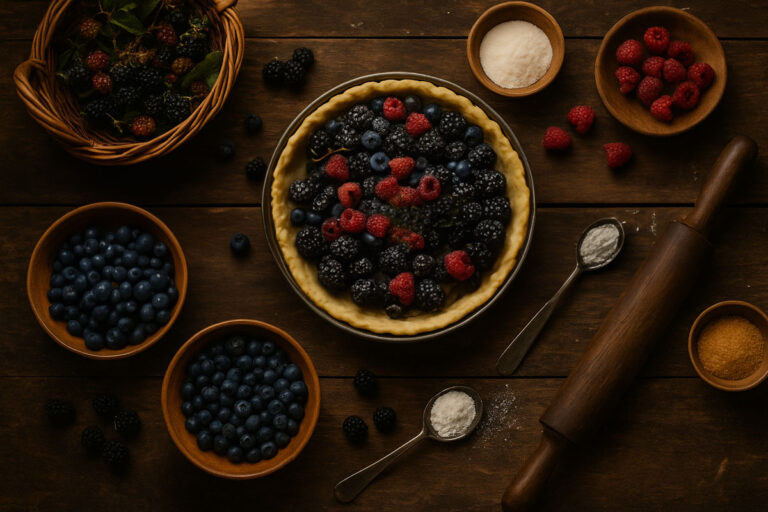
Alongside fish, sweet and savory seasonal bakes once played a role in breakfast traditions. Potato apple cakes—a simple mixture of mashed potato and grated apple fried on a griddle—were especially popular in autumn, when orchards produced an abundance of fruit. Scones flavored with berries or rhubarb, and griddle cakes made with buttermilk, also appeared seasonally on Irish breakfast tables.
These dishes reflected the rhythm of the farming year, when families relied on whatever was in season. They added variety to otherwise repetitive meals and gave Irish breakfasts a touch of sweetness. While modern convenience foods have pushed them aside, they remain part of the story of Ireland’s culinary creativity.
From fried herrings to potato apple cakes, these forgotten foods remind us that the Irish breakfast was once far more diverse than the modern “Full Irish.” They reveal a past where resourcefulness and seasonality shaped every meal, and where breakfast was a reflection of both land and sea.