
Spring has long been a season of renewal in Ireland. As the days grow longer and the countryside bursts into shades of green, communities have traditionally welcomed the arrival of warmer weather with seasonal foods that celebrate new life and fresh beginnings. Among the most important symbols of spring were eggs, which represented fertility, abundance, and renewal long before they became associated with modern Easter celebrations.
For generations of Irish families, spring marked the end of winter scarcity and the return of fresh ingredients to the table. Eggs, early vegetables, dairy products, herbs, and newly available farm produce all played an important role in seasonal meals. These foods were often connected not only to nourishment but also to religious observances, folk customs, and community gatherings.
The Symbolism of Eggs in Ireland
Eggs have been symbols of life and rebirth for thousands of years. In Ireland, their significance predates Christianity and can be traced to ancient beliefs about fertility, renewal, and the changing seasons. As spring arrived and hens began laying more regularly after the darker months of winter, eggs became a natural sign that the land was awakening once again.
For farming families, the appearance of fresh eggs after winter was both practical and symbolic. They provided valuable nutrition at a time when stored foods from the previous harvest were often running low. Their connection to new life also made them an important feature of seasonal celebrations.
Throughout Irish folklore, eggs occasionally appeared in customs linked to luck, prosperity, and protection. While many of these traditions varied from region to region, the egg’s association with fertility and abundance remained remarkably consistent across the country.
Eggs and Easter Traditions
Eggs became especially important during Easter, one of the most significant celebrations in the Irish calendar. Historically, many Christians abstained from eating eggs during the Lenten season leading up to Easter Sunday. As a result, eggs accumulated throughout Lent and were eagerly enjoyed once the fasting period ended.
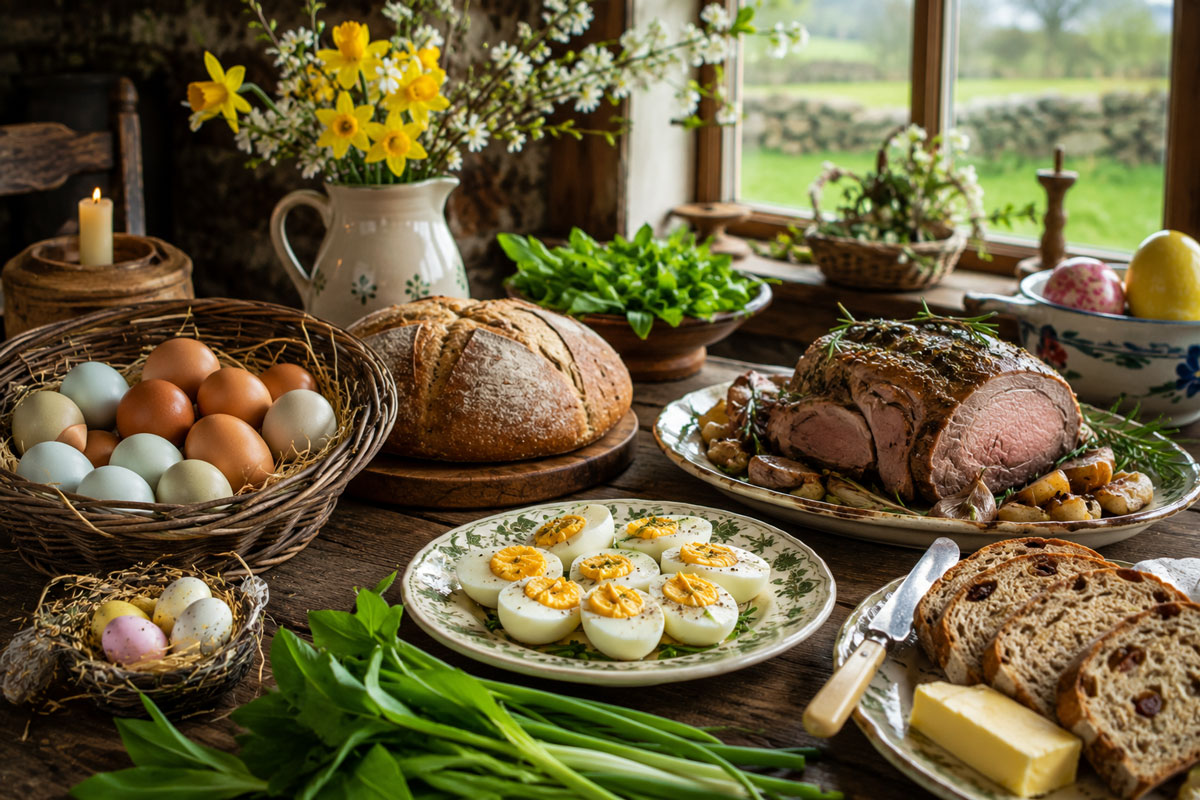
On Easter morning, families often gathered for a meal that featured eggs prominently. In many households, boiled eggs were served alongside breads, butter, and other special foods reserved for the holiday. For children, egg-related games and traditions added an element of fun to the celebration.
One of the most popular customs involved egg rolling competitions. Participants would roll hard-boiled eggs down grassy hillsides, with the egg traveling the furthest or remaining intact often declared the winner. Variations of this tradition could be found in different parts of Ireland and Britain, reflecting the widespread symbolic importance of the egg during Easter.
As chocolate became more widely available during the nineteenth and twentieth centuries, chocolate Easter eggs gradually joined older customs. However, the tradition remained rooted in the same themes of renewal, celebration, and the arrival of spring.
Springtime Foods in Rural Ireland
Beyond eggs, spring brought a welcome variety of fresh foods to Irish tables. After months of relying heavily on stored root vegetables, grains, and preserved foods, families eagerly embraced the first seasonal ingredients of the year.
Fresh dairy products played a major role in springtime meals. As cattle returned to richer grazing pastures, milk production increased, leading to an abundance of butter, buttermilk, and cream. Many regarded spring butter as particularly rich and flavorful due to the fresh grass consumed by grazing animals.
Early greens were also highly valued. Nettles, watercress, sorrel, and wild garlic often appeared in soups and simple dishes. These fresh ingredients provided vitamins and nutrients that had been scarce during winter and became important markers of the changing season.
Lamb was another food strongly associated with spring. Ireland’s long farming tradition meant that lamb frequently appeared at seasonal gatherings and festive meals. Combined with young vegetables and fresh herbs, it became one of the most recognizable spring dishes in many regions.
Traditional breads, oatcakes, and dairy-based foods continued to form the foundation of many meals, while fresh eggs enhanced everything from baking to simple breakfasts enjoyed after winter’s hardships had passed.
Seasonal Celebrations and Community Gatherings
Spring in Ireland was not simply about food—it was also about community. Seasonal gatherings marked the transition from winter to a more active agricultural year. Neighbors visited one another more frequently, markets became busier, and religious celebrations brought families together.
Many spring customs reflected a deep appreciation for nature’s cycles. The return of migratory birds, the blooming of hedgerows, and the appearance of fresh produce all reinforced the connection between food and the land.
Easter celebrations often included special meals shared among extended family members. Tables featured eggs, breads, butter, cakes, and seasonal meats, creating occasions that blended faith, hospitality, and gratitude.
For rural communities especially, these gatherings offered a chance to celebrate the end of winter while looking forward to the growing season ahead. Food played a central role in expressing hope, abundance, and community spirit.
How These Traditions Continue Today
While modern Ireland enjoys year-round access to foods from around the world, many springtime traditions remain remarkably familiar. Eggs continue to symbolize Easter and renewal, while seasonal ingredients remain popular among home cooks and chefs alike.
Farmers’ markets, artisan food producers, and advocates of seasonal eating have helped renew interest in traditional spring foods. Fresh eggs, local dairy products, spring lamb, wild garlic, and foraged greens are increasingly celebrated as part of Ireland’s rich culinary heritage.
Many families still gather for Easter meals centered around seasonal ingredients, even if modern menus differ from those of previous generations. The themes, however, remain largely unchanged: renewal, gratitude, abundance, and the joy of sharing food with loved ones.
The story of egg traditions and springtime foods in Ireland offers a fascinating glimpse into how food reflects both the natural world and cultural identity. From ancient symbols of rebirth to contemporary Easter celebrations, eggs continue to connect Irish people with centuries of seasonal customs. Alongside fresh dairy, spring vegetables, and festive gatherings, they remain an enduring reminder that after every winter comes the promise of renewal.