


From Shamrocks to Soda Bread: The Food Traditions of St. Patrick’s Day
St. Patrick’s Day is celebrated around the world with parades, music, and plenty of green—yet the heart of the day has always been something simpler: gathering. And wherever people gather, food follows. Some St. Patrick’s Day dishes are deeply rooted in Irish home cooking, shaped by the seasons and the pantry. Others—especially the famous “corned beef and cabbage” spread—tell the story of Irish emigrants building new traditions abroad. Together, they form a delicious timeline of Irish identity, memory, and celebration.
So what are the real food traditions of St. Patrick’s Day? The answer depends on where you’re standing: a farmhouse kitchen in Ireland, a city street in America, a pub in London, or a family table in Australia. Let’s follow the trail from shamrocks to soda bread—and see how March 17th became a feast day of its own.
Table of Contents
- Why Food Matters on St. Patrick’s Day
- What Was Traditionally Eaten in Ireland
- Soda Bread: The Loaf That Became a Symbol
- Bacon and Cabbage: A Real Irish Classic
- Colcannon and Champ: Comfort Food with History
- Stews, Soups, and the One-Pot Tradition
- Fish and the Lenten Table
- Corned Beef and the Irish-American Feast
- Sweet Treats: Simple Bakes and Family Puddings
- The Modern St. Patrick’s Day Menu
- How to Celebrate with an Authentic Irish-Inspired Table
Why Food Matters on St. Patrick’s Day
St. Patrick’s Day began as a religious feast day—honouring the patron saint of Ireland. For much of Irish history, it wasn’t the loud public celebration it is today. It was a day anchored in church, community, and family visiting. In many years it fell during Lent, which meant the “feast” was often modest: a brighter meal rather than a lavish one. But even when the table was simple, the intention mattered. A special loaf, a shared pot, a better cut of meat if it could be spared—those small upgrades were how Irish households marked an important day.
Food became part of the tradition not because Ireland had endless abundance, but because the meal was a way of saying: today matters.
What Was Traditionally Eaten in Ireland
Traditional Irish food is practical food. It grew out of seasons, storage, and the realities of rural life: potatoes and cabbage, oats and butter, bread baked to stretch a week, and meat preserved when possible. When St. Patrick’s Day arrived in March, the pantry was often in its “late winter” mode—stores running down, spring produce not quite in full swing. So Irish celebrations tended to feature what was already there, prepared with a little extra care.
In many households, a St. Patrick’s Day meal in Ireland might look like:
- A one-pot dinner (stew, soup, or boiled dinner)
- Fresh bread (often soda bread)
- Potatoes served boiled, mashed, or in a comforting mix like colcannon
- Cabbage or greens—especially in late winter and early spring
- Meat when available—more often bacon than beef
- Tea and something baked if the day included visitors
Soda Bread: The Loaf That Became a Symbol
If there is one food that travels well across borders and generations, it’s Irish soda bread. It’s simple, quick, and built on pantry basics—flour, buttermilk (or sour milk), salt, and a raising agent. In traditional kitchens, soda bread was a practical solution: no yeast to fuss with, no long proving time, and a warm loaf on the table quickly.
Over time, soda bread took on a symbolic role. For Irish families abroad, baking soda bread became a way of keeping “home” alive in the oven. And for modern St. Patrick’s Day celebrations, it’s a perfect centrepiece because it feels authentic without being complicated.
Heritage note: In Ireland, soda bread is often not sweet and not packed with add-ins. The raisin-studded “Irish soda bread” common in America is delicious—but it’s more of an Irish-American celebration loaf than an everyday traditional Irish one.
Bacon and Cabbage: A Real Irish Classic
When people search for “traditional St. Patrick’s Day food,” they often get steered toward corned beef. But in Ireland, the more historically common celebratory meat is cured pork—bacon—served with cabbage and potatoes. This is a true classic of Irish home cooking: hearty, dependable, and deeply tied to what was practical for rural households.
Bacon was easier to preserve and portion than fresh meat, and it could flavour a pot even when used sparingly. The cabbage, cooked tender in the same kitchen rhythm, turned a plain meal into something comforting and complete. When served with potatoes—boiled or mashed—the plate becomes unmistakably Irish in spirit.
Colcannon and Champ: Comfort Food with History
Few dishes say “Irish comfort” like colcannon: mashed potatoes mixed with cabbage (or kale), butter, and sometimes scallions. It’s humble and rich at the same time, and it’s exactly the kind of food that makes sense in March—warming, filling, and built from what’s available.
Champ, a close cousin, uses scallions (spring onions) stirred through buttery mash. Both dishes are a reminder that Irish cooking often shines brightest when it’s simple. On St. Patrick’s Day, serving colcannon beside bacon, or with a fried egg, or simply with extra butter, can feel like a proper celebration without turning the day into a spectacle.


Stews, Soups, and the One-Pot Tradition
The Irish one-pot tradition is more than convenience—it’s a way of cooking shaped by hearth life, fuel-saving, and feeding many mouths. A pot on the fire could simmer while work continued, growing richer as it went. On St. Patrick’s Day, a stew or soup is one of the most authentic ways to honour that tradition.
Common St. Patrick’s Day pot meals include:
- Irish stew (often lamb or mutton historically, though beef versions are common today)
- Vegetable soup with root veg and herbs, served with brown bread
- Hearty broths made richer with a bone or small portion of meat
A pot meal is also naturally communal—perfect for a holiday centred on gathering.
Fish and the Lenten Table
Because St. Patrick’s Day frequently falls during Lent, fish has long been part of the March table, especially in households observing seasonal restraint. In coastal communities, fish was not a “special occasion novelty”—it was part of life. But on a feast day, it might be served in a slightly more celebratory way: a richer sauce, a bigger portion, or a meal shared with visitors after church.
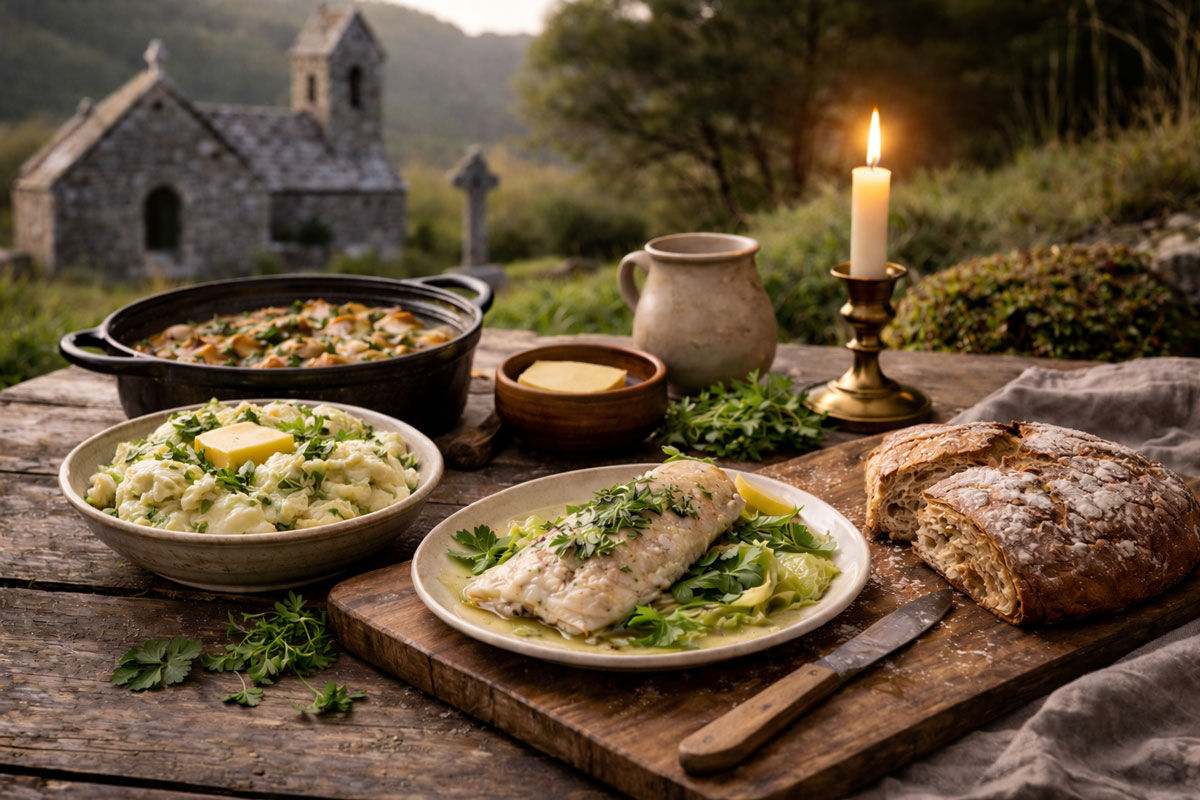
St. Patrick’s Day-friendly Irish seafood ideas include simple fish bakes, smoked fish dishes, or a warming chowder served with brown bread. These keep the spirit of Irish tradition while fitting the season.
Corned Beef and the Irish-American Feast
Now for the famous one: corned beef. It’s a cornerstone of St. Patrick’s Day in America, and it’s a real tradition—just not one that developed in Ireland as the standard March 17th meal.
Irish immigrants in the 19th century often lived alongside other immigrant communities and adapted to what was affordable and available. In many places, corned beef became a practical substitute for the cured pork (bacon) that would have been more familiar at home. Over time, it evolved into a beloved Irish-American celebratory dish—served with cabbage and potatoes and wrapped in family memories.
The best way to honour this is to treat it as what it is: an Irish diaspora tradition that deserves respect, even if it isn’t the “old country” default.
Sweet Treats: Simple Bakes and Family Puddings
Irish desserts have often been less about show and more about comfort: simple puddings, fruit bakes, and teatime treats made with pantry ingredients. For St. Patrick’s Day, sweet traditions might include:
- Apple tart (warm, familiar, and perfect with custard or cream)
- Tea brack (a fruit loaf often linked to hospitality and the teapot)
- Oat-based bakes that feel rustic and deeply Irish
- Simple sponge cakes or biscuits served when visitors call in
And for many modern tables—especially abroad—“St. Patrick’s Day desserts” can include green-themed treats. They’re not traditional Irish heritage food, but they’re part of the day’s global fun. The key is knowing which is which.
The Modern St. Patrick’s Day Menu
Today, St. Patrick’s Day food traditions depend on geography and mood. In Ireland, you’ll see everything from home-cooked classics to restaurant specials—plus a growing appetite for modern Irish cooking that keeps traditional ingredients but updates the presentation.
Modern Irish-style St. Patrick’s Day menus often include:
- Gourmet versions of stew and seafood chowder
- Soda bread served warm with butter and jam
- Colcannon as a side to roasted meats
- Seasonal touches like greens, leeks, and early spring produce
- “Irish-inspired” desserts that nod to tradition without copying it exactly
And globally, St. Patrick’s Day has become a cultural celebration as much as a religious one—so the food often leans toward festive and crowd-friendly.
How to Celebrate with an Authentic Irish-Inspired Table
If you want a St. Patrick’s Day menu that feels authentic, warm, and rooted in Irish tradition (without being overly strict), here’s a simple way to build it:
- Choose one main tradition: Irish stew or bacon and cabbage or a fish supper.
- Add a potato classic: colcannon, champ, or buttery mash.
- Bake one loaf: soda bread is perfect—quick, rustic, and deeply Irish in spirit.
- Keep the sweet simple: apple tart, tea brack, or a humble traybake.
- Serve it like Ireland would: warm, generous, and meant to be shared.
And if you’re celebrating with Irish-American traditions, you can still keep an Irish heart at the centre of it: pair corned beef with brown bread, make a simple mash, and tell the story at the table—how traditions travel, adapt, and endure.
Closing: A Feast Built from Memory
St. Patrick’s Day food traditions aren’t just recipes—they’re stories. In Ireland, the table was shaped by seasons, simplicity, and a quiet sense of celebration. Abroad, the table became a bridge—connecting families to home through what they could find and afford. From shamrocks to soda bread, the real tradition is the same: gather your people, set something warm in the centre, and let the day be marked by gratitude as much as festivity.