
Table of Contents
- Tara and the Ritual of Royal Feasting
- Meat, Status, and the King’s Table
- Grain, Dairy, and the Everyday Foundations
- Drink, Ceremony, and the Order of the Feast
- Meaning Beyond the Meal: Power, Law, and Memory
Tara and the Ritual of Royal Feasting
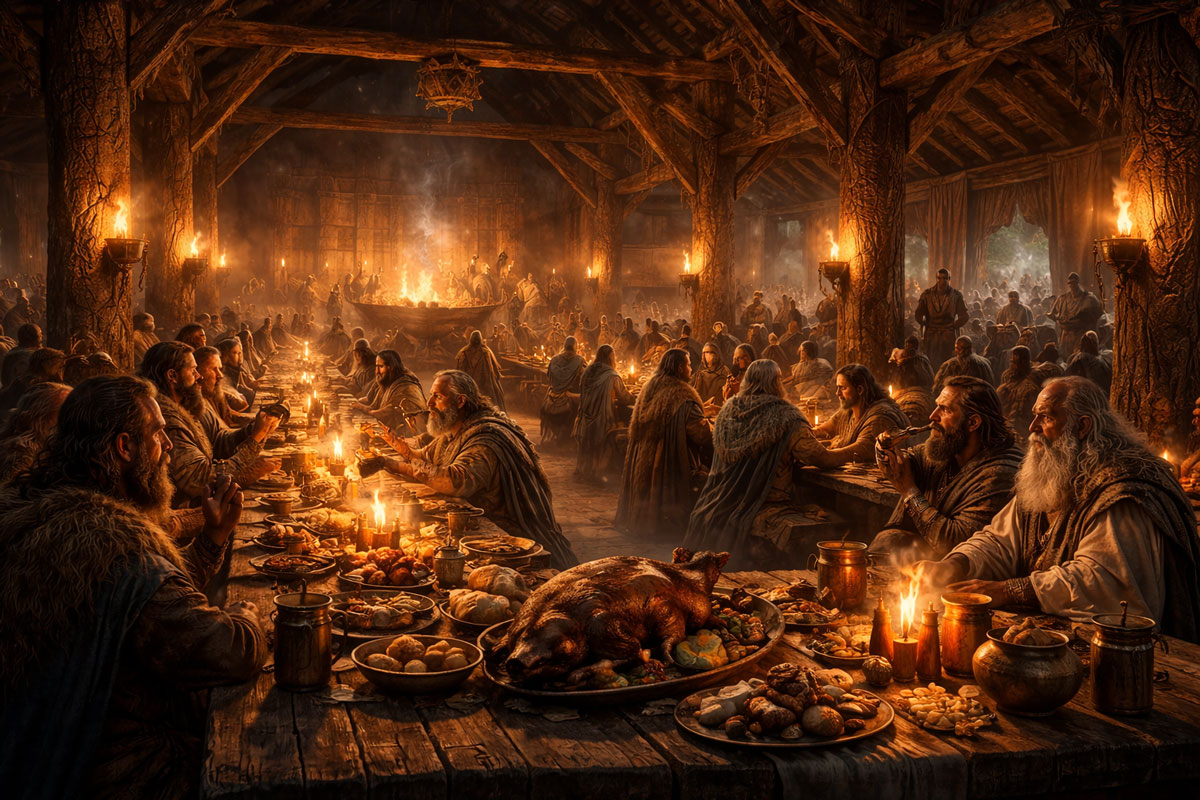
At the heart of ancient Irish kingship stood the Hill of Tara, a ceremonial landscape rather than a single palace. For centuries, Tara functioned as the symbolic seat of the High Kings of Ireland, a place where law, lineage, and ritual converged. Feasting was not incidental here; it was central to how authority was displayed, confirmed, and remembered.
Royal feasts at Tara were occasions of immense social and political importance. They marked seasonal festivals, the confirmation of kings, the settlement of disputes, and the reinforcement of alliances. To be invited to a feast at Tara was to be acknowledged within the hierarchy of early Irish society. Who sat where, what was served, and in what order food and drink were distributed all carried meaning.
Early Irish law texts and saga literature describe feasts as carefully ordered events governed by custom. The king’s generosity was judged by the abundance and quality of food he provided. A ruler who failed to feed his people properly risked not only embarrassment, but loss of legitimacy. In this way, feasting was both hospitality and governance.
Tara’s feasts took place within a wider ritual calendar tied to the agricultural year. Seasonal gatherings aligned with key moments such as Samhain, when cattle were slaughtered and stores assessed for winter. These were moments when the prosperity of the land—and the king’s ability to steward it—was made visible through food.
Meat, Status, and the King’s Table
Meat was the most potent symbol of status in ancient Ireland, and it dominated royal feasts. Cattle were the primary measure of wealth, and beef featured prominently at high-status gatherings. The slaughter of cattle for a feast represented abundance, sacrifice, and the redistribution of wealth under the king’s authority.
Pork was equally significant. Pigs were highly valued because they converted forest resources—acorns, roots, and mast—into rich meat. Literary sources frequently mention pork joints served at feasts, with particular cuts reserved for guests of rank. The choicest portions were allocated according to strict rules, reinforcing social order through the act of eating.
Venison and wild game also appeared at royal tables, especially during large ceremonial feasts. Deer, boar, and wild birds reflected both the king’s control over hunting grounds and his connection to the natural world. Fish, while more common in coastal regions, could be included when available, especially salmon, which held symbolic associations with wisdom.
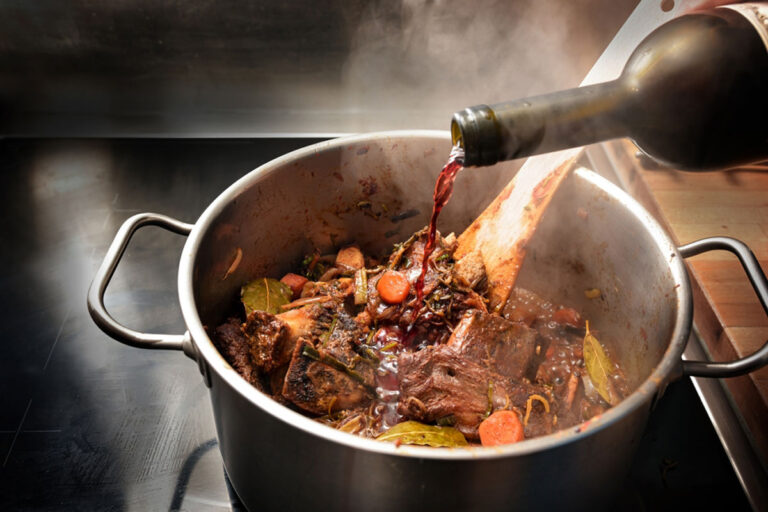
Cooking methods were practical but impressive in scale. Meat was often roasted over open fires or cooked in large cauldrons. Boiling was common, producing broths enriched with herbs and fats. These preparations allowed large numbers of people to be fed at once while showcasing abundance rather than refinement.
Importantly, meat consumption at Tara was not everyday fare. For most people, meat was eaten infrequently. The royal feast magnified this contrast, turning rare foods into public demonstrations of prosperity and favour.
Grain, Dairy, and the Everyday Foundations
While meat signified power, the foundation of the High Kings’ feasts rested on grains and dairy. Barley and oats were the principal cereals of ancient Ireland, ground into meal and prepared as breads, porridges, and gruels. Flatbreads cooked on hot stones or griddles accompanied almost every meal.
Porridge, made from oats or barley, was not a humble afterthought but a central food. It provided sustenance, balance, and warmth, especially during colder months. At royal feasts, porridge could be enriched with butter, milk, or honey, elevating a common dish into something celebratory.
Dairy was perhaps the most important everyday food in ancient Ireland. Milk, butter, curds, and soft cheeses featured heavily in both daily diets and feasting contexts. Butter in particular carried symbolic weight. Stored in wooden vessels or bogs to preserve it, butter represented wealth, planning, and control over resources.
Butter and milk products were used generously at high-status meals. They enriched breads, softened porridges, and accompanied meats. The abundance of dairy at a feast reflected the health of herds and, by extension, the king’s ability to protect and manage his lands.
Honey also played a role, both as a sweetener and as a luxury ingredient. It flavoured dishes and drinks, offering sweetness in a world without refined sugar. Its presence at Tara signalled access to valuable resources gathered through skilled labour.
Drink, Ceremony, and the Order of the Feast
No royal feast at Tara was complete without drink. Ale was the most common beverage, brewed from barley and flavoured with herbs. It was thick, nourishing, and consumed in large quantities during feasts. The serving of ale followed strict protocols, with vessels passed in a defined order reflecting rank.
Mead, made from fermented honey, occupied a more prestigious position. It was associated with kingship, poetry, and ritual. To drink mead at Tara was to participate in a symbolic exchange linking hospitality, inspiration, and authority. In some traditions, the right to kingship itself was affirmed through ceremonial drinking.
Feasting was not chaotic. Seating arrangements, serving order, and portion distribution were carefully regulated. Poets, judges, warriors, and nobles each had designated places and entitlements. The king presided, ensuring that custom was observed and generosity displayed.
Entertainment formed part of the feast. Storytelling, poetry, music, and the recitation of genealogies reinforced collective memory. Food and drink sustained the body, while words and song sustained identity and continuity.
The feast thus became a living expression of social order. To eat and drink at Tara was to understand one’s place within the kingdom and to witness the ideals of leadership enacted through abundance and fairness.
Meaning Beyond the Meal: Power, Law, and Memory
Feasting at Tara was never just about nourishment. It was a public enactment of kingship itself. A High King was expected to be generous, just, and capable of providing for his people. Food made these qualities tangible.
Early Irish law connected the fertility of the land with the moral fitness of the king. A just ruler ensured good harvests; a flawed one brought scarcity. Feasts therefore became proof that harmony existed between ruler, people, and landscape.
Over time, as political structures changed and Tara’s role shifted from active centre to symbolic site, the memory of its feasts endured in story and tradition. Sagas preserved details of what was eaten and how it was served, embedding food within the narrative of Irish identity.
Today, imagining what the High Kings ate at Tara offers more than historical curiosity. It reveals how deeply food, power, and culture were intertwined in ancient Ireland. Meals expressed law, hierarchy, generosity, and belief, all through the shared act of feasting.
In remembering these ancient tables, we glimpse a world where food carried meaning far beyond taste—a world where to feast was to rule, and to rule was to feed.