


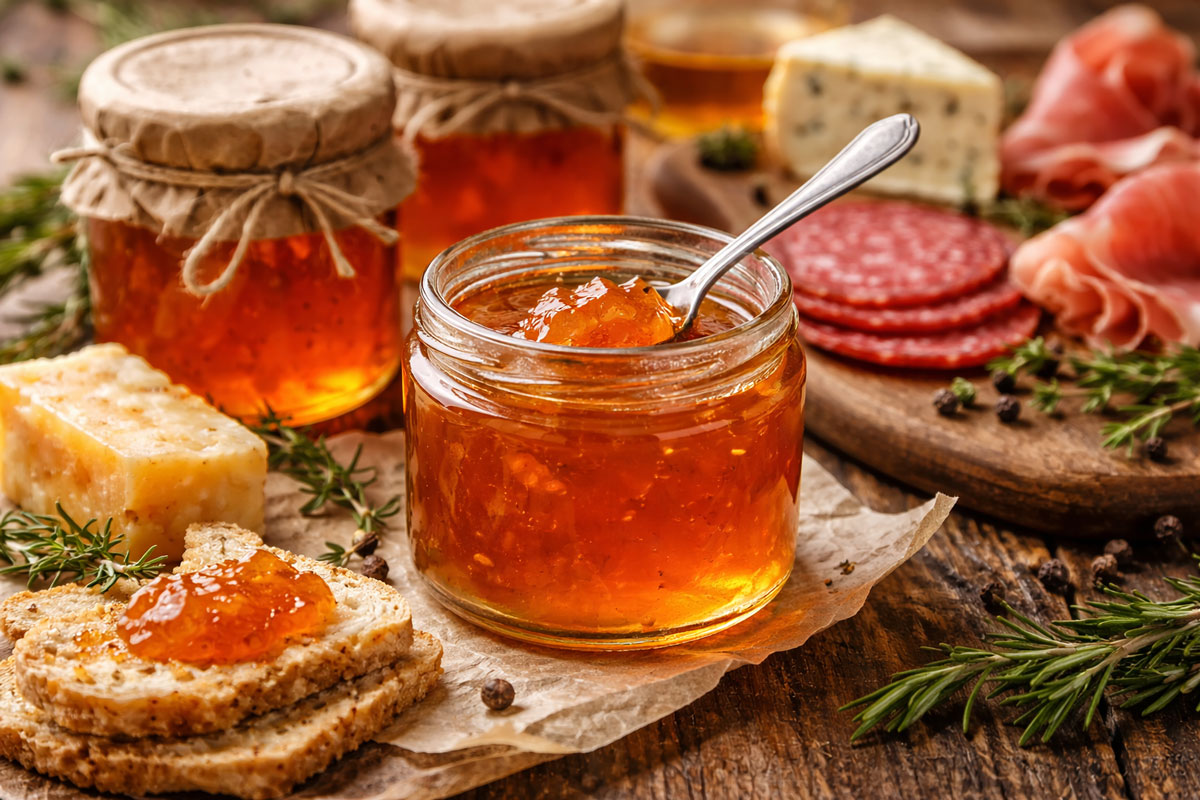
Description: This savoury crab apple jelly is a traditional Wexford-style preserve, prized for its sharp, clean flavour and beautiful amber colour. Lightly seasoned rather than sweet, it pairs perfectly with roast meats, cheese boards, and cold cuts, capturing a classic Irish farmhouse taste.
Preparation Time: 20 minutes
Cooking Time: 1 hour 30 minutes
Setting Time: 2–3 hours
Serving Size: Makes about 3–4 small jars
Ingredients
- 2 kg crab apples, washed and roughly chopped
- Water (enough to just cover the apples)
- 500g sugar (use slightly less than the volume of juice for a savoury finish)
- 1 tsp salt
- 1–2 tbsp cider vinegar (to taste)
- Optional: 1 sprig rosemary or thyme, 4–5 black peppercorns
Instructions
Step 1 – Cook the Crab Apples
Place the chopped crab apples in a large pot and add enough water to just cover them. Bring to a boil, then reduce to a simmer and cook for 45–60 minutes until the apples are soft and broken down.
Step 2 – Strain the Juice
Pour the mixture into a jelly bag or muslin-lined sieve set over a bowl. Allow to drip slowly for several hours or overnight. Do not squeeze, or the jelly may become cloudy.
Step 3 – Measure and Season
Measure the strained juice. For each litre of juice, use about 450–500g sugar for a savoury jelly. Add salt, cider vinegar, and any optional herbs or peppercorns.
Step 4 – Boil to Setting Point
Bring the juice mixture to a rolling boil and cook for 10–15 minutes until it reaches setting point. Test by spooning a little onto a chilled plate—if it wrinkles when pushed, it’s ready.
Step 5 – Strain (Optional)
If herbs or spices were used, strain them out before potting.
Step 6 – Pot the Jelly
Pour the hot jelly into sterilised jars, seal immediately, and allow to cool and set.
Tips
- Savoury balance: Keep the sugar lower than traditional jelly for a sharper finish.
- Clear jelly: Never squeeze the jelly bag.
- Flavour variations: Rosemary, thyme, bay, or black pepper all work well.
- Storage: Keeps for up to 12 months in a cool, dark place.
Serving Suggestion
Serve with roast pork, lamb, or beef, alongside cold meats, or with mature Irish cheese and oatcakes.