

Table of Contents
- 1. Christmas Before Turkey: How Irish People Ate in the Past
- 2. Fish, Fasting, and Christmas Eve Traditions
- 3. Regional Christmas Foods Before the Modern Feast
- 4. Spiced Beef, Goose, and Other Forgotten Christmas Meats
- 5. Old Irish Christmas Superstitions and Food Beliefs
Christmas Before Turkey: How Irish People Ate in the Past
For much of Irish history, Christmas looked very different from the lavish dinners we know today. Long before roast turkey, glazed ham, and overflowing tables became the norm, Christmas food in Ireland was shaped by scarcity, religion, seasonality, and deep-rooted custom. What families ate—and when they ate it—was guided as much by faith and survival as by celebration.
In rural Ireland, particularly before the late 19th century, winter was a lean time. Fresh vegetables were limited, meat was precious, and households depended heavily on stored crops like potatoes, oats, salted fish, and cured meats. Christmas was important, but it was not always extravagant. Instead, it marked a pause in hardship, a moment of ritual abundance rather than excess.
Christmas Eve: A Day of Fasting
For generations, Christmas Eve was traditionally a day of fasting and abstinence. As a vigil before the Feast of the Nativity, many Irish Catholics avoided meat entirely on December 24th. The evening meal was simple, symbolic, and deliberately restrained.
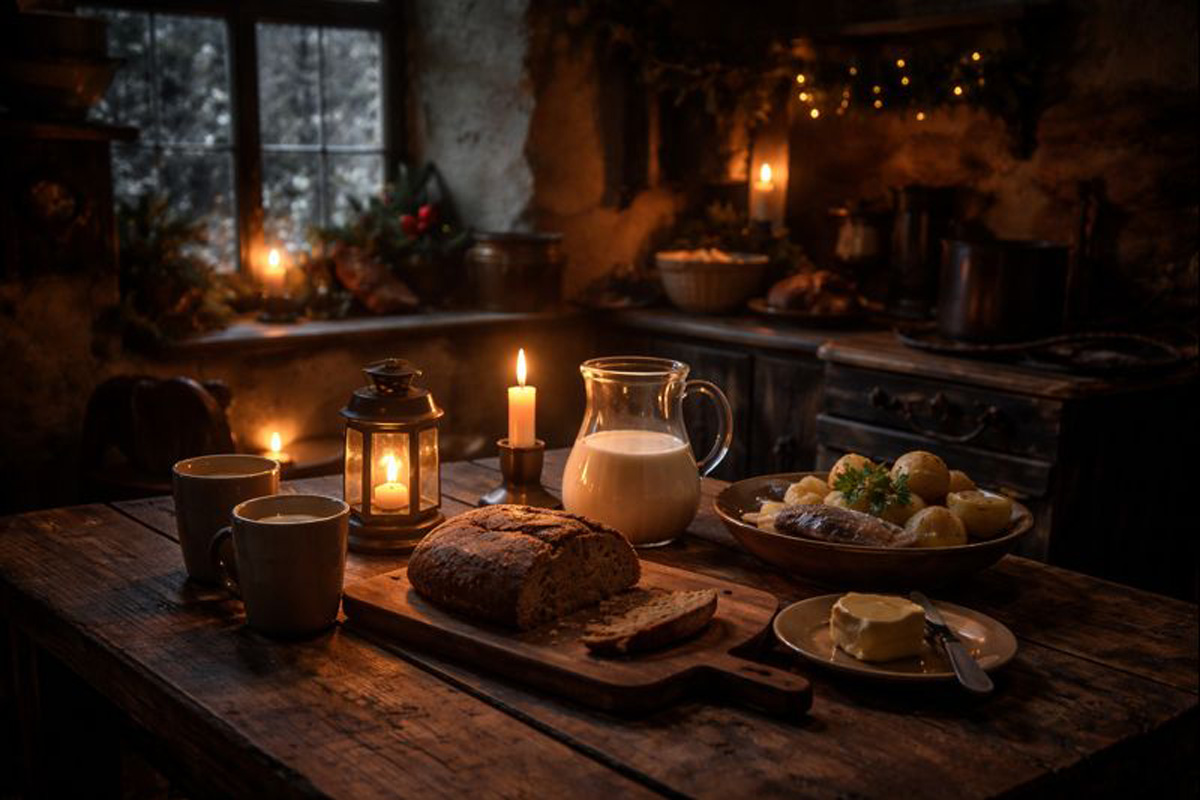
Common Christmas Eve foods included salt herring, fresh or dried fish, potatoes, soda bread, and occasionally milk or butter. In coastal areas, fish was plentiful and central to the meal. Inland households often relied on salted or preserved fish, eaten with boiled potatoes and a little melted butter. The simplicity of the meal heightened the significance of Christmas Day, when restrictions were lifted.
Midnight Mass and the First Festive Meal
After attending Midnight Mass—often on foot through cold, dark lanes—families would return home for a small but meaningful meal. This was sometimes the first time richer food appeared on the table. In some homes, this might include eggs, bacon, or a slice of cake saved especially for the occasion.
This post-Mass meal carried deep symbolic weight. It represented the end of fasting, the birth of Christ, and the promise of abundance returning after restraint. Even modest foods tasted celebratory when eaten in this context.
Meat Was a Rarity, Not a Given
Contrary to modern expectations, roast meat was not always guaranteed at Christmas. When meat did appear, it varied by region and circumstance. Goose was common in some areas, especially where families kept their own birds. In others, a small joint of beef, mutton, or bacon might be shared across several days.
Pork, when available, was often salted or cured, having been prepared weeks earlier as part of winter slaughtering. This made Christmas one of the few times of year when meat could be eaten freely and without guilt.
The Christmas Dinner as We Know It Came Later
The idea of a grand Christmas dinner—complete with turkey, stuffing, multiple sides, and elaborate desserts—is largely a post-Famine and 20th-century development. As living conditions improved and imported foods became more accessible, Christmas gradually transformed into the lavish feast we recognise today.
Before that shift, Irish Christmas food was less about indulgence and more about meaning. It reflected the rhythms of farming life, the discipline of religious observance, and the quiet joy of sharing what little could be spared. These older traditions reveal a deeper story—one where food was not just eaten, but honoured.
Understanding how Irish people once ate at Christmas helps explain why the season still carries such emotional weight. Even now, festive meals are tied to memory, gratitude, and togetherness—values forged during centuries when every Christmas meal truly mattered.
Fish, Fasting, and Christmas Eve Traditions
For generations in Ireland, Christmas Eve was marked not by indulgence, but by restraint. Rooted in Catholic tradition, December 24th was observed as a day of fasting and abstinence—a final act of discipline before the joy of Christmas Day. Food played a central role in this ritual, not through abundance, but through symbolism.
Meat was avoided entirely in many households, and meals were deliberately simple. This was not seen as deprivation, but as preparation. The modesty of the Christmas Eve table heightened the significance of what was to come, reinforcing the spiritual meaning of the season.
Fish as the Centrepiece of Christmas Eve
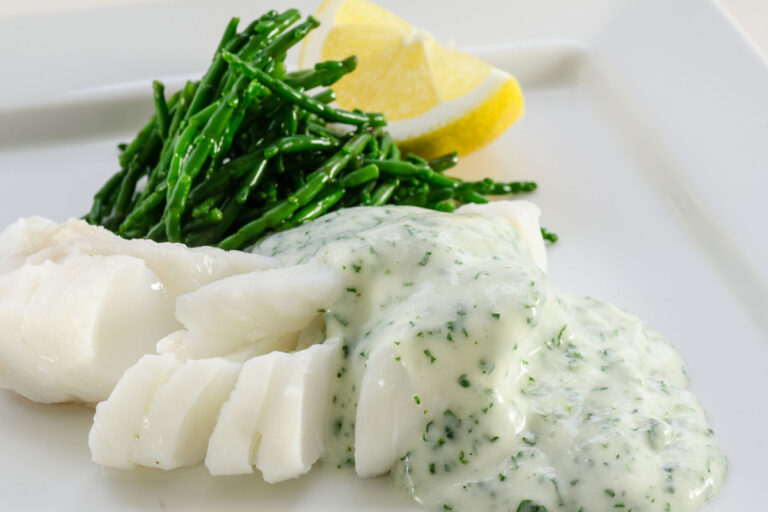
Fish was the most common and widely accepted food for Christmas Eve. In coastal communities, fresh fish such as cod, haddock, whiting, or mackerel might be cooked simply—boiled, baked, or pan-fried with little more than salt and butter. Inland, where fresh fish was harder to obtain, households relied on salt herring, dried fish, or cured alternatives that had been stored for winter.
Salt herring, in particular, became closely associated with Christmas Eve. It was soaked to remove excess salt, then served with boiled potatoes and sometimes a small jug of melted butter or milk. Though humble, this meal carried enormous cultural weight and was remembered with affection by many who grew up in rural Ireland.
Simple Breads and Potatoes
Alongside fish, bread and potatoes formed the backbone of the Christmas Eve meal. Soda bread, oat bread, or farls were common, reflecting what families baked year-round. Potatoes, stored carefully since harvest, were boiled or mashed, often plain and unadorned.
Butter might be used sparingly, especially in poorer households, where it was considered valuable and saved for Christmas Day. The simplicity of these foods was intentional—they reflected humility, patience, and respect for the religious significance of the night.
Milk, Tea, and Small Comforts
In some homes, particularly where resources were scarce, Christmas Eve supper was little more than tea and bread. Milk, if available, was considered nourishing and comforting. These modest meals were often eaten quietly, sometimes after prayers were said, reinforcing the solemn tone of the evening.
Children were often keenly aware of the contrast between Christmas Eve and Christmas Day. The restraint of the night before made the following day’s meal feel all the more special, even when it consisted of foods that might otherwise seem ordinary.
Midnight Mass and Breaking the Fast
Attending Midnight Mass was central to Christmas Eve in Ireland. Families would walk long distances, sometimes in harsh weather, to attend the service. On returning home, the fast was considered complete.
In some households, a small celebratory bite followed Mass—perhaps a slice of cake, bread with butter, or an egg dish. This was not the main Christmas meal, but a symbolic transition from fasting to feasting, from waiting to celebration.
Why These Traditions Mattered
The foods of Christmas Eve were never meant to impress. Their purpose was to prepare the heart and home for Christmas Day. Fish, bread, and potatoes became vessels of meaning—representing sacrifice, anticipation, and faith.
Though many of these customs have faded, their influence lingers. The idea that Christmas food should feel earned, meaningful, and shared is rooted in these older traditions. Understanding them offers a deeper appreciation of how Irish Christmas celebrations evolved—and why food still holds such emotional power at this time of year.
Regional Christmas Foods Before the Modern Feast
Before the standardised Christmas dinner became common across Ireland, festive food varied widely depending on geography, local resources, and social class. What appeared on the Christmas table in one part of the country could be quite different from what was eaten elsewhere. These regional differences reveal how deeply Irish Christmas food was shaped by landscape and livelihood.
Coastal Ireland: Fish, Shellfish, and the Sea’s Bounty
In coastal counties, Christmas food traditions were closely tied to the sea. Fishing communities in places like Donegal, Galway, Clare, and Waterford relied heavily on cod, herring, mackerel, and shellfish. Christmas Eve fish meals were especially strong in these regions, with fresh fish sometimes replacing salted varieties.
In some coastal households, oysters or mussels appeared during the Christmas period, not as luxury items but as readily available food. Chowders and fish stews, made with milk or water rather than cream, offered warmth and nourishment during the winter months.
Inland and Midland Counties: Potatoes, Bacon, and Bread
Away from the coast, inland communities depended more heavily on stored crops and preserved meats. Potatoes formed the backbone of nearly every meal, including Christmas. In counties such as Offaly, Laois, and Westmeath, Christmas fare often centred on bacon or salted pork, served with potatoes and cabbage.
Fresh bread—especially soda bread or oat bread—was baked for Christmas and treated as something special. Even when the ingredients were simple, the act of baking and sharing bread carried festive significance.
The South: Spiced Beef and Regional Specialties
In parts of Munster, particularly County Cork, spiced beef became a distinctive Christmas tradition. Beef joints were cured and spiced weeks in advance using cloves, allspice, pepper, and salt. The meat was then slowly boiled and served cold or reheated during the Christmas period.
This practice reflected both agricultural abundance and careful preparation. Spiced beef could be stretched over several days, making it practical as well as celebratory. In many Cork households, it became a defining element of Christmas long before turkey entered the picture.
The North and Ulster Traditions
In Ulster, Christmas food traditions reflected a mix of Catholic and Protestant influences. Alongside fasting practices in Catholic homes, Protestant households often placed greater emphasis on baked goods and preserved meats.
Breads, fruit loaves, and simple cakes were common, and pork products—especially ham—featured prominently. These meals were hearty but restrained, shaped by winter conditions and religious observance rather than extravagance.
Social Class and the Christmas Table
Class also played a role in what families ate at Christmas. Wealthier households might afford a goose, beef joint, or imported ingredients, while poorer families marked the season with modest improvements on everyday meals—extra butter, white bread instead of brown, or a small portion of meat shared carefully.
Regardless of region or wealth, the defining feature of an Irish Christmas meal before the modern era was intention. Food was chosen carefully, prepared with effort, and shared with gratitude. These regional traditions remind us that Irish Christmas food was never one single feast, but many local expressions of the same desire to mark the season with care and meaning.
Spiced Beef, Goose, and Other Forgotten Christmas Meats
Before turkey became the centrepiece of the Irish Christmas table, festive meats were shaped by practicality, preservation, and regional custom. These meats were not chosen for spectacle but for their ability to sustain families through winter, stretch across several days, and mark Christmas as a rare moment of abundance.
Spiced Beef: A Cork Christmas Legacy
One of the most distinctive pre-turkey Christmas meats in Ireland is spiced beef, a tradition closely associated with County Cork. Prepared weeks in advance, beef joints were cured with salt, sugar, and warming spices such as cloves, allspice, pepper, and sometimes juniper. The meat was then slowly boiled until tender.
Spiced beef was practical as well as festive. Once cooked, it kept well in cold conditions and could be served over several days, sliced thin and eaten hot or cold. For many Cork families, spiced beef was the defining taste of Christmas long before turkey appeared, and in some homes it still holds pride of place today.
Goose: The True Bird of Christmas Past
Before turkey became widely available, goose was the most common festive bird in Ireland. Families who kept poultry often raised a goose specifically for Christmas, feeding it carefully in the weeks leading up to the holiday. Goose was rich, fatty, and filling—ideal for winter when calories mattered.
The rendered goose fat was just as valuable as the meat itself. It was saved and used to roast potatoes or flavour vegetables throughout the season, ensuring nothing was wasted. In many households, goose symbolised careful planning and the reward of patience.
Salted Pork, Bacon, and Winter Slaughtering
Pork played a central role in Irish winter diets, especially following the traditional winter slaughter of pigs. Bacon, ham, and salted pork were staples that could be preserved and relied upon during colder months.
At Christmas, these meats were often prepared with greater care—boiled gently, sometimes glazed, and served with cabbage or root vegetables. Though not extravagant, pork dishes represented comfort, familiarity, and security at a time of year when food supplies were under constant pressure.
Mutton and Beef: Shared and Stretched
In some regions, particularly where cattle or sheep farming was common, small joints of beef or mutton appeared at Christmas. These were rarely large roasts. Instead, they were shared carefully and often used to flavour broths or stews that could feed a household over several meals.
Meat was valued not just for taste, but for nourishment. Even bones were saved to make soups, ensuring the Christmas animal sustained the family well beyond the feast itself.
Why These Meats Faded from the Table
The gradual disappearance of these traditional Christmas meats coincided with changing agricultural practices, rising living standards, and increased access to imported foods. Turkey, once rare and expensive, became affordable and fashionable during the 20th century, eventually replacing older traditions.
Yet these forgotten meats tell an important story. They reflect a time when Christmas food was deeply tied to survival, foresight, and respect for the animal. Remembering them offers a fuller picture of Irish Christmas traditions—one rooted not in excess, but in meaning.
Old Irish Christmas Superstitions and Food Beliefs
In traditional Ireland, Christmas food was never just about eating. It was deeply bound to belief, superstition, and the unseen world. What was cooked, shared, saved, or avoided during the Christmas period was thought to influence fortune, health, and protection in the year ahead. These customs reveal how seriously food was taken—not just as sustenance, but as a powerful force within the home.
Food for the Holy Family and the Poor
One of the most widespread traditions involved leaving food out on Christmas Eve or Christmas night. In many households, bread, milk, or a small portion of the Christmas meal was left on the table or windowsill. This gesture was said to honour the Holy Family, who were believed to be wandering in search of shelter.
In some areas, this practice also extended symbolically to the poor, the traveller, or the unseen world. To deny food at Christmas was considered deeply unlucky. Hospitality during the season was not just encouraged—it was morally and spiritually required.
The Importance of Sharing
Sharing Christmas food carried enormous significance. To eat alone, hoard food, or refuse a guest was believed to invite misfortune. Even families with very little made efforts to share something—be it bread, tea, or a slice of cake.
This belief reinforced community bonds. Christmas food was meant to circulate, not be guarded. The act of sharing was thought to bring blessings on the household for the coming year.
Lucky and Unlucky Foods
Certain foods were considered lucky at Christmas, while others were avoided. Bread was especially symbolic, representing life and continuity. Breaking bread together on Christmas Day was seen as a sign of unity and protection.
Waste, on the other hand, was feared. Throwing out food during the Christmas period was believed to invite hardship. Scraps were carefully saved, reused, or given to animals. Respect for food was closely tied to respect for God’s provision.
Keeping the Christmas Table Intact
In some households, the Christmas table was left set overnight after the main meal, sometimes with candles still in place. This practice symbolised welcome and abundance. Clearing the table too quickly was thought to symbolise scarcity or ingratitude.
Food left out overnight was not always eaten later—it was the gesture itself that mattered. The table became a sacred space, representing shelter, warmth, and generosity.
Animals and Christmas Food Beliefs
Animals were not excluded from Christmas traditions. It was common to give livestock an extra portion of feed or a special treat on Christmas Day. Some believed animals could speak at midnight on Christmas Eve, reinforcing the idea that the natural and spiritual worlds were closer at this time.
To neglect animals during Christmas was seen as a bad omen. Caring for them generously was believed to ensure prosperity and protection for the household.
Why These Beliefs Endured
These food-related superstitions endured because they reinforced values that mattered deeply in Irish life: generosity, humility, gratitude, and community. Christmas magnified these values, turning everyday acts—sharing bread, saving scraps, feeding animals—into meaningful rituals.
Though many of these beliefs have faded, their influence remains. The emotional weight still attached to Christmas food in Ireland—the sense that it must be shared, respected, and remembered—can be traced directly back to these older traditions.