


Table of Contents
- 1. Introduction: Why Irish Butter Stands Apart
- 2. Grass-Fed Cows and the Chemistry of Milk
- 3. Churning, Fermentation, and Fat Structure
- 4. Climate, Seasonality, and Why Irish Butter Changes Through the Year
- 5. Tradition, Modern Standards, and Global Reputation
Introduction: Why Irish Butter Stands Apart
Irish butter has earned an almost legendary reputation around the world. From home kitchens in Ireland to restaurants and bakeries across Europe and North America, it is praised for its rich colour, creamy texture, and deep, complex flavour. But Irish butter isn’t just good by reputation — it is genuinely different, and the reasons lie in science, farming practices, and Ireland’s unique natural environment.
At first glance, butter seems simple: cream churned into a spreadable fat. Yet subtle differences in grass quality, cow diet, milk composition, fat structure, fermentation, and climate all influence how butter tastes. Ireland happens to combine these factors in a way few other countries can replicate.
Much of the story begins in the fields. Ireland’s long growing season, mild temperatures, and high rainfall create lush, nutrient-rich grass for grazing cattle. This grass-fed diet alters the chemical makeup of the milk, increasing levels of beta-carotene and specific fatty acids that directly affect butter’s colour, aroma, and mouthfeel.
There is also a cultural dimension. Butter has been central to Irish food for centuries — preserved in bogs, traded as currency, and used generously in cooking and baking. This long relationship has shaped how butter is made, valued, and refined over time, blending tradition with modern dairy science.
Grass-Fed Cows and the Chemistry of Milk
The single most important factor behind the flavour of Irish butter is the diet of the cows that produce the milk. In Ireland, dairy cattle are predominantly grass-fed, grazing outdoors for much of the year rather than being confined to barns and fed grain-based rations. This grazing system has a measurable, scientific impact on the chemistry of milk — and therefore on the butter made from it.
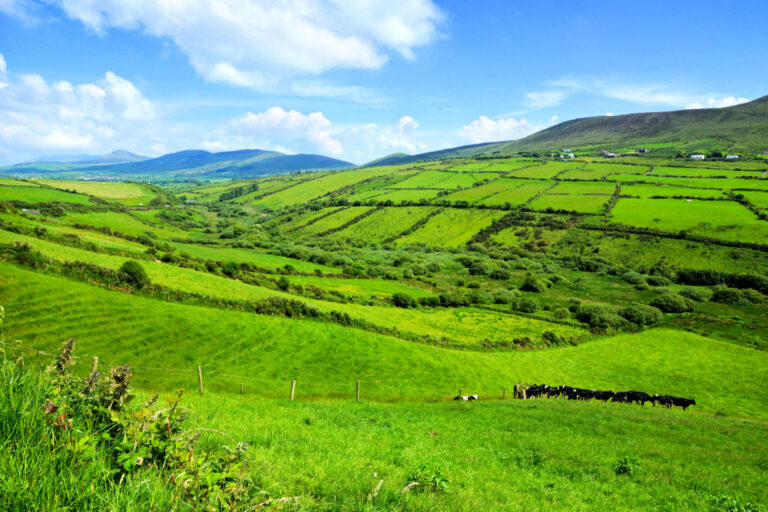
Ireland’s climate plays a crucial role. Mild temperatures, frequent rainfall, and long daylight hours create ideal conditions for grass growth. Irish pasture is rich in clover, ryegrass, and diverse meadow plants, providing cows with a diet high in natural nutrients. Because cows can graze for up to 300 days a year, their milk consistently reflects this grass-based nutrition.
Beta-Carotene and Butter’s Golden Colour
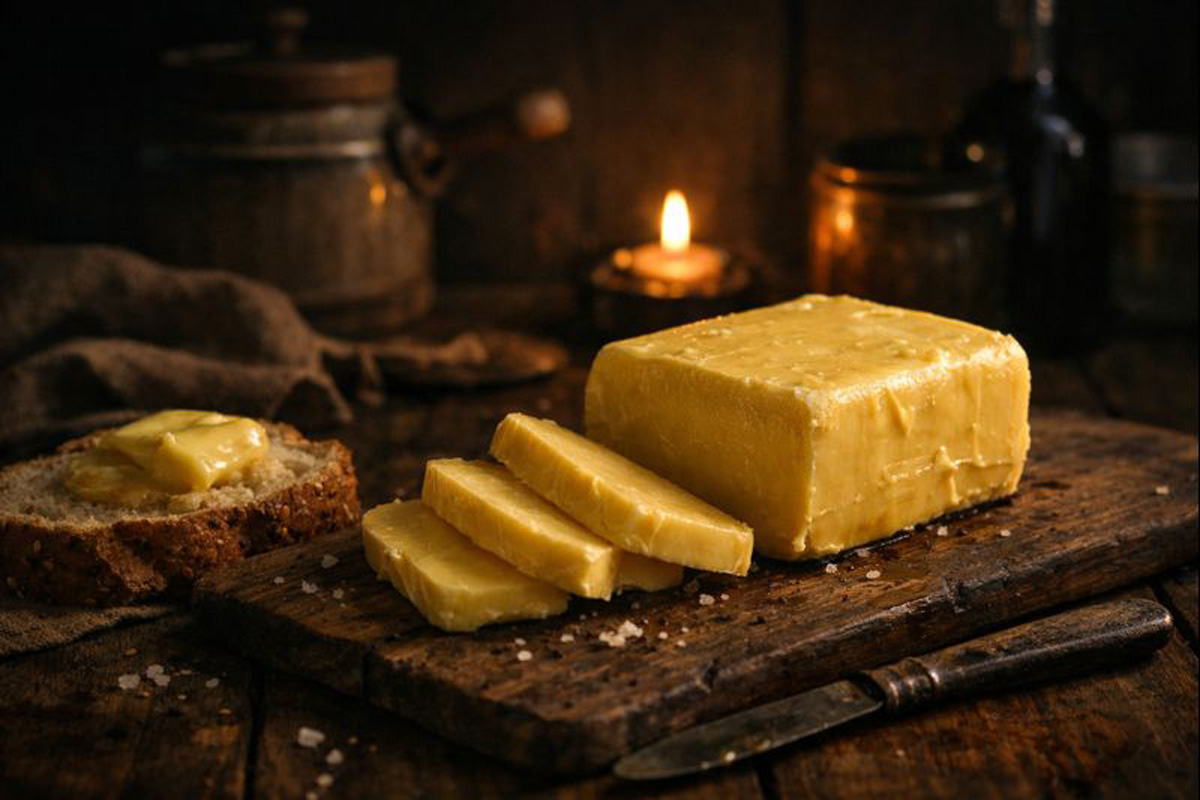
Grass-fed milk contains higher levels of beta-carotene, a natural pigment found in green plants. While some of this beta-carotene is converted into vitamin A, a significant amount remains in the milk fat. During butter-making, beta-carotene concentrates in the fat, giving Irish butter its distinctive golden-yellow colour — without the need for artificial colouring.
In contrast, grain-fed cows produce milk with lower beta-carotene levels, resulting in paler butter. This visual difference is one of the first clues that Irish butter comes from grass-fed milk.
Fatty Acids and Flavour Development
Grass feeding also changes the fatty acid profile of milk. Irish grass-fed milk contains higher levels of beneficial omega-3 fatty acids and conjugated linoleic acid (CLA). These compounds don’t just affect nutrition — they influence flavour, aroma, and how butter melts in the mouth.
The balance of saturated and unsaturated fats in grass-fed milk creates a butter that feels softer at room temperature and releases flavour more readily on the palate. This contributes to the creamy mouthfeel and clean finish that Irish butter is known for.
Terroir in Dairy Form
Just as wine reflects the land where grapes are grown, Irish butter reflects its agricultural environment. Soil composition, rainfall, grass species, and grazing patterns all subtly shape the milk’s chemistry. Scientists sometimes describe this as dairy terroir — the idea that flavour is influenced by place as much as process.
This combination of grass-based nutrition and environmental conditions gives Irish milk a flavour foundation that cannot easily be replicated elsewhere. By the time the cream is churned into butter, the science of grass-fed milk has already done much of the work.
Churning, Fermentation, and Fat Structure
While grass-fed milk provides the foundation for Irish butter’s flavour, the way that milk is processed plays an equally important role. Churning, fermentation, and the microscopic structure of milk fat all influence how butter tastes, smells, and behaves in cooking. These processes help explain why Irish butter feels creamier and more aromatic than many alternatives.
Sweet Cream vs Cultured Butter
Most Irish butter produced today is made from sweet cream, meaning the cream is churned shortly after separation without extended fermentation. However, even sweet-cream Irish butter develops more flavour than many international butters because the milk itself contains higher levels of flavour-active compounds from grass feeding.
Historically, Irish butter was often cultured. Cream was allowed to ferment naturally, developing lactic acid and complex aromatic compounds before churning. This traditional method produced butter with tangy, nutty notes. Some modern Irish producers are now reintroducing cultured butter styles, building on this older tradition with controlled fermentation.
How Churning Changes Milk
Churning physically agitates cream until the fat globules collide and stick together. As this happens, liquid buttermilk separates from solid butterfat. The efficiency of this process depends on the size and composition of the fat globules, which are influenced by the cow’s diet.
Grass-fed milk tends to produce larger and more fragile fat globules. These globules break and recombine more easily during churning, creating butter with a smoother, more cohesive structure. This contributes to Irish butter’s creamy texture and its ability to melt evenly.
Crystal Structure and Mouthfeel
Butterfat is made up of many different fatty acids that solidify into crystals as the butter cools. The arrangement of these fat crystals affects firmness, spreadability, and how butter releases flavour on the tongue.
Because Irish butter contains a slightly higher proportion of unsaturated fats, its crystal structure is softer and less rigid. This allows the butter to soften quickly at room temperature and melt cleanly when heated. As it melts, aromatic compounds are released gradually, enhancing flavour perception.
Why Irish Butter Bakes Differently
The fat structure of Irish butter also affects baking performance. Softer butter incorporates air more easily during creaming, leading to lighter textures in cakes and pastries. In laminated doughs like puff pastry or croissants, Irish butter’s pliability reduces cracking, helping create more even layers.
These physical properties are not accidental—they are the direct result of milk chemistry shaped by grass feeding, combined with careful processing. The science behind churning and fat structure helps explain why Irish butter performs so well both on the table and in the oven.
Climate, Seasonality, and Why Irish Butter Changes Through the Year
One of the lesser-known reasons Irish butter tastes different lies in Ireland’s climate and the way it shapes milk production throughout the year. Unlike countries with extreme seasons, Ireland’s mild, Atlantic-influenced climate creates relatively stable grazing conditions. This consistency has a direct impact on the flavour, texture, and colour of Irish butter.
Ireland’s cool summers, gentle winters, and frequent rainfall allow grass to grow for much of the year. As a result, Irish cows spend more time grazing outdoors than dairy cattle in many other countries. This extended grazing season keeps the milk’s fat composition closer to its natural grass-fed profile for longer periods.
Seasonal Butter and Colour Variation
Even in Ireland, butter changes with the seasons. During late spring and summer, when grass is at its most nutrient-rich, milk contains higher levels of beta-carotene. Butter produced during these months is noticeably more golden and often more aromatic.
In winter, when cows may spend more time indoors and consume silage or supplemental feed, butter tends to be slightly paler and firmer. However, because Irish winter feed is often grass-based silage rather than grain-heavy rations, the change is less dramatic than in many other dairy-producing countries.
Temperature, Fat, and Texture
Climate also affects how butter behaves after it is made. Butterfat is sensitive to temperature, and the balance of fatty acids in Irish butter means it softens readily at cool room temperatures. This gives Irish butter its characteristic spreadability, even straight from the fridge compared to harder, grain-fed butters.
The relatively cool Irish climate during production and storage also helps preserve delicate flavour compounds. Excessive heat can accelerate oxidation in milk fat, dulling flavour. Ireland’s cooler conditions reduce this risk, helping maintain freshness from churn to table.
The Role of Consistent Grazing Systems
Ireland’s dairy industry places strong emphasis on pasture-based systems. Cows follow rotational grazing patterns that keep grass at optimal nutritional stages. This consistency reduces extreme swings in milk composition, resulting in butter that tastes rich and balanced throughout the year.
In many ways, Irish butter reflects the country’s steady climate: mild, balanced, and reliable. Seasonal variation still exists, but it enhances rather than disrupts flavour—adding subtle depth and character that butter lovers often notice without realising why.
Tradition, Modern Standards, and Global Reputation
Irish butter’s distinctive taste is not only the result of grass, climate, and chemistry—it is also shaped by centuries of tradition combined with rigorous modern standards. Ireland’s long history of butter-making has created a culture that values quality, consistency, and respect for the raw ingredient: milk.
Butter in Irish History
Butter has played a central role in Irish life for centuries. In early Ireland, butter was a valuable commodity—used as food, offered as rent or tribute, and even preserved in bogs for long-term storage. Archaeological discoveries of bog butter reveal how important dairy fats were in Irish society, both nutritionally and economically.
Traditional Irish butter-making often involved hand-churning cream from grass-fed cows, with flavour varying naturally by season. This deep familiarity with butter helped establish high expectations for taste and quality that continue today.
Modern Irish Dairy Standards
Today, Ireland operates under some of the strictest dairy quality controls in the world. Milk is closely monitored for freshness, hygiene, and composition. The country’s pasture-based system is supported by scientific research, with ongoing studies into grass varieties, cow nutrition, and milk fat quality.
Irish butter producers benefit from this combination of traditional farming knowledge and modern food science. Advances in temperature control, cream separation, and churning technology allow producers to preserve the natural advantages of grass-fed milk while delivering consistent results at scale.
Why Irish Butter Performs So Well in Cooking
Chefs and bakers around the world prize Irish butter not just for its flavour, but for how it behaves in the kitchen. Its softer texture, higher proportion of flavour-rich milk fats, and clean melting profile make it ideal for spreading, sautéing, baking, and pastry work.
In baking, Irish butter creates flakier pastries and more tender cakes. In savoury cooking, it melts smoothly without separating, carrying flavours evenly across a dish. These qualities are the direct outcome of the scientific factors explored throughout this article.
A Global Reputation Built on Nature and Science
Irish butter’s international success is no accident. It reflects a rare alignment of natural conditions, agricultural practices, and careful processing. Grass-fed cows, mild climate, favourable milk chemistry, and centuries of butter-making expertise all contribute to a product that stands out on a global stage.
When people say Irish butter tastes different, they are responding to real, measurable differences—rooted in science, shaped by tradition, and refined by modern standards. It is this combination that makes Irish butter not just a national staple, but one of Ireland’s most respected food exports.