


Among Ireland’s most treasured foods, few ingredients tell a story as rich and enduring as Irish lamb. From the windswept hills of Connemara to the green pastures of Wicklow, sheep have grazed across this landscape for centuries, shaping not only the countryside but the culture itself. Their wool clothed generations, their milk sustained families, and their meat became a centerpiece of celebration—from humble farm kitchens to Sunday roasts shared around the family table.
Irish lamb is more than a dish; it’s a reflection of Ireland’s land, history, and people. Each region produces meat with its own distinct character, born from the herbs, grasses, and sea breezes that flavor the pastures. Whether slow-roasted, stewed with root vegetables, or grilled over open flame, lamb connects modern Ireland to a pastoral tradition that stretches back thousands of years.
Table of Contents
- 1. Introduction: Ireland’s Gift from the Hills
- 2. The Origins of Irish Sheep Farming
- 3. Life on the Hill Farms
- 4. Lamb in Irish History and Culture
- 5. The Modern Irish Lamb Industry and the Sunday Roast
Introduction: Ireland’s Gift from the Hills
In Ireland, the story of lamb begins in the hills. Sheep have roamed this land since ancient times, thriving on wild grasses and heather-covered slopes where few other animals could. The rugged landscape shaped a breed of animals as hardy as the people who tended them. Generations of farmers perfected the art of raising lambs naturally, allowing the rhythm of the seasons to guide every part of the process.
Today, Irish lamb continues to embody that connection between land and livelihood. Its unique flavor—mild yet rich, earthy yet sweet—comes directly from the natural environment. It’s a product of open pastures, fresh air, and a way of life that values stewardship as much as sustenance. From the remote farms of Kerry to the Sunday dinners of Dublin, lamb remains Ireland’s gift from the hills.
The Origins of Irish Sheep Farming
The history of sheep farming in Ireland stretches back thousands of years. Archaeological evidence suggests that sheep were first brought to Ireland around 4000 BCE by early Neolithic settlers, who valued them for their milk, wool, and meat. Over time, sheep became an integral part of rural life, adapting perfectly to the island’s temperate climate and hilly terrain.
In ancient Celtic society, sheep were symbols of wealth and fertility, and their presence was woven into myths, trade, and seasonal festivals. Wool became a key resource, providing warmth and clothing long before industrial weaving emerged. Sheep were not only valuable for their fleece but also as a sustainable source of food—especially in the form of mutton, which sustained rural communities through the colder months.
By the early Christian period, Irish monasteries were at the forefront of organized sheep farming. Monks raised flocks to supply wool for clothing, parchment for writing, and meat for fasting days when beef or pork was forbidden. The integration of sheep into both the spiritual and economic life of Ireland helped solidify their importance for centuries to come.
Throughout the medieval era, sheep farming expanded across the island. Different breeds emerged in response to local geography—from hardy mountain sheep in the west to softer-fleeced lowland varieties in the east. This regional diversity would later shape the flavors and qualities of Irish lamb, creating the foundation for the distinctive taste we know today.
By the time Ireland’s farming landscape began to modernize, sheep were already part of its natural and cultural fabric. The relationship between people, land, and livestock had become a defining feature of Irish rural identity—a legacy that endures on hill farms to this day.
Life on the Hill Farms
Across Ireland’s rugged western and southern counties—places like Connemara, Kerry, and Donegal—hill farming has shaped both the landscape and the lives of those who work it. These remote upland regions, marked by rocky ground, thin soil, and unpredictable weather, are ideal for sheep but little else. Here, lambs graze freely on wild herbs, grasses, and heather, developing the rich, distinctive flavor that defines Irish hill lamb.
For centuries, families in these areas have followed the same seasonal rhythm: lambing in spring, grazing through the summer, and bringing animals down from the hills before the winter storms. Many of these farms are small and family-run, passed down through generations. The work is demanding—early mornings, long days, and constant care for the flock—but it’s also deeply tied to tradition and pride.
Hill farmers rely on their intimate knowledge of the land. They know which slopes catch the first sun, where shelter can be found from Atlantic winds, and how to manage flocks in terrain that would challenge machinery. The connection between farmer and landscape is personal, almost sacred—a continuation of a way of life that dates back thousands of years.
The result of this care and environment is lamb with a flavor impossible to replicate elsewhere. The diet of wild plants gives the meat a subtle sweetness and depth that chefs and consumers around the world admire. In many ways, Irish hill lamb is a taste of the land itself—pure, natural, and shaped by the wind and rain that define the Irish countryside.
Even as modern farming methods spread, the traditional hill farms remain a cornerstone of Irish agriculture. They preserve biodiversity, protect rural culture, and continue to produce some of the finest lamb in Europe—each animal a testament to Ireland’s enduring bond between land and livelihood.
Lamb in Irish History and Culture
Lamb has held a special place in Irish history and culture for centuries—both as a daily sustenance and a symbol of faith, renewal, and hospitality. In the ancient world, sheep were prized for their versatility, providing wool for clothing, milk for cheese and butter, and meat for feasting. Over time, lamb became not just a practical food but a meaningful one, woven into Ireland’s seasonal rhythms and social life.
In medieval Ireland, mutton—meat from older sheep—was more common than tender lamb, as flocks were raised primarily for wool. However, lamb took on a ceremonial role during springtime festivals and religious observances. The image of the Paschal Lamb symbolized sacrifice and new life, deeply resonating in a Christian culture that tied food to spiritual significance. During Easter, lamb often featured as a celebratory meal marking the end of Lenten fasting.
Folklore, too, is rich with references to sheep and lambs. Shepherds were viewed as protectors of the land, and lambs were associated with innocence, blessing, and prosperity. In rural communities, sharing a lamb stew or roast was an act of generosity and kinship—food not only to fill the stomach but to strengthen the bonds of community.
By the 18th and 19th centuries, as Ireland’s population grew and agriculture became more organized, lamb and mutton featured regularly in both farmhouse and urban markets. It was often cooked slowly over open fires with root vegetables, herbs, and barley—ingredients that turned humble cuts into hearty, flavorful meals. These traditional recipes would evolve into classics such as Irish stew and roast leg of lamb, dishes still beloved today.
Through centuries of change—from the Celtic harvest to the modern dinner table—lamb has remained a constant in Irish life. It carries with it echoes of faith, family, and the fertile land that made it possible, embodying the very essence of Ireland’s pastoral heritage.
The Modern Irish Lamb Industry and the Sunday Roast
Today, Irish lamb stands as one of the nation’s most respected exports—renowned for its quality, flavor, and natural origin. Ireland’s temperate climate, lush pastures, and centuries-old farming traditions create ideal conditions for raising sheep in a way that is both sustainable and humane. Most Irish flocks are grass-fed and free-ranging, reflecting farming practices that prioritize animal welfare and environmental stewardship.
The modern Irish lamb industry supports thousands of rural families, particularly in the west and south of the country. Many of these farms are small-scale and family-run, continuing age-old methods passed down through generations. Their lambs graze freely on wild grasses and herbs, producing meat that is lean, tender, and naturally flavored. This purity has earned Irish lamb a strong reputation on the global stage, with exports reaching markets across Europe, the Middle East, and Asia.
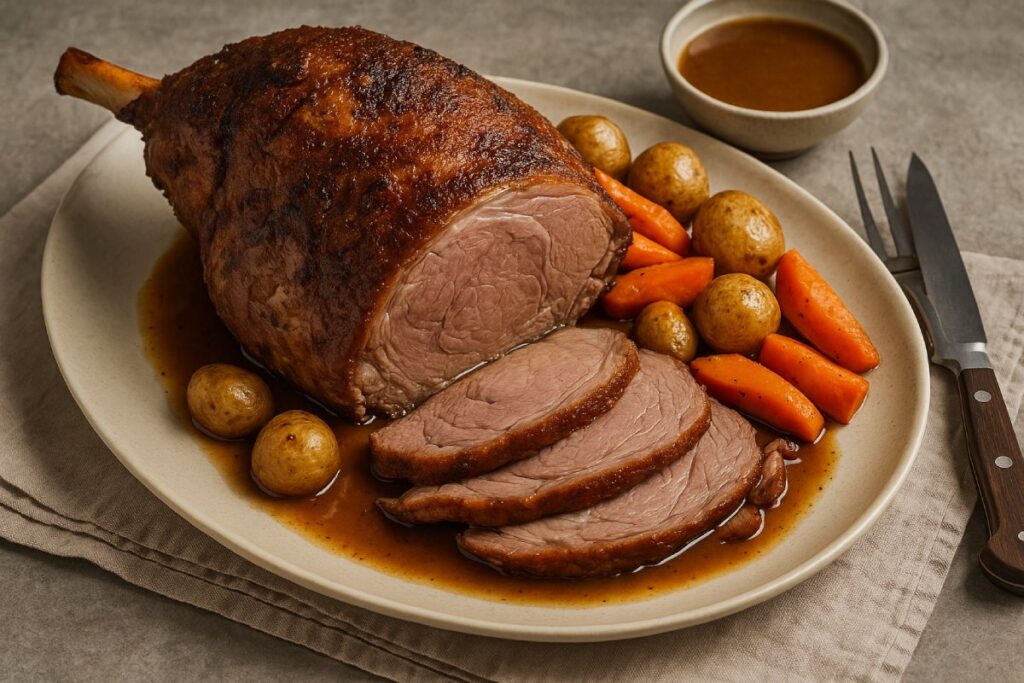
At home, lamb remains a beloved part of Irish culinary tradition. The Sunday roast is perhaps its most iconic expression—a meal that brings families together across generations. A roast leg of lamb, cooked slowly with rosemary, garlic, and root vegetables, remains a centerpiece of the Irish table. It’s a dish that captures both comfort and celebration, blending old-world simplicity with timeless flavor.
Beyond the classic roast, modern Irish chefs continue to reinterpret lamb in creative ways—from slow-braised shoulder served with craft stout to spiced lamb burgers or tender cutlets paired with foraged herbs. These innovations pay homage to Ireland’s farming heritage while showcasing the versatility of this ancient meat.
Whether served at a farmhouse table or a fine-dining restaurant, Irish lamb tells a story that connects the present to the past. It speaks of open fields and family farms, of care and craftsmanship, of faith and food. From hill farms to the Sunday roast, the journey of Irish lamb is the story of Ireland itself—rooted in tradition, shaped by the land, and shared with the world.