

Table of Contents
- 1. The Digital Kitchen: A New Era for Irish Food
- 2. From Coddle to Cloud Bread: TikTok’s Influence on Irish Palates
- 3. Food Creators, Micro-Influencers, and the Rise of Irish TikTok Chefs
- 4. Social Media as a Launchpad for Local Irish Food Businesses
- 5. What’s Next? Predicting the Future of Irish Food Trends Online
The Digital Kitchen: A New Era for Irish Food
Once rooted firmly in the traditions of family recipes and local food rituals, Irish cuisine is now undergoing a digital transformation. Thanks to platforms like TikTok, Instagram Reels, and YouTube Shorts, a new food culture is emerging—one that is faster, more visual, and highly influenced by trends born online. This digital kitchen isn’t just changing how food is presented; it’s changing what Irish people cook and eat.
Young Irish creators and food lovers are at the forefront of this movement, using smartphones instead of cookbooks to guide their meals. Whether it’s whipping up a viral butter board, perfecting an air-fried snack, or trying a Korean-inspired garlic cheese bread, Irish kitchens are now places of constant experimentation. Global food trends are being adapted to local tastes—sometimes with surprising results.
During the pandemic lockdowns, interest in home cooking soared across Ireland, and TikTok emerged as a culinary lifeline. With short, fast-paced videos showcasing unique recipes and easy techniques, people of all ages began to explore food in new ways. For many Irish families, dinner became less about tradition and more about inspiration—from people halfway around the world.
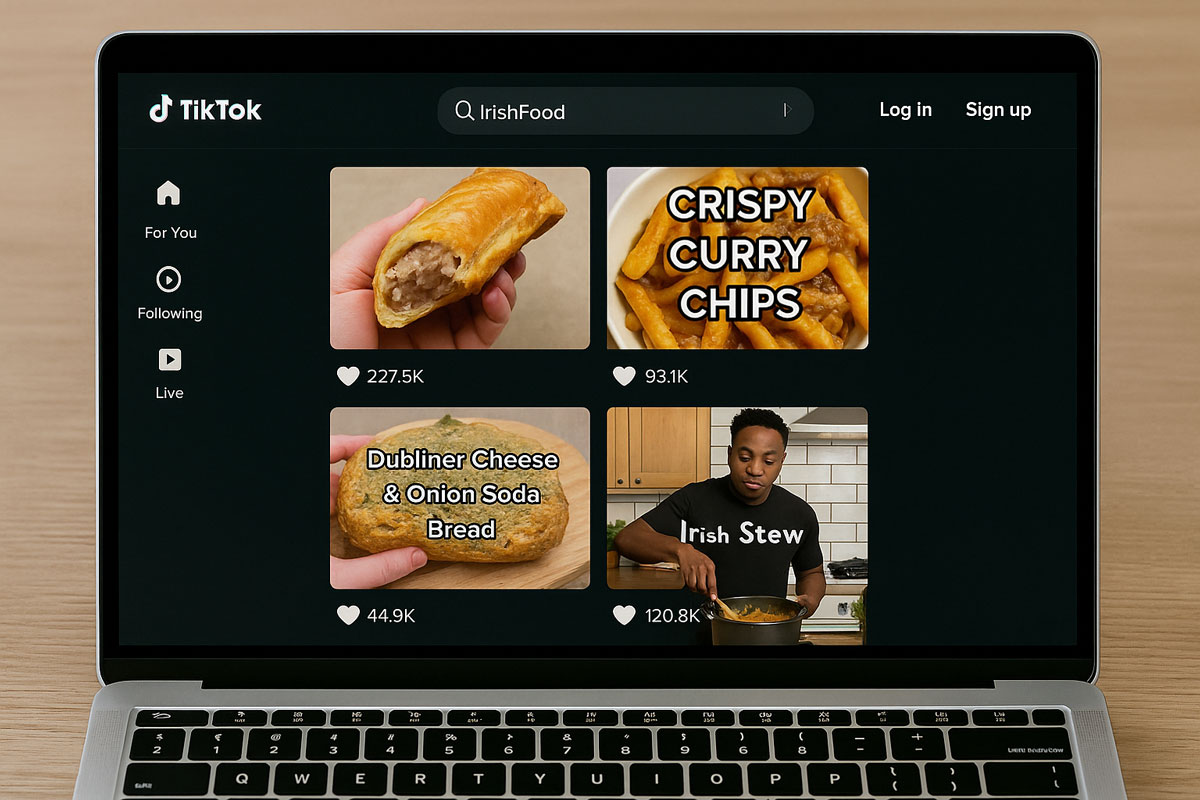
This shift isn’t just about recipes. It’s about how food is talked about, how it looks on camera, and how it fits into a lifestyle of sharing and engagement. Hashtags like #IrishFoodTok and #EasyIrishRecipes now help define what’s trending, and many content creators have gone from amateur cooks to social media influencers, sparking new interest in Irish food both at home and abroad.
The digital kitchen has brought Irish food into a global conversation—where a simple TikTok clip can launch a national craving, and where what’s popular today might be gone tomorrow. In this ever-changing space, food isn’t just eaten—it’s performed, recorded, and shared.
From Coddle to Cloud Bread: TikTok’s Influence on Irish Palates
For generations, traditional Irish meals like Dublin coddle, boxty, and Irish stew were passed down through families with little variation. But now, a new generation is blending these beloved dishes with internet trends, creating mashups that are as surprising as they are shareable. From air-fried potato farls to Guinness-infused ramen, TikTok has opened the floodgates for culinary creativity in Irish homes.
One of the most noticeable changes is how global food crazes are being interpreted through an Irish lens. When cloud bread went viral on TikTok—a fluffy, meringue-like creation made with just egg whites, sugar, and cornstarch—it wasn’t long before Irish versions began appearing, sometimes dyed green or infused with local ingredients like Baileys or Irish butter.
Another example is the butter board, a viral charcuterie-style trend where softened butter is spread across a board and topped with sweet or savory ingredients. In Ireland, this trend evolved into rustic farmhouse versions featuring Kerrygold butter, sea salt flakes, fresh herbs, and even for dipping—turning a global fad into a uniquely Irish bite.
Even classic Irish breakfasts are being reimagined. TikTok videos show everything from deconstructed breakfast rolls to Irish-style breakfast tacos. The once-staple black pudding is now being diced and added to pasta dishes, salad bowls, or even fusion tacos that bring Irish flavours to life in completely new formats.
This creative spirit has also encouraged more experimentation with plant-based and allergy-friendly alternatives. Vegan colcannon, gluten-free soda bread, and dairy-free Irish coffee substitutes are thriving in the algorithm-driven world of social media—giving traditional dishes a modern, inclusive twist.
As viral trends sweep across the globe, Irish cooks are no longer passive observers. They’re active participants—remixing food trends in a way that celebrates both innovation and heritage.
Food Creators, Micro-Influencers, and the Rise of Irish TikTok Chefs
The rise of Irish food content creators on TikTok and Instagram has given a fresh face—and voice—to Irish cuisine. Gone are the days when food media was controlled by a handful of celebrity chefs or cookbook publishers. Today, a college student in Galway or a home cook in Wexford can build a loyal following simply by sharing relatable, mouthwatering content.
These micro-influencers—many with just a few thousand followers—often have more engagement than big-name personalities. Their authenticity, local accents, and Irish kitchen quirks make them instantly relatable. Whether they’re filming in a tiny apartment or a countryside kitchen, these creators are making Irish food feel both modern and deeply personal.
Some focus on recreating childhood favourites with a twist, while others highlight affordable meals for students or busy families. You’ll find accounts dedicated to Irish baking, air fryer meals, gluten-free options, and humorous takes on nostalgic recipes like chicken curry chips or jambons. The common thread? An eagerness to entertain, teach, and celebrate Irish food culture in all its forms.
Short-form video has proven particularly effective. A 30-second clip showing how to make Tayto-crusted chicken goujons can rack up hundreds of thousands of views in a weekend. Hashtags like #IrishFoodie, #TikTokIreland, and #IrishRecipes connect creators to a growing audience that’s hungry for something both familiar and fresh.
Some creators are even building full-time careers from their content, launching cookbooks, collaborating with Irish food brands, or offering cooking classes online. What began as a few cooking clips in lockdown has blossomed into a dynamic food scene fueled by humour, creativity, and community.
It’s not just a trend—it’s a movement. And these creators are leading the way in how Ireland sees, cooks, and shares its food with the world.
Social Media as a Launchpad for Local Irish Food Businesses
Social media isn’t just changing how Irish people cook—it’s transforming how they launch and grow food businesses. From market stalls to family-run cafés and home bakers, small Irish food entrepreneurs are turning to TikTok and Instagram to reach audiences far beyond their local communities.
In a country where word of mouth once meant chatting in the pub or corner shop, that conversation now happens through comments, shares, and likes. A single viral video can lead to sold-out markets, long queues, and national media coverage. It’s not unusual for a local bakery to gain tens of thousands of followers overnight after posting a quirky behind-the-scenes video or a visually satisfying pour of melted chocolate onto a fresh batch of brownies.
For many, platforms like TikTok are more accessible—and affordable—than traditional advertising. Food trucks post videos of their daily specials, new restaurants showcase the energy of their kitchens, and artisan producers highlight everything from handmade cheeses to heritage grains. The visual nature of social media pairs perfectly with Ireland’s growing appreciation for craft and quality in food.
These platforms also give businesses direct access to their customer base. Questions about allergens, delivery, or opening hours can be answered in real time. Businesses can tell their stories authentically, building trust with customers who value transparency and personality. And for younger consumers, discovering a place on TikTok or Instagram is often more powerful than seeing it on Google Maps.
Collaborations between content creators and local brands have also become a key strategy. An influencer reviewing an Irish brunch spot or unboxing a box of Irish-made snacks can drive serious traffic. Even limited-edition products—like viral “TikTok muffins” or themed grazing boxes—are being crafted with the algorithm in mind.
Social media has become the new marketplace. And in this digital farmers’ market, Irish food businesses are finding bold, creative ways to thrive.
What’s Next? Predicting the Future of Irish Food Trends Online
As TikTok and other social platforms continue to evolve, so too will the landscape of Irish food culture. The pace of change is fast, and staying relevant means staying curious. So, what’s next for Irish food in the age of viral videos and algorithm-driven trends?
One likely direction is the continued fusion of global and local influences. As Irish creators become more adventurous, we can expect to see even more daring cross-cultural experiments—think black pudding bao buns, seaweed pesto pasta, or oat milk ice cream flavoured with whiskey and honey. These creative hybrids reflect a broader trend: global inspiration, local execution.
Sustainability and transparency are also moving to the forefront. With audiences increasingly conscious of the environmental impact of what they eat, creators who highlight seasonal Irish ingredients, low-waste cooking, or farm-to-fork sourcing are gaining traction. A recipe isn’t just about taste—it’s also a statement about values.
Health-conscious food content is growing too. Whether it’s plant-based Irish dinners, low-sugar baking, or gut-friendly recipes with kefir and oats, there’s a strong appetite for wellness without sacrificing flavour. Social media makes it easy to share simple swaps and nutritional tips in visually engaging formats.
And while trends will continue to come and go, one constant is the desire for community. Irish food content often succeeds not just because of the food—but because of the stories behind it. Family history, local pride, humour, and a sense of shared identity all contribute to why people connect with these videos and creators.
As artificial intelligence, augmented reality, and even virtual food tastings enter the scene, the Irish food experience online will become even more immersive. But at its heart, it will still be about connection—sharing something delicious, telling a story, and maybe sparking a new craving across the world.
In this new era of food culture, Ireland is not just following trends—it’s helping shape them.